Lycopodiaceae
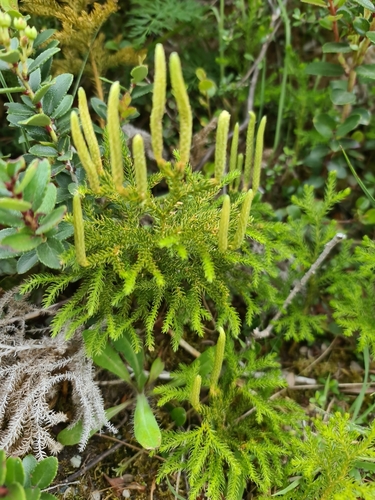
Austrolycopodium fastigiatum (R.Br.) Holub
Austrolycopodium fastigiatum (R.Br.) Holub
Austrolycopodium fastigiatum is an alpine club moss native to New Zealand and Australia, with a conifer-like upright growth habit.
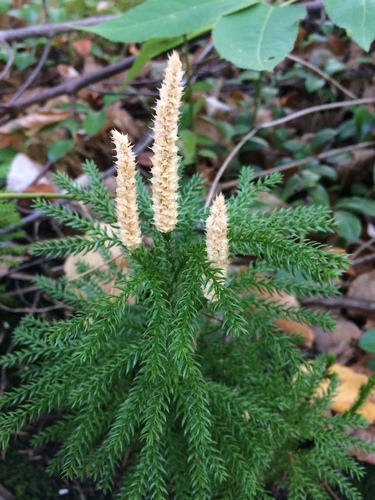
Dendrolycopodium dendroideum (Michx.) A.Haines
Dendrolycopodium dendroideum (Michx.) A.Haines
Dendrolycopodium dendroideum, tree groundpine, is a North American clubmoss also native to Russia, with historical decorative and photographic uses.
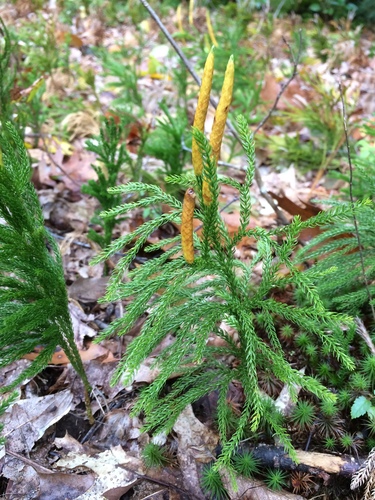
Dendrolycopodium hickeyi (W.H.Wagner, Beitel & R.C.Moran) A.Haines
Dendrolycopodium hickeyi (W.H.Wagner, Beitel & R.C.Moran) A.Haines
Dendrolycopodium hickeyi is a tree club-moss native to northeastern North America, found in shaded sandy conifer forests.
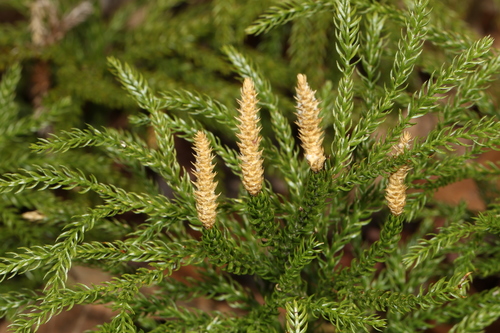
Dendrolycopodium obscurum (L.) A.Haines
Dendrolycopodium obscurum (L.) A.Haines
Dendrolycopodium obscurum is a small conifer-like lycophyte that has been harvested for wreaths and flash powder, and is protected in some US states.
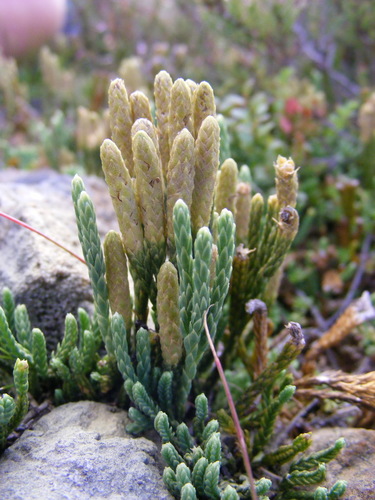
Diphasiastrum alpinum (L.) Holub
Diphasiastrum alpinum (L.) Holub
Diphasiastrum alpinum is a circumpolar northern clubmoss that grows in alpine and boreal habitats, and can hybridize with D. sitchense.
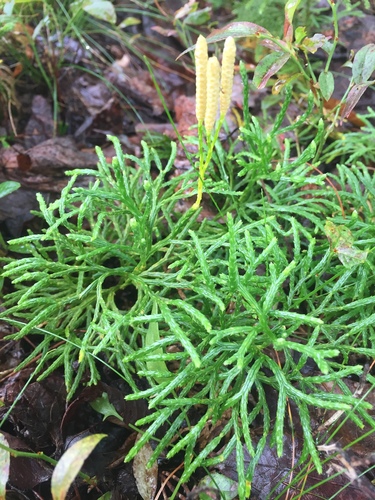
Diphasiastrum complanatum (L.) Holub
Diphasiastrum complanatum (L.) Holub
Diphasiastrum complanatum is a spreading perennial clubmoss with flattened branches, found across the Northern Hemisphere, once used for dyeing wool in Finland.
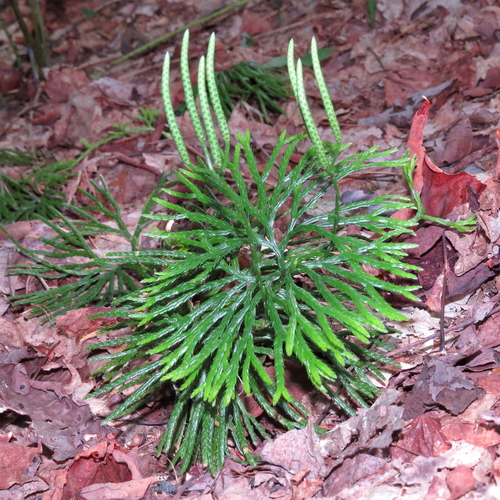
Diphasiastrum digitatum (Dill. ex A.Braun) Holub
Diphasiastrum digitatum (Dill. ex A.Braun) Holub
Diphasiastrum digitatum is a low-growing perennial clubmoss native to eastern North America with a range of historical human uses.
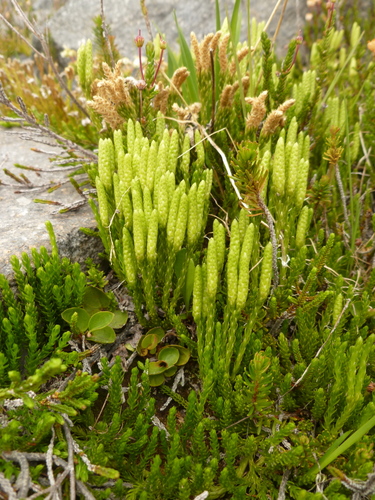
Diphasiastrum sitchense (Rupr.) Holub
Diphasiastrum sitchense (Rupr.) Holub
Diphasiastrum sitchense (Sitka clubmoss) is a native pteridophyte of northern North America and northeastern Asia, found in varied upland and woodland habitats.
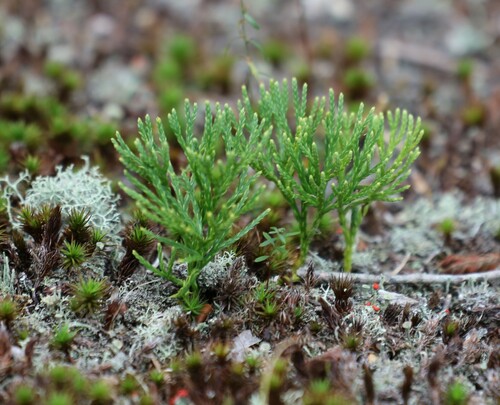
Diphasiastrum tristachyum (Pursh) Holub
Diphasiastrum tristachyum (Pursh) Holub
Diphasiastrum tristachyum is a perennial clubmoss, commonly called ground cedar, with a distinct flat-topped growth form.
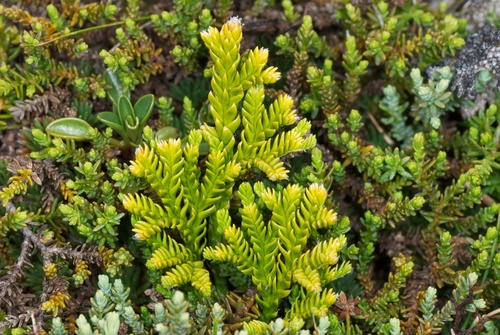
Diphasium scariosum (G.Forst.) Rothm.
Diphasium scariosum (G.Forst.) Rothm.
Diphasium scariosum is a distinctive club moss found across parts of Oceania and Southeast Asia with unusual fluorescent spots.
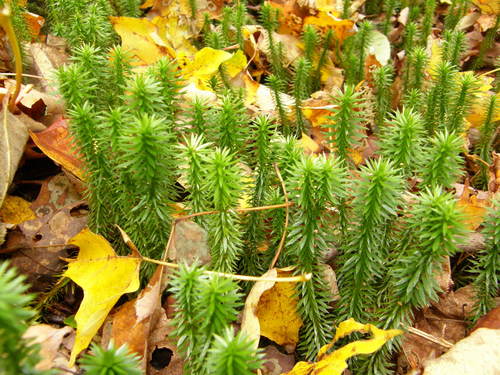
Huperzia lucidula (Michx.) Trevis.
Huperzia lucidula (Michx.) Trevis.
Huperzia lucidula, or shining firmoss, is an evergreen clubmoss native to eastern North America that grows in moist acidic forests.
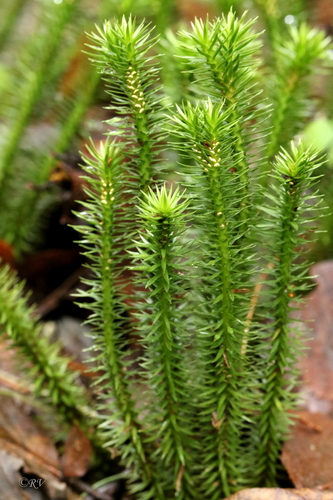
Huperzia selago (L.) Bernh.
Huperzia selago (L.) Bernh.
Huperzia selago is a toxic circumpolar clubmoss with traditional uses in multiple indigenous medical practices.
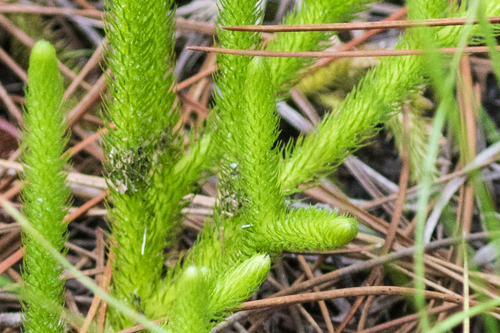
Lycopodiella alopecuroides (L.) Cranfill
Lycopodiella alopecuroides (L.) Cranfill
Lycopodiella alopecuroides, foxtail clubmoss, is a perennial clubmoss with historically used flammable spore powder.
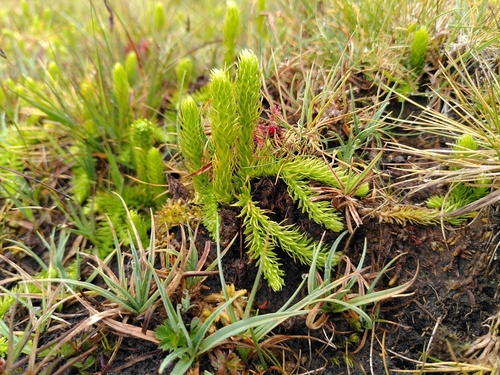
Lycopodiella inundata (L.) Holub
Lycopodiella inundata (L.) Holub
Lycopodiella inundata is a rare declining arctic-alpine club moss distributed across the Northern Hemisphere.
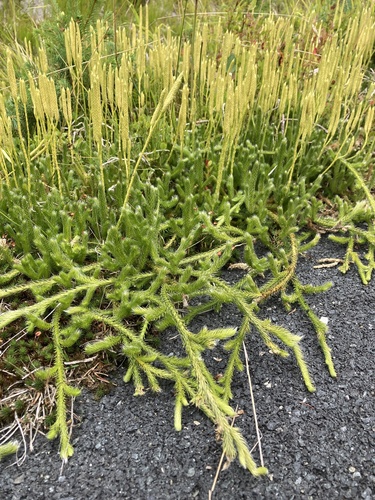
Lycopodium clavatum L.
Lycopodium clavatum L.
Lycopodium clavatum is a widespread spore-bearing vascular clubmoss with identified uses and bioactive constituents.
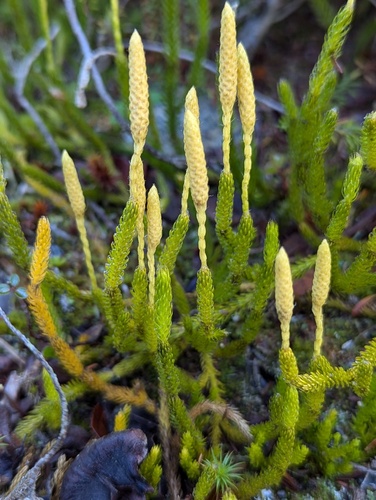
Lycopodium lagopus (Laest. ex C.Hartm.) Zinserl. ex Kuzen.
Lycopodium lagopus (Laest. ex C.Hartm.) Zinserl. ex Kuzen.
Lycopodium lagopus (one-cone club-moss) is an arctic-subarctic clubmoss that rarely bears more than one cone per stem.
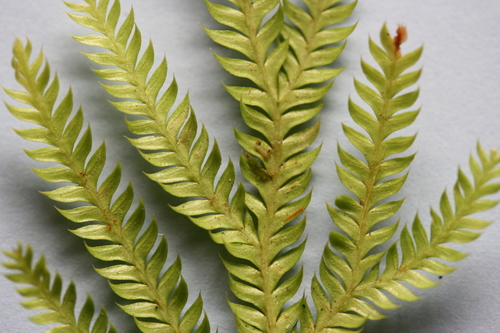
Lycopodium volubile Sw., 1806
Lycopodium volubile Sw., 1806
Pseudodiphasium is a monotypic lycophyte genus in Lycopodiaceae holding the native-to-Malesia-Australia introduced-to-Ecuador species P. volubile.
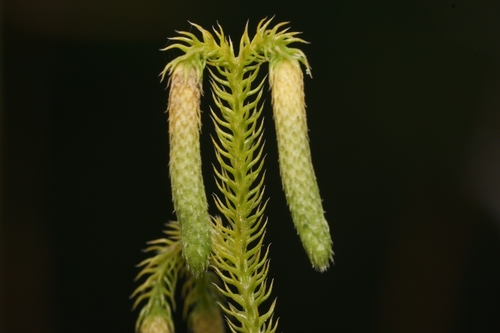
Palhinhaea cernua (L.) Vasc. & Franco
Palhinhaea cernua (L.) Vasc. & Franco
Palhinhaea cernua, the staghorn clubmoss, is the largest clubmoss, a widespread pan-tropical species sometimes cultivated.
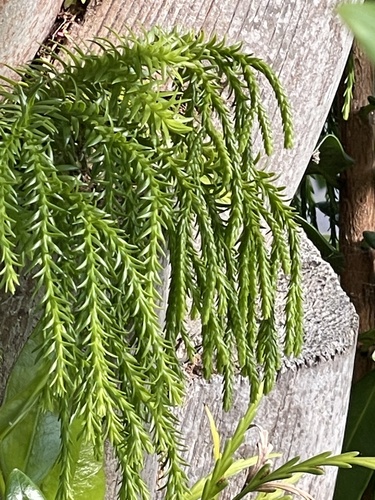
Phlegmariurus varius (R.Br.) A.R.Field & Bostock
Phlegmariurus varius (R.Br.) A.R.Field & Bostock
Phlegmariurus varius is a Lycopodiaceae club moss found in Australia, New Zealand and nearby islands, growing on ground, rock or other plants.
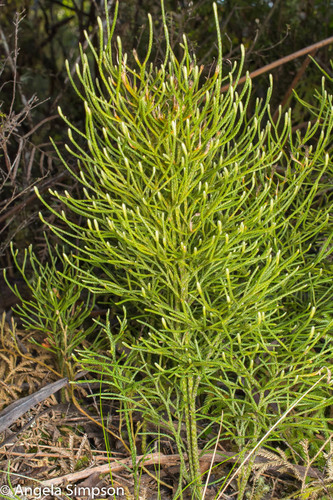
Pseudolycopodium densum (Rothm.) Holub
Pseudolycopodium densum (Rothm.) Holub
Pseudolycopodium densum, the bushy clubmoss, is the only species in the lycophyte genus Pseudolycopodium, native to Australia, New Zealand and New Caledonia.
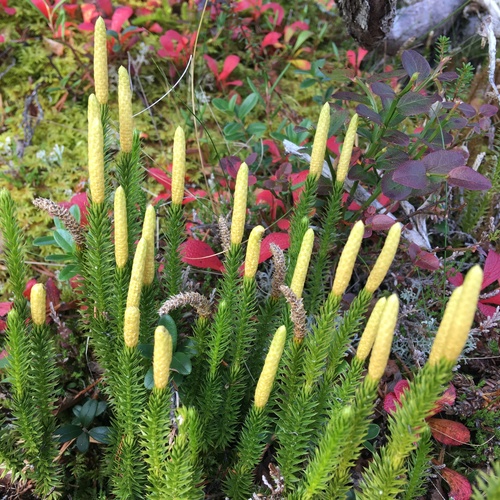
Spinulum annotinum (L.) A.Haines
Spinulum annotinum (L.) A.Haines
Spinulum annotinum is a widespread common club-moss with documented traditional uses in Finnish medicine and crafts.
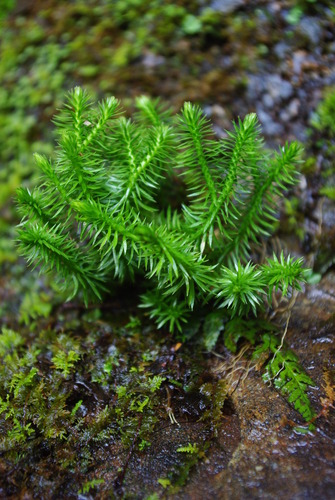
Huperzia porophila (F.E.Lloyd & Underw.) Holub
Huperzia porophila (F.E.Lloyd & Underw.) Holub
Huperzia porophila, the rock clubmoss/rock firmoss, is an Appalachian-region hybrid lycophyte that grows exclusively on rock.
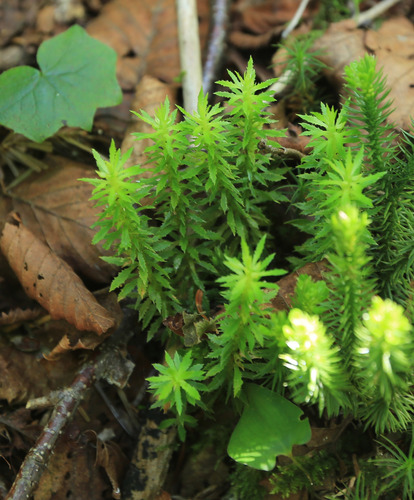
Huperzia serrata (Thunb.) Trevis.
Huperzia serrata (Thunb.) Trevis.
Huperzia serrata, the toothed firmoss clubmoss, is a vulnerable plant native to eastern Asia and most main Hawaiian islands.
Huperzia selago subsp. appressa (La Pylaie ex Desv.) D.Löve
Huperzia selago subsp. appressa (La Pylaie ex Desv.) D.Löve
Huperzia selago subsp. appressa is a circumpolar toxic fern ally with traditional medicinal uses across multiple regions.
Start Exploring Nature Today
Download iNature for free. 10 identifications on us. No account needed. No credit card required.
Download Free on App Store
