Hylidae
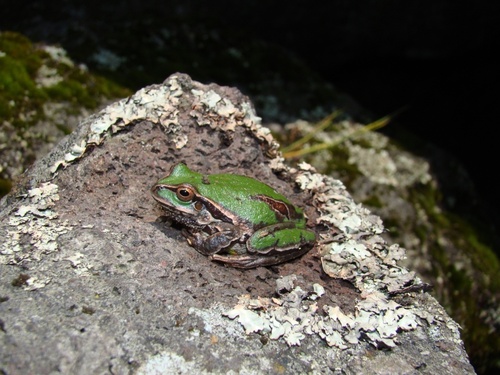
Dryophytes plicatus (Brocchi, 1877)
Dryophytes plicatus (Brocchi, 1877)
Dryophytes plicatus, the ridged tree frog, is a Hylidae frog species endemic to Mexico that lives in a range of habitats.
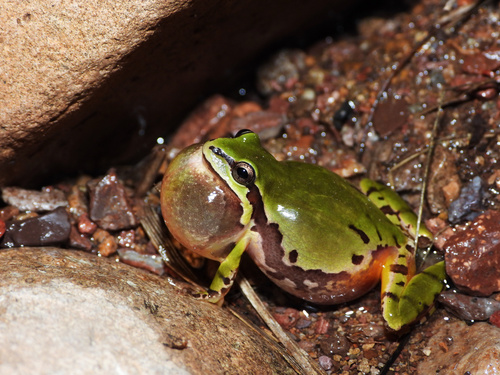
Dryophytes wrightorum (Taylor, 1939)
Dryophytes wrightorum (Taylor, 1939)
Dryophytes wrightorum, Wright's mountain tree frog, is a Hylidae species found in Mexico and the US, and is Arizona's state amphibian.
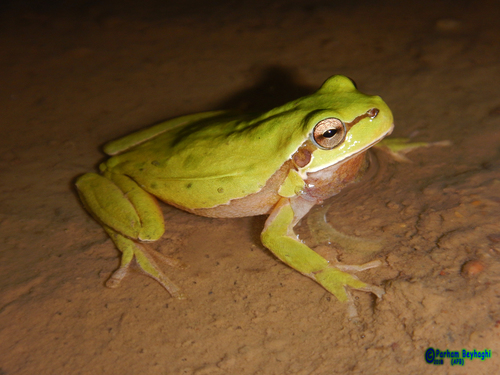
Hyla savignyi Audouin, 1827
Hyla savignyi Audouin, 1827
Hyla savignyi, the Middle East tree frog, is an endangered endemic Hylidae frog found across parts of the Middle East and nearby regions.
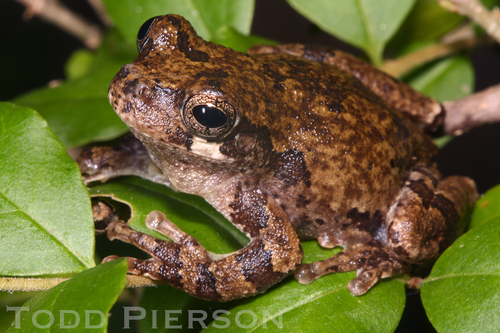
Dryophytes avivoca (Viosca, 1928)
Dryophytes avivoca (Viosca, 1928)
Dryophytes avivoca is a small tree frog native to the southeastern United States, found in wooded swamps.
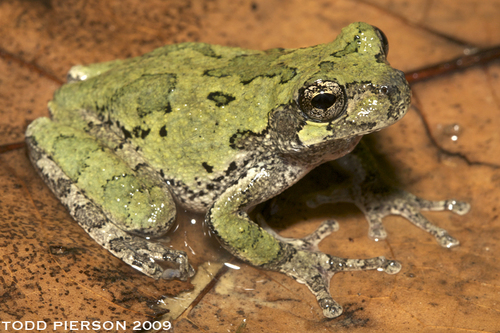
Hyla femoralis Bosc, 1800
Hyla femoralis Bosc, 1800
The pine woods tree frog is a Hylidae frog species endemic to the southeastern United States, favoring pine and wooded wetland habitats.
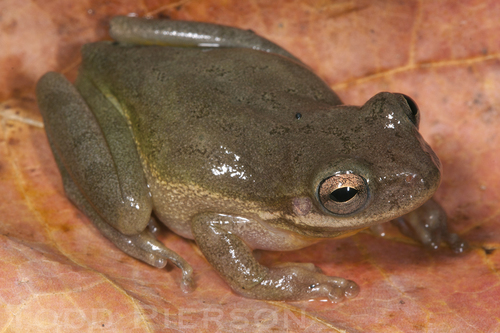
Dryophytes squirellus (Daudin, 1800)
Dryophytes squirellus (Daudin, 1800)
The squirrel tree frog Dryophytes squirellus is a small tree frog native to the southeastern US and introduced to the Bahamas.
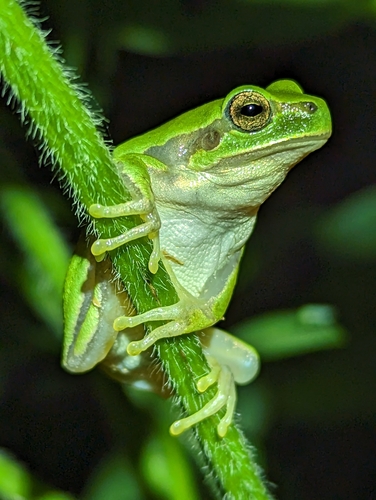
Dryophytes immaculatus (Boettger, 1888)
Dryophytes immaculatus (Boettger, 1888)
The Chinese immaculate treefrog (Dryophytes immaculatus), a Hylidae frog endemic to China, has declined sharply due to habitat loss.
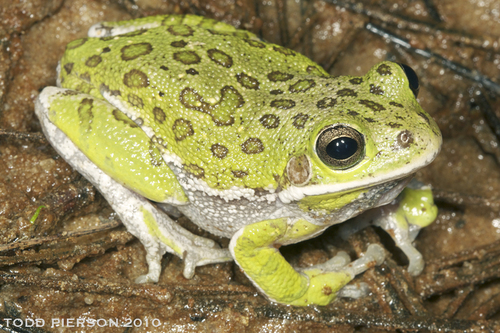
Dryophytes gratiosus (LeConte, 1856)
Dryophytes gratiosus (LeConte, 1856)
Dryophytes gratiosus, the barking treefrog, is the largest native US tree frog, found across the US Southeast coastal plain.","description":{"optimized_content":"Dryophytes gratiosus is the largest native tree frog in the United States, getting its name from its raucous, explosive call. It has a head-body length of 5 to 7 cm (2.0 to 2.8 in). While its color is variable, it is easily recognizable by characteristic dark, round markings on its dorsum. Individuals can be bright or dull green, brown, yellowish, or gray, with small grey and green-yellow spots. It has prominent, round toe pads, and males have a large vocal sac. This species has skin unlike any other American frog: it is not rough and warty, nor is it smooth, instead being thick and leathery. Its skin can change color based on lighting, time of day, temperature, or surroundings. Color changes are rapid, and its spots can appear to disappear and reappear over time. Its eyes are colored brown, gold, and black. Its geographic range spans from Delaware to southern Florida and eastern Louisiana, most often in coastal areas. Isolated colonies also exist in Maryland, Kentucky, and Tennessee. A temporary population was found in New Jersey in 1957. Adult Dryophytes gratiosus usually live in trees or bushes, and can burrow deep into mud and logs for extra protection from predators. For breeding, barking treefrogs need suitable habitat of shallow, semi-permanent pools with open canopies or grass-dominated ponds that have at least some open water.","one_line_intro":"Dryophytes gratiosus, the largest native US tree frog, lives across the southeastern US coastal areas and breeds in shallow open water pools.","This is Dryophytes gratiosus (barking tree frog), the largest native tree frog in the United States, found across the Southeast US.","Dryophytes gratiosus (barking tree frog) is the largest native tree frog of the United States, found in the US Southeast with some isolated inland populations.","Dryophytes gratiosus, the barking tree frog, is the largest native tree frog in the United States, found from Delaware to Florida and eastern Louisiana.","Dryophytes gratiosus is the largest native tree frog in the United States, distinguished by its leathery skin and variable coloration.","Dryophytes gratiosus, or barking tree frog, is the largest native US tree frog ranging across the southeastern Atlantic and Gulf coasts.","Dryophytes gratiosus is the largest native tree frog native to the United States, with distinctive skin and variable body color.","Dryophytes gratiosus is the largest native US tree frog, found in the Southeast, named for its loud, explosive call.","Barking tree frog (Dryophytes gratiosus) is the largest native tree frog in the United States with variable coloration.","Dryophytes gratiosus, the barking tree frog, is the largest native tree frog in the United States found in the Southeast.","Barking treefrog (Dryophytes gratiosus) is the largest native tree frog in the United States found in the southeast.","Dryophytes gratiosus is the largest native tree frog of the United States, found primarily in southeastern coastal areas.","Dryophytes gratiosus, barking treefrog, is the largest native tree frog in the United States with variable body coloration.","Dryophytes gratiosus is the largest native tree frog in the United States, living across the southeast in trees and breeding pools.","Dryophytes gratiosus, the barking treefrog, is the largest native tree frog native to the United States.","Dryophytes gratiosus, commonly called barking tree frog, is the largest native tree frog in the United States.","Barking tree frog (Dryophytes gratiosus) is the largest native tree frog found in the United States.","Dryophytes gratiosus, the barking tree frog, is the largest native tree frog in the United States.","Dryophytes gratiosus is the largest native tree frog in the United States, found in the southeastern part of the country.","Dryophytes gratiosus, the barking tree frog, is the largest native tree frog in the United States found in coastal Southeast.","Dryophytes gratiosus is a species of tree frog, the largest native one in the United States, found across the Southeast.","Barking treefrog (Dryophytes gratiosus) is the largest native tree frog in the United States, native to the Southeast.","Dryophytes gratiosus is the largest native tree frog in the United States, with unique leathery skin and variable color.","Dryophytes gratiosus, barking tree frog, is the largest native tree frog in the United States, ranging across the Southeast.","Dryophytes gratiosus is the largest native tree frog in the United States, named for its loud raucous call.","Dryophytes gratiosus, the barking tree frog, is the largest native tree frog native to the United States.","Dryophytes gratiosus is the largest native tree frog in the United States, occurring mainly in the Southeast.","Dryophytes gratiosus (barking tree frog) is the largest native tree frog in the United States, found in the Southeast.","Dryophytes gratiosus, also called barking tree frog, is the largest native tree frog in the United States.","Dryophytes gratiosus, the barking tree frog, is the largest native tree frog found in the United States.","Dryophytes gratiosus is the largest native tree frog in the United States, with distinctive leathery textured skin.","Dryophytes gratiosus is the largest native tree frog in the United States, living in trees across the southeastern coastal areas.","Dryophytes gratiosus, commonly known as the barking tree frog, is the largest native tree frog in the United States.","The barking tree frog, Dryophytes gratiosus, is the largest native tree frog in the United States.","Dryophytes gratiosus, the barking tree frog, is the largest native tree frog in the United States with variable color.","Dryophytes gratiosus, or barking treefrog, is the largest native tree frog in the United States.","The barking treefrog, Dryophytes gratiosus, is the largest native tree frog in the United States.","Barking treefrog (Dryophytes gratiosus) is the largest native tree frog in the United States.","Dryophytes gratiosus, known as the barking treefrog, is the largest native tree frog in the United States.","Dryophytes gratiosus, the barking treefrog, is the largest native tree frog in the United States.","Dryophytes gratiosus is the largest native tree frog in the United States, native to the southeastern region.","Dryophytes gratiosus is a species of tree frog that is the largest native one in the United States.","Dryophytes gratiosus is the largest native tree frog in the United States, found in southeastern coastal areas.","Dryophytes gratiosus is the largest native tree frog in the United States, also known as the barking tree frog.","Dryophytes gratiosus, commonly known as barking tree frog, is the largest native tree frog in the US.
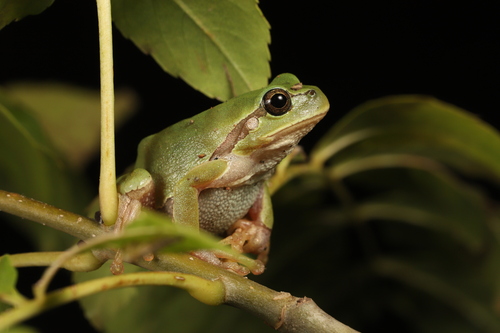
Hyla intermedia Boulenger, 1882
Hyla intermedia Boulenger, 1882
Hyla intermedia, the Italian tree frog, is a small frog native to Italy and nearby parts of southern Switzerland and western Slovenia.

Dryophytes arenicolor (Cope, 1866)
Dryophytes arenicolor (Cope, 1866)
Dryophytes arenicolor, the canyon tree frog, varies in color for camouflage and has distinct size and marking traits.
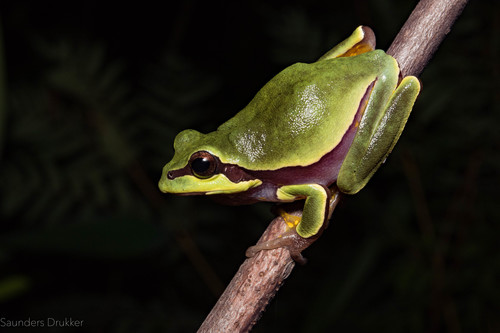
Dryophytes andersonii (Baird, 1854)
Dryophytes andersonii (Baird, 1854)
Dryophytes andersonii, the Pine Barrens tree frog, is a North American frog with disjunct US populations, and it is North Carolina's state frog.
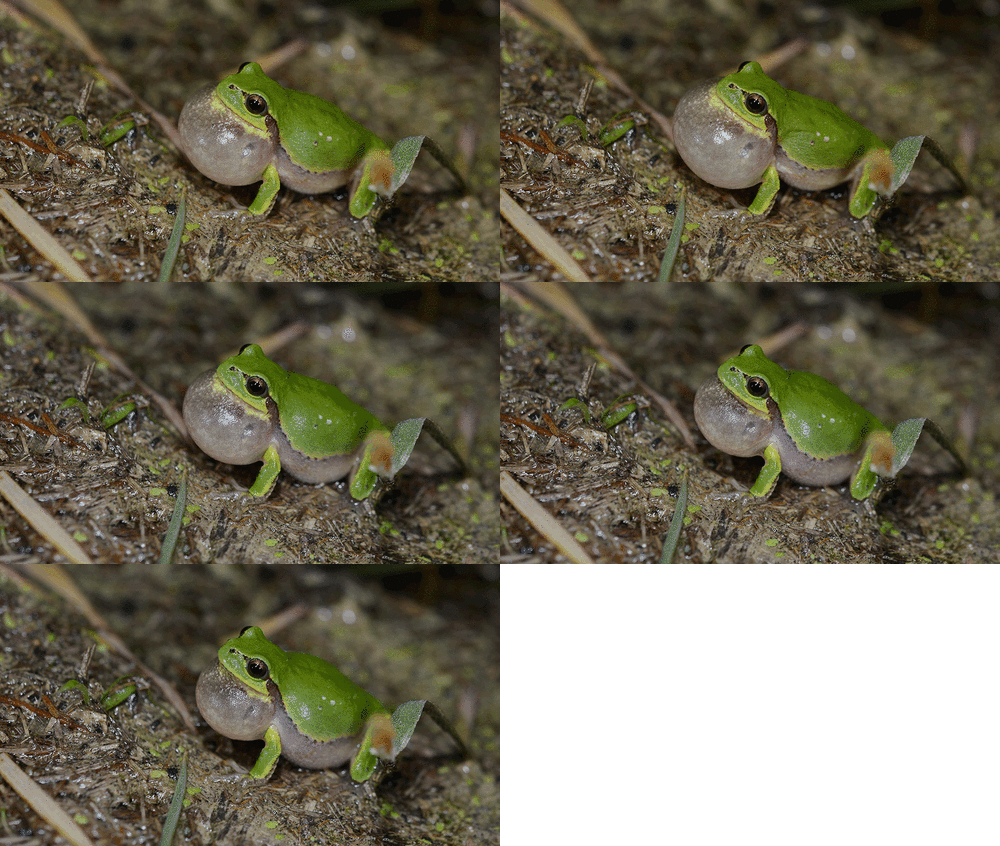
Dryophytes japonicus (Günther, 1859)
Dryophytes japonicus (Günther, 1859)
Dryophytes japonicus, the Japanese tree frog, is an Asian amphibian with skin neurotoxins for predator defense.
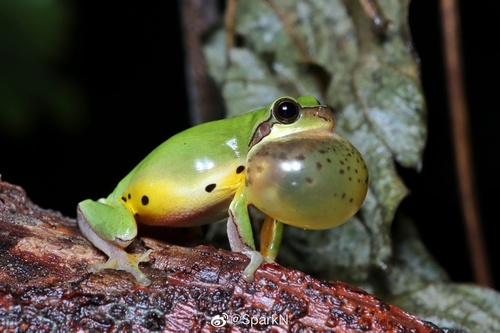
Hyla chinensis Günther, 1858
Hyla chinensis Günther, 1858
Hyla chinensis is a small Hylidae frog found in eastern/southeastern China and Taiwan, classified as least concern.
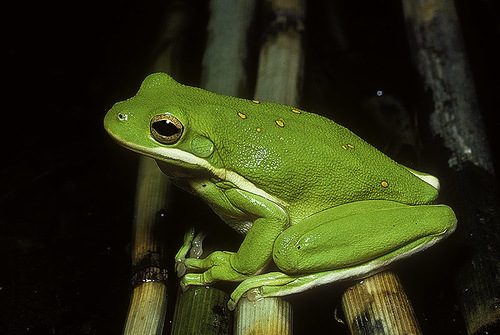
Dryophytes cinereus (Schneider, 1799)
Dryophytes cinereus (Schneider, 1799)
Dryophytes cinereus, the American green tree frog, is a moderately sized tree frog native to the central and southeastern United States.
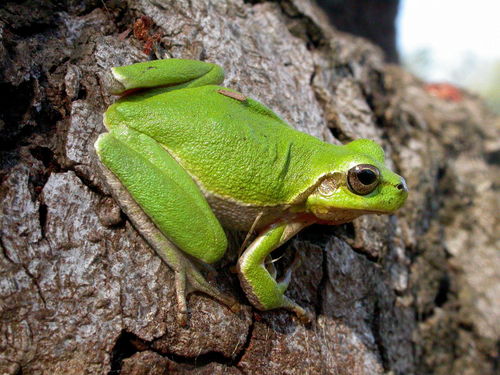
Hyla sarda (De Betta, 1853)
Hyla sarda (De Betta, 1853)
Hyla sarda, the Sardinian or Tyrrhenian tree frog, is a Hylidae species found in parts of the western Mediterranean with varied natural habitats.
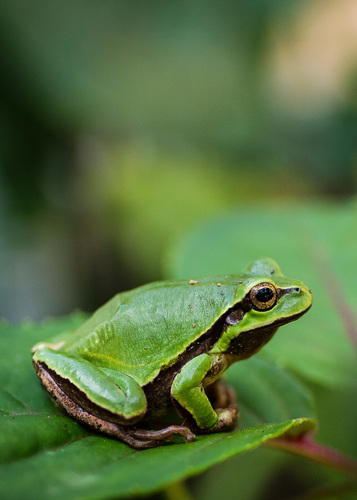
Dryophytes euphorbiaceus (Günther, 1858)
Dryophytes euphorbiaceus (Günther, 1858)
Dryophytes euphorbiaceus, the southern highland tree frog, is a Hylidae frog endemic to Mexico threatened by habitat loss.
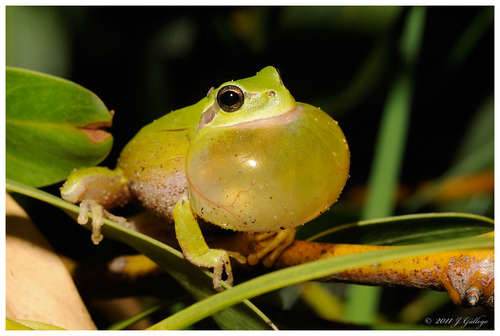
Hyla meridionalis Boettger, 1874
Hyla meridionalis Boettger, 1874
The Mediterranean or stripeless tree frog (Hyla meridionalis) is a frog species native to southwest Europe and northwest Africa, with some introduced populations.
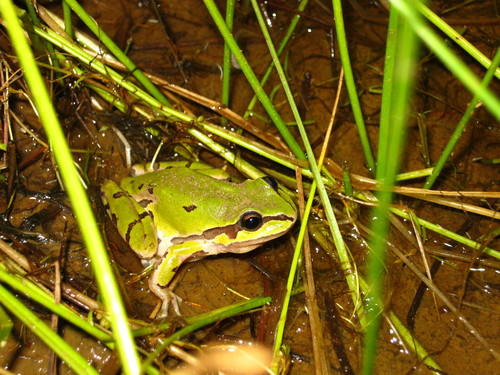
Dryophytes eximius (Baird, 1854)
Dryophytes eximius (Baird, 1854)
Dryophytes eximius, the mountain tree frog, is a Mexican Hylidae frog that is Arizona's state amphibian, though it does not actually occur there.
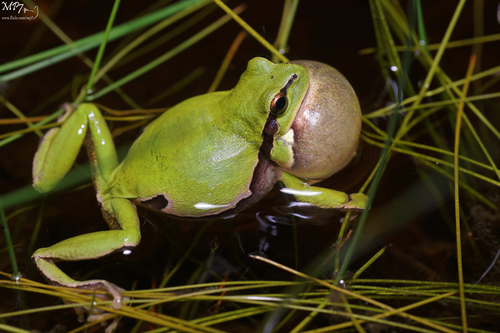
Hyla molleri Bedriaga, 1889
Hyla molleri Bedriaga, 1889
Hyla molleri, the Iberian or Moller's tree frog, is an endemic Hylidae frog from the Iberian Peninsula and southwest France, split from Hyla arborea.
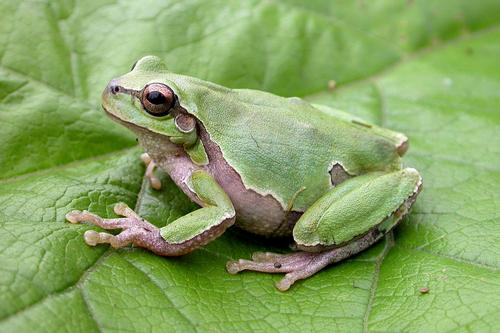
Hyla orientalis Bedriaga, 1890
Hyla orientalis Bedriaga, 1890
Hyla orientalis (eastern tree frog) is a Hyla species described in 1890, found in eastern Europe, Asia Minor, and western Asia.
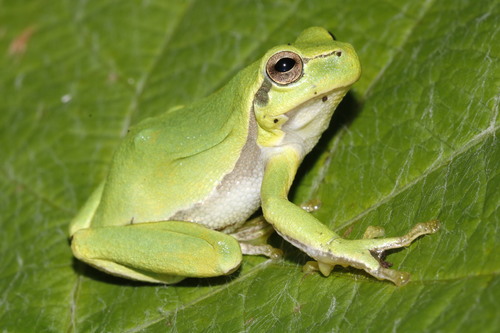
Hyla arborea (Linnaeus, 1758)
Hyla arborea (Linnaeus, 1758)
Hyla arborea, the European tree frog, is a small climbing amphibian native to most of Europe, northwest Africa, and temperate Asia.
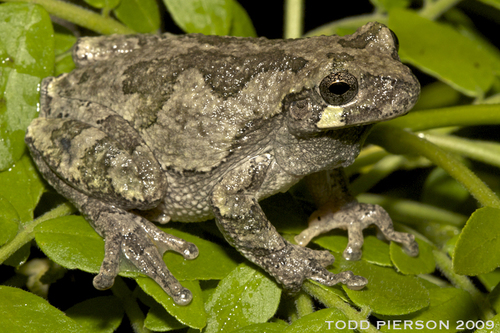
Dryophytes versicolor (LeConte, 1825)
Dryophytes versicolor (LeConte, 1825)
Dryophytes versicolor, the gray treefrog, is a small color-changing North American treefrog species that can survive freezing temperatures.
Dryophytes chrysoscelis (Cope, 1880)
Dryophytes chrysoscelis (Cope, 1880)
Dryophytes chrysoscelis, Cope's gray treefrog, is a sexually dimorphic treefrog with freeze tolerance that lives across much of North America.
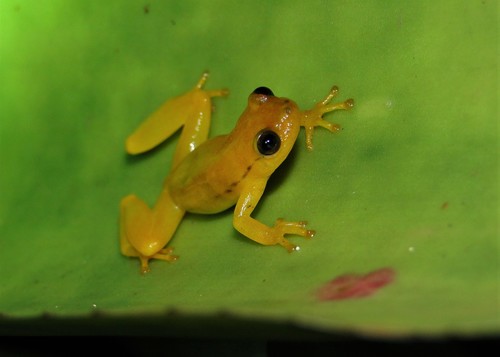
Phyllodytes edelmoi Peixoto, Caramaschi & Freire, 2003
Phyllodytes edelmoi Peixoto, Caramaschi & Freire, 2003
Phyllodytes edelmoi is a non-endangered frog species in Hylidae that is endemic to Brazil.
Related Families
Start Exploring Nature Today
Download iNature for free. 10 identifications on us. No account needed. No credit card required.
Download Free on App Store
