Boidae
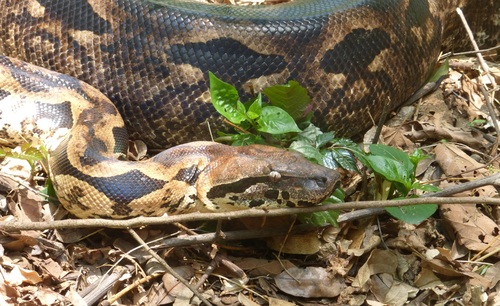
Acrantophis madagascariensis (Duméril & Bibron, 1844)
Acrantophis madagascariensis (Duméril & Bibron, 1844)
Acrantophis madagascariensis is Madagascar's largest endemic constrictor snake, found in northern, western, and central open woodlands.
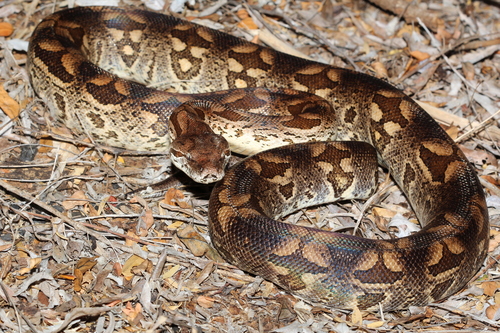
Acrantophis dumerili Jan, 1860
Acrantophis dumerili Jan, 1860
Acrantophis dumerili, Dumeril's ground boa, is a Madagascar-dwelling boa species with specific size, habitat, and reproductive traits.
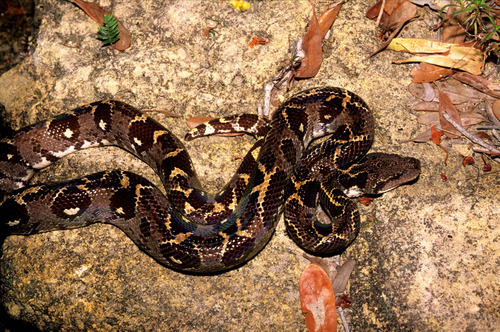
Sanzinia volontany Vences & Glaw, 2004
Sanzinia volontany Vences & Glaw, 2004
Sanzinia volontany, the Nosy Komba ground boa, is a non-venomous brown boa endemic to western Madagascar.
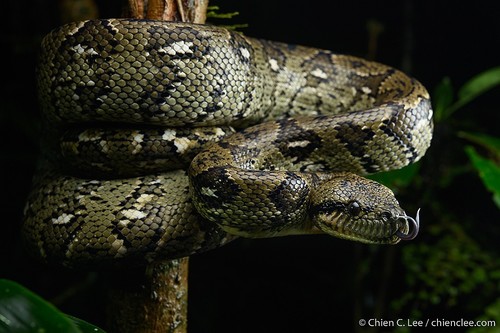
Sanzinia madagascariensis (Duméril & Bibron, 1844)
Sanzinia madagascariensis (Duméril & Bibron, 1844)
Sanzinia madagascariensis is an ovoviviparous snake endemic to Madagascar that lives in waterside trees and shrubs.
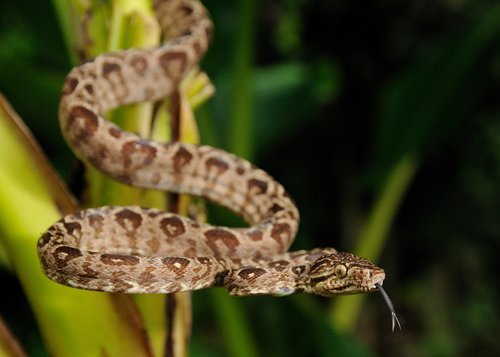
Corallus hortulana (Linnaeus, 1758)
Corallus hortulana (Linnaeus, 1758)
Corallus hortulana, commonly called Amazon tree boa, is a widely distributed boa species with varied coloration and little-studied wild reproduction.
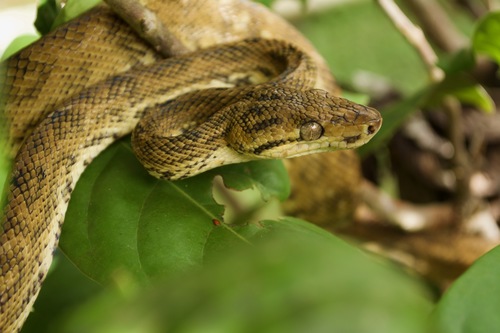
Corallus ruschenbergerii (Cope, 1875)
Corallus ruschenbergerii (Cope, 1875)
Corallus ruschenbergerii is a large nocturnal tree boa found across Lower Central America and northern South America.
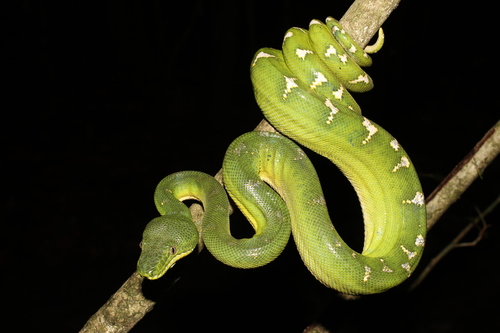
Corallus caninus (Linnaeus, 1758)
Corallus caninus (Linnaeus, 1758)
Corallus caninus, the emerald tree boa, is a non-venomous South American snake with characteristic emerald adult coloration.
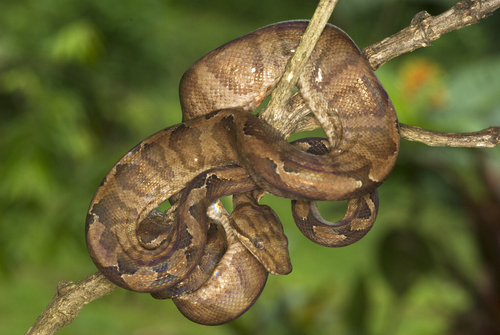
Corallus annulatus (Cope, 1875)
Corallus annulatus (Cope, 1875)
Corallus annulatus is a snake with a distinct brownish-red base pattern found across parts of Central and South America.
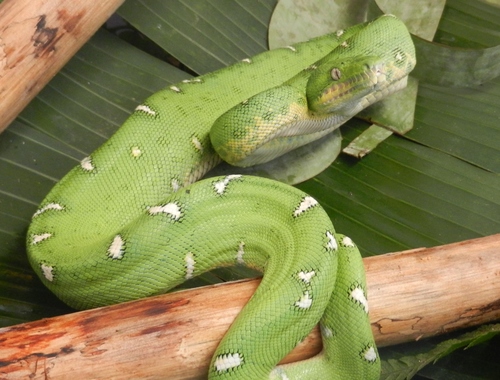
Corallus batesii (Gray, 1860)
Corallus batesii (Gray, 1860)
Corallus batesii, the Amazon Basin emerald tree boa, is a large ovoviviparous boa native to Amazon Basin jungles.
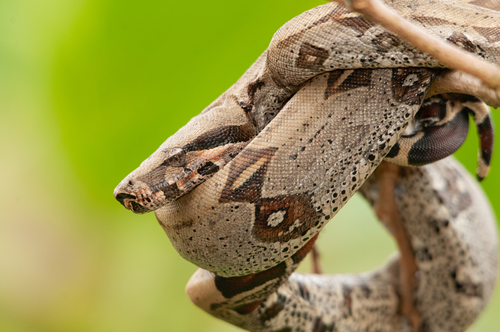
Boa constrictor Linnaeus, 1758
Boa constrictor Linnaeus, 1758
Boa constrictor, the common boa, is a large non-venomous South American boid snake commonly kept in captivity.
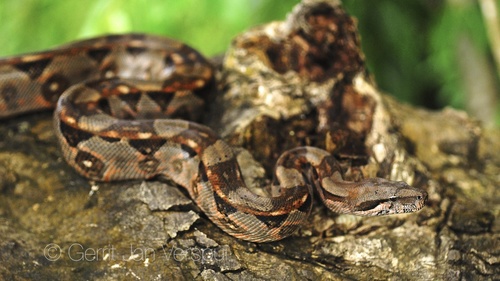
Boa imperator Daudin, 1803
Boa imperator Daudin, 1803
Boa imperator is a variable-sized, variable-pattern boa species native to Mexico, Central America, and northwestern South America.
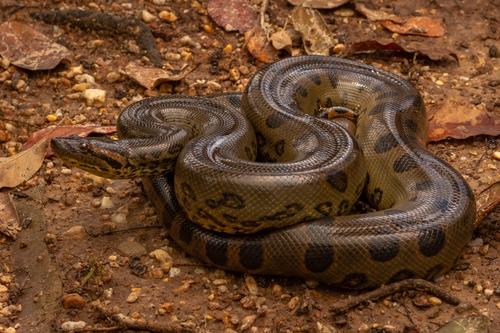
Eunectes murinus (Linnaeus, 1758)
Eunectes murinus (Linnaeus, 1758)
Eunectes murinus, the green anaconda, is the world's heaviest snake, native to South America and occasionally recorded in Florida.
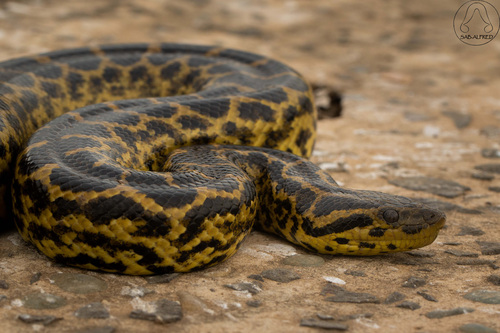
Eunectes notaeus Cope, 1862
Eunectes notaeus Cope, 1862
Eunectes notaeus, the yellow anaconda, is a large South American boa with generalist aquatic feeding habits.
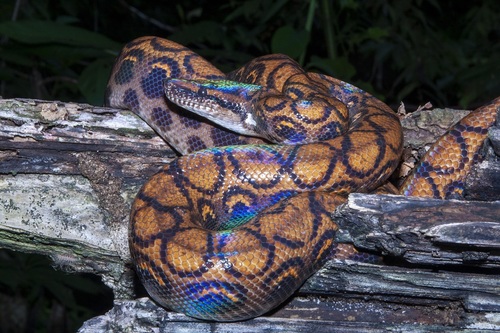
Epicrates cenchria (Linnaeus, 1758)
Epicrates cenchria (Linnaeus, 1758)
Epicrates cenchria, the rainbow boa, is a patterned, sexually dimorphic boa found across much of Central and South America.
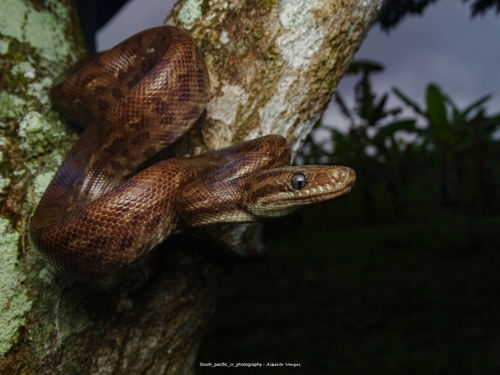
Epicrates maurus Gray, 1849
Epicrates maurus Gray, 1849
Epicrates maurus, the northernmost smallest rainbow boa, is a sexually dimorphic ovoviviparous snake ranging from southern Central America to northern South America.
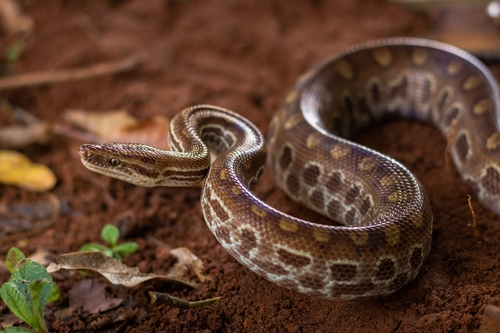
Epicrates crassus Cope, 1862
Epicrates crassus Cope, 1862
Epicrates crassus, the Paraguayan rainbow boa, is a Boidae snake found in Argentina, Brazil, and Paraguay.
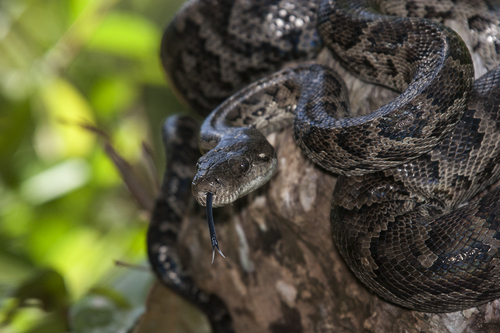
Chilabothrus striatus (Fischer, 1856)
Chilabothrus striatus (Fischer, 1856)
Chilabothrus striatus, the Hispaniolan boa, is a Boidae snake endemic to Hispaniola that is traded internationally as a pet.
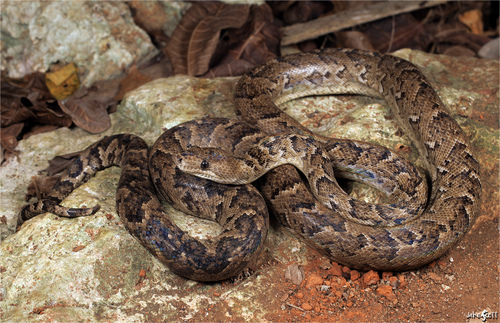
Chilabothrus angulifer (Cocteau & Bibron, 1840)
Chilabothrus angulifer (Cocteau & Bibron, 1840)
Chilabothrus angulifer, the Cuban boa, is the largest and least derived member of its genus, endemic to Cuba and its nearby islands.
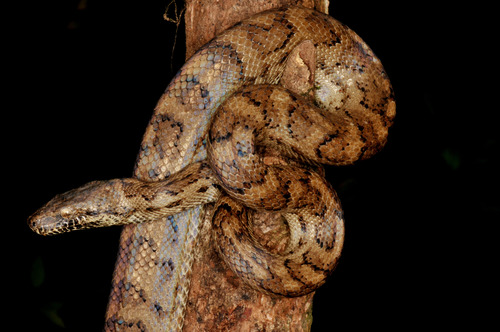
Chilabothrus inornatus (Reinhardt, 1843)
Chilabothrus inornatus (Reinhardt, 1843)
Chilabothrus inornatus, the Puerto Rican boa, is a boa species endemic to Puerto Rico with variable colour and patterning.
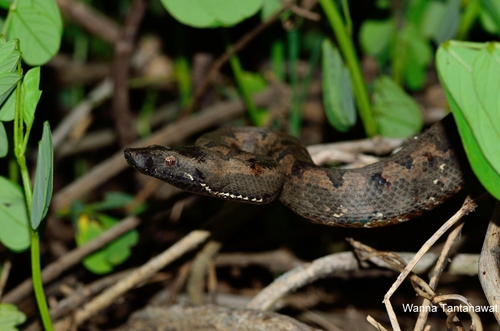
Candoia paulsoni (Stull, 1956)
Candoia paulsoni (Stull, 1956)
Candoia paulsoni is a viviparous boa species native to Maluku Islands and Melanesia, with six recognized subspecies.
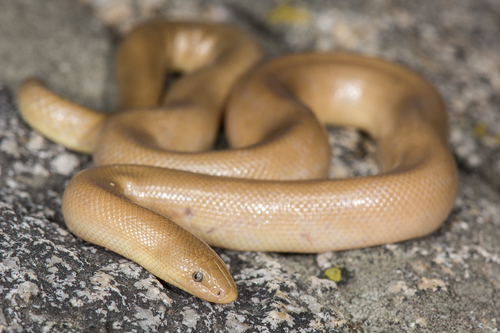
Charina umbratica Klauber, 1943
Charina umbratica Klauber, 1943
Charina umbratica, the southern rubber boa, is a small secretive blunt-tailed snake endemic to mountain regions of southern California.
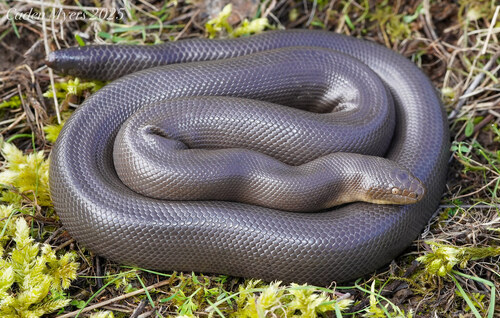
Charina bottae (Blainville, 1835)
Charina bottae (Blainville, 1835)
Charina bottae (rubber boa) is the northernmost boa species, native to western North America with distinct physical traits and live birth reproduction.
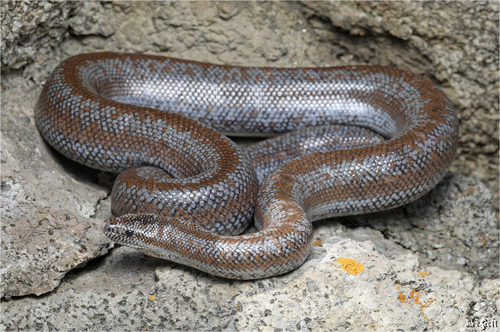
Lichanura orcutti Stejneger, 1889
Lichanura orcutti Stejneger, 1889
Lichanura orcutti (the rosy boa) is a striped heavy-bodied snake found in rocky arid habitats of the southwestern United States.
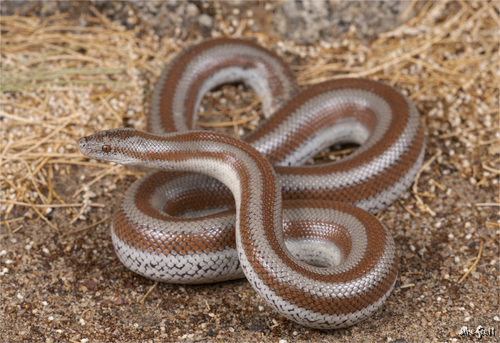
Lichanura trivirgata Cope, 1861
Lichanura trivirgata Cope, 1861
Lichanura trivirgata Cope, 1861, the desert rosy boa, is a small boid snake native to arid regions of the southwestern U.S. and northwestern Mexico that bears live young.
Start Exploring Nature Today
Download iNature for free. 10 identifications on us. No account needed. No credit card required.
Download Free on App Store
