Apidae
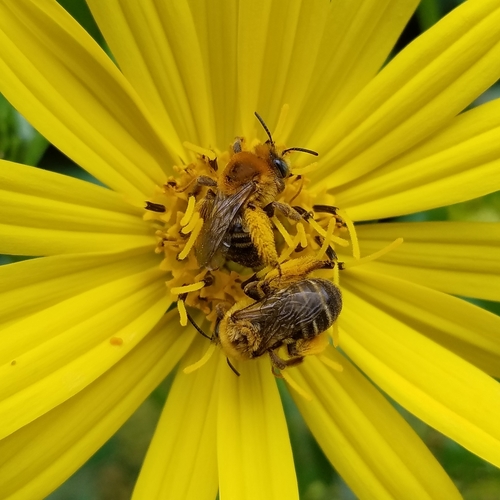
Melissodes trinodis Robertson, 1901
Melissodes trinodis Robertson, 1901
Melissodes trinodis is a North American long-horned bee species in the family Apidae.
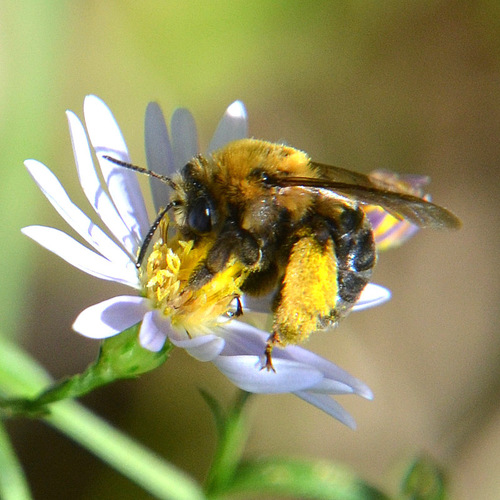
Melissodes dentiventris Smith, 1854
Melissodes dentiventris Smith, 1854
Melissodes dentiventris is a long-horned bee species in the Apidae family, found in North America.
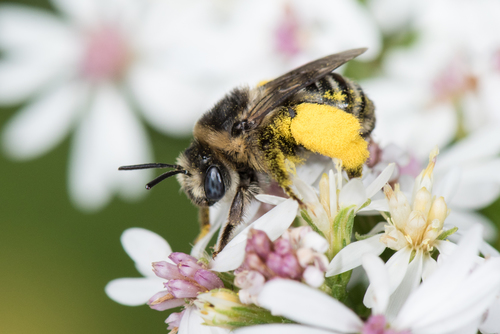
Melissodes druriellus (Kirby, 1802)
Melissodes druriellus (Kirby, 1802)
Melissodes druriellus, commonly called Drury's or rustic longhorn bee, is an Apidae long-horned bee species found in North America.
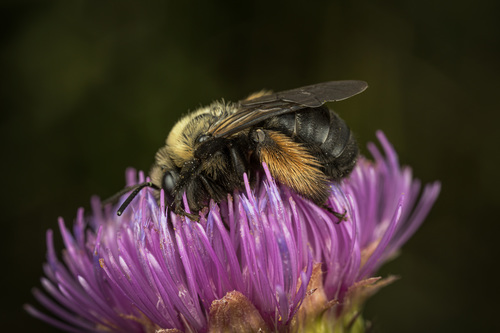
Melissodes desponsus Smith, 1854
Melissodes desponsus Smith, 1854
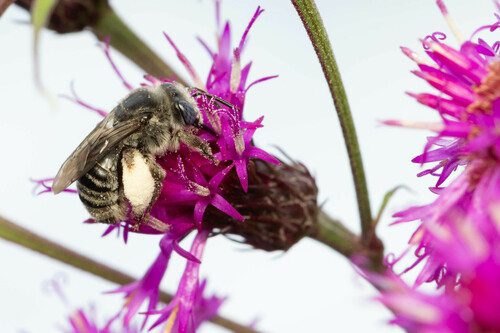
Melissodes desponsus is a solitary ground-nesting bee species that uses Cirsium thistles as host plants, found in the northeast US and southern Canada.
Melissodes denticulatus Smith, 1854
Melissodes denticulatus Smith, 1854
Melissodes denticulatus is a North American long-horned bee often found near ironweed, making it easier to identify.
Melissodes communis Cresson, 1879
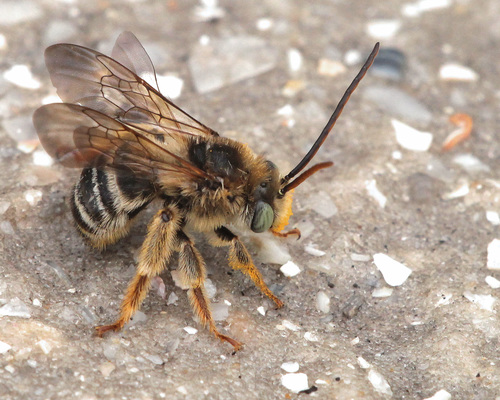
Melissodes communis Cresson, 1879
Melissodes communis, the common long-horned bee, is an Apidae species found in Central and North America.
Melissodes tepaneca Cresson, 1879
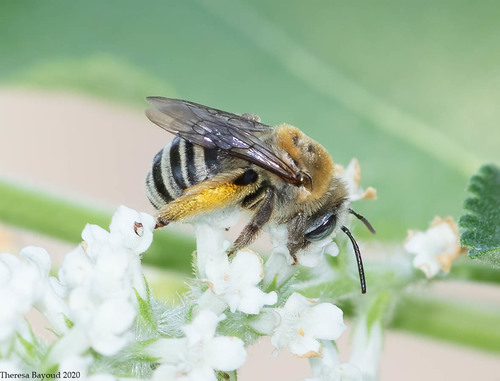
Melissodes tepaneca Cresson, 1879
Melissodes tepaneca is a species of long-horned bee in Apidae found in North and Central America.
Melissodes comptoides Robertson, 1898
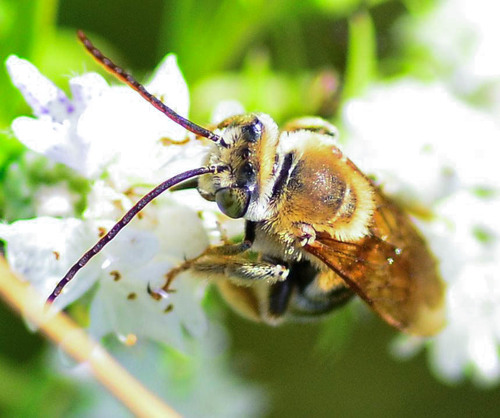
Melissodes comptoides Robertson, 1898
Melissodes comptoides, the brown-winged long-horned bee, is an Apidae long-horned bee species found in North America.
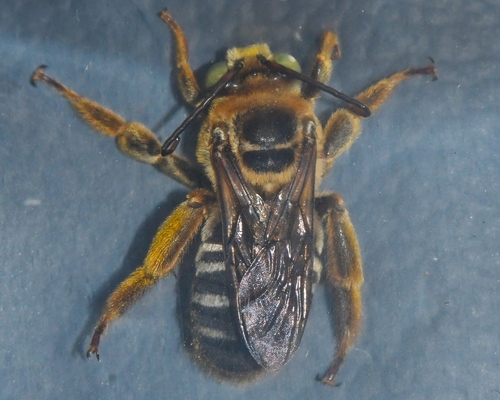
Svastra aegis (LaBerge, 1956)
Svastra aegis (LaBerge, 1956)
Svastra aegis is a long-horned bee species from the Apidae family found in North America.
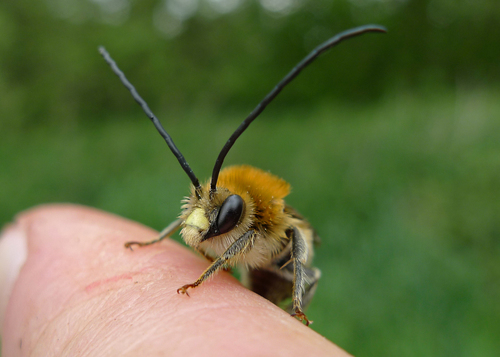
Eucera longicornis (Linnaeus, 1758)
Eucera longicornis (Linnaeus, 1758)
Eucera longicornis is a long-horned bee found across the Palearctic, with distinct sexual size differences in antennae.
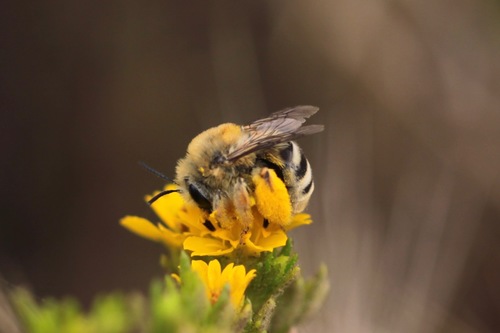
Tetraloniella pomonae (Cockerell, 1915)
Tetraloniella pomonae (Cockerell, 1915)
Tetraloniella pomonae is a long-horned bee species in the Apidae family, found in Central and North America.
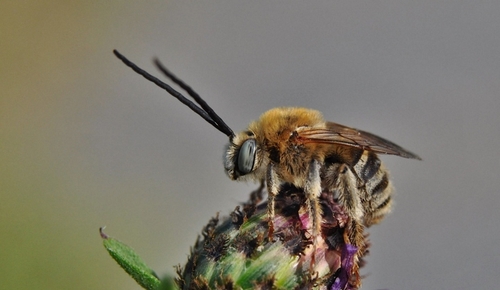
Tetraloniella dentata (Germar, 1839)
Tetraloniella dentata (Germar, 1839)
Tetraloniella dentata is a rare univoltine oligolectic bee found across North Africa and Eurasia that nests in soil.
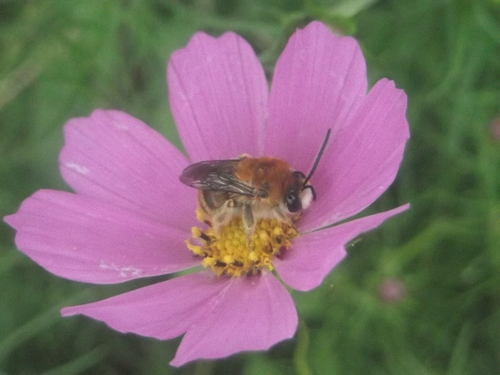
Syntrichalonia exquisita (Cresson, 1879)
Syntrichalonia exquisita (Cresson, 1879)
Syntrichalonia exquisita is a long-horned bee species from Apidae, found in Central and North America.
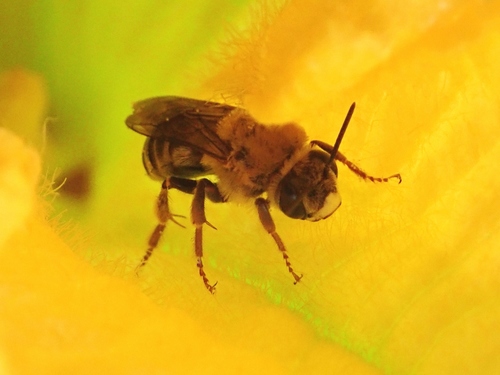
Xenoglossa strenua (Cresson, 1879)
Xenoglossa strenua (Cresson, 1879)
Xenoglossa strenua is a long-horned bee species in the Apidae family, found in Central and North America.
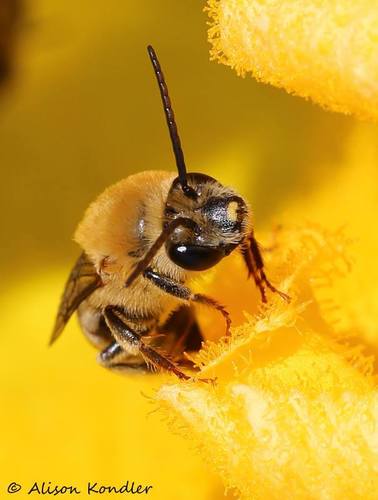
Peponapis pruinosa (Say, 1837)
Peponapis pruinosa (Say, 1837)
Peponapis pruinosa, the eastern cucurbit squash bee, is a North American solitary ground-nesting bee specialized as an important pollinator of Cucurbita crops.
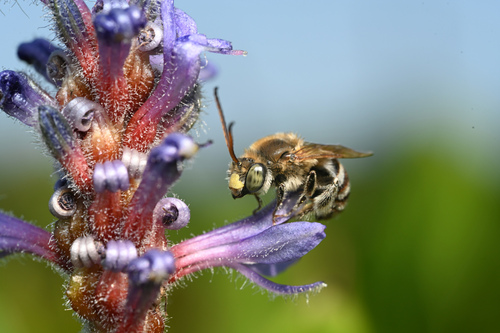
Florilegus condignus (Cresson, 1879)
Florilegus condignus (Cresson, 1879)
Florilegus condignus is an uncommon long-horned bee found across the Caribbean, Central America, and North America.
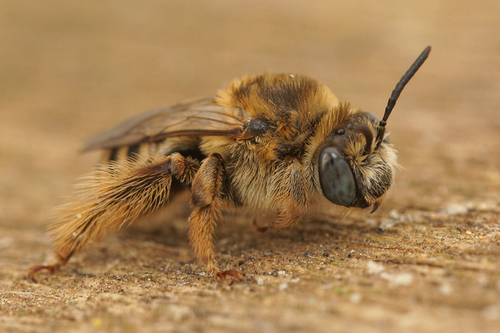
Tetralonia malvae (Rossi, 1790)
Tetralonia malvae (Rossi, 1790)
Tetralonia malvae, the Mallow longhorn, is an oligolectic Apidae bee distributed across western Eurasia to Central Asia.
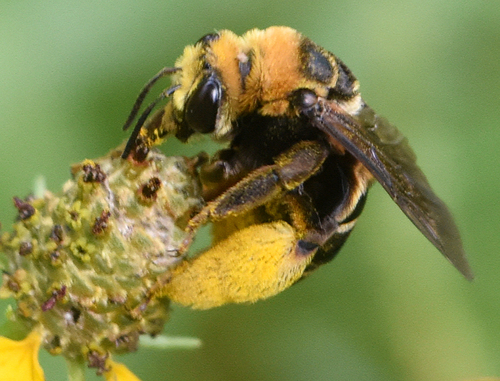
Svastra obliqua (Say, 1837)
Svastra obliqua (Say, 1837)
Svastra obliqua, the sunflower bee, is a long-horned bee species in Apidae found across North and Central America.
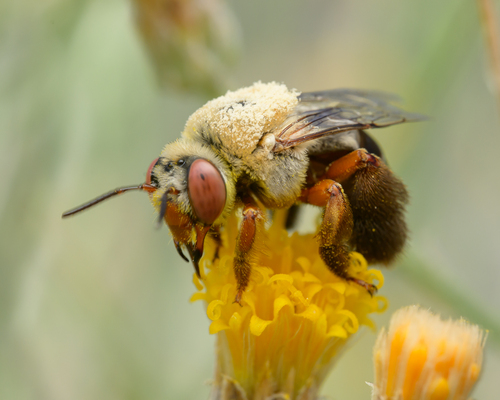
Centris rhodopus Cockerell, 1897
Centris rhodopus Cockerell, 1897
The red-legged centris (Centris rhodopus) is a centridine bee in the Apidae family, found in Central and North America.
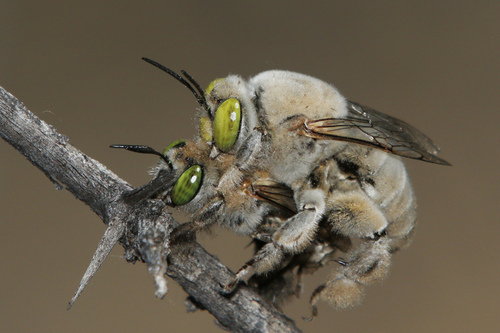
Centris pallida Fox, 1899
Centris pallida Fox, 1899
Centris pallida is a common North American desert bee classified as Least Concern, with distinct physical traits between sexes.
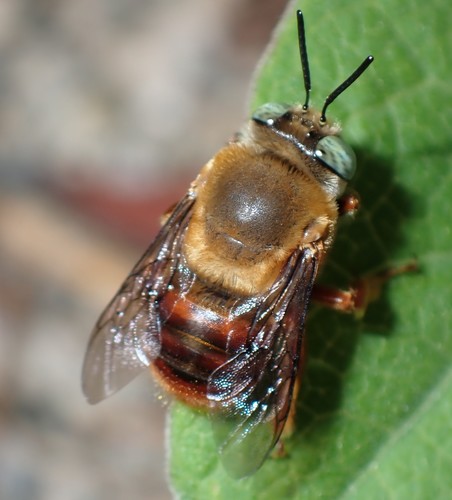
Centris errans Fox, 1899
Centris errans Fox, 1899
Centris errans, the wandering centris, is an apidae bee mostly found in southern Florida, the Caribbean, and North America.
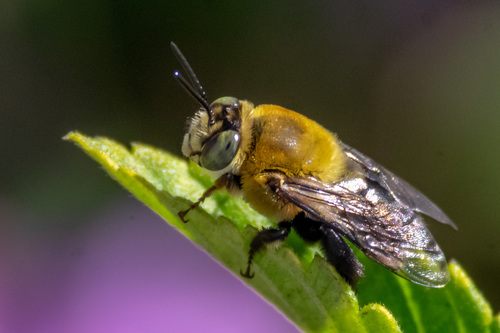
Centris nitida Smith, 1874
Centris nitida Smith, 1874
Centris nitida is a centridine bee in the Apidae family native to Central America, introduced to U.S. Florida.
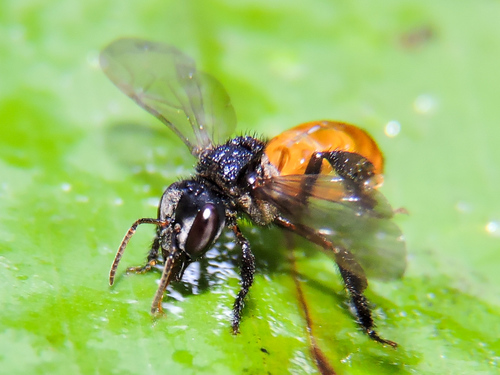
Trigona fulviventris Guérin-Méneville, 1844
Trigona fulviventris Guérin-Méneville, 1844
Trigona fulviventris is a large widely distributed Neotropical stingless bee with two described subspecies distinguished by metasomal color.
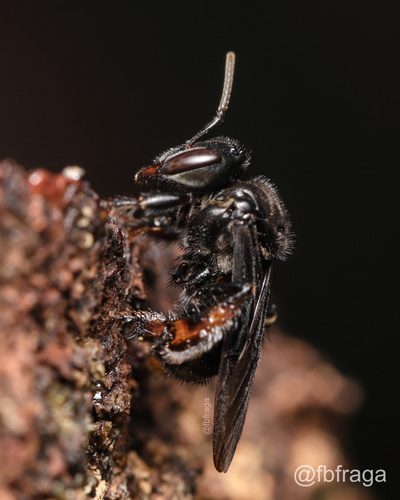
Trigona spinipes (Fabricius, 1793)
Trigona spinipes (Fabricius, 1793)
Trigona spinipes is a South American stingless bee that nests high in trees and acts as an effective pollinator of Nymphaea pulchella.
Related Families
Start Exploring Nature Today
Download iNature for free. 10 identifications on us. No account needed. No credit card required.
Download Free on App Store
