Anatidae — Duck Family
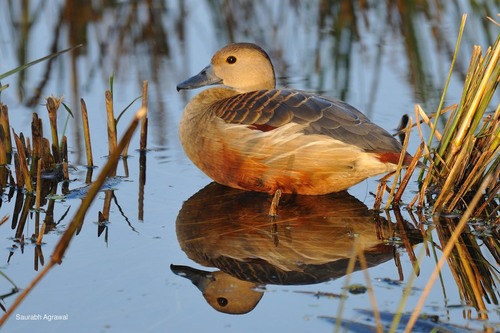
Dendrocygna javanica (Horsfield, 1821)
Dendrocygna javanica (Horsfield, 1821)
Dendrocygna javanica, the lesser whistling duck, is a common wetland duck found across South and Southeast Asia.
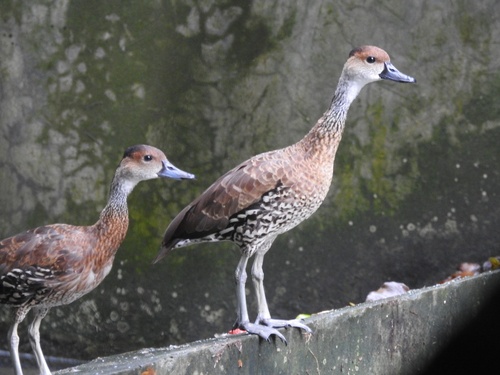
Dendrocygna arborea (Linnaeus, 1758)
Dendrocygna arborea (Linnaeus, 1758)
Dendrocygna arborea, the West Indian whistling duck, is a large whistling duck native to the West Indies that feeds on plant matter.
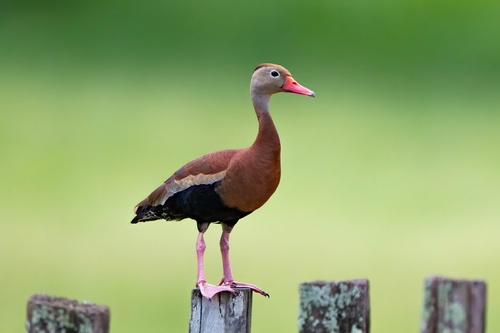
Dendrocygna autumnalis (Linnaeus, 1758)
Dendrocygna autumnalis (Linnaeus, 1758)
Black-bellied whistling duck (Dendrocygna autumnalis) is a mid-sized social waterfowl widely distributed across the Americas.
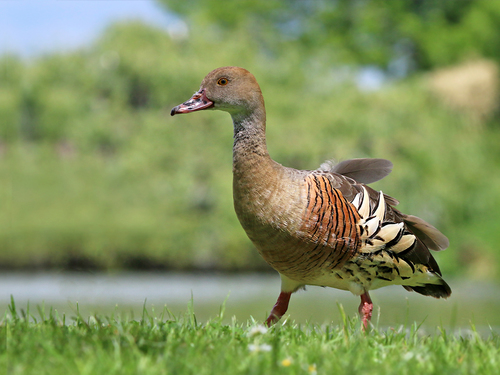
Dendrocygna eytoni (Eyton, 1838)
Dendrocygna eytoni (Eyton, 1838)
Dendrocygna eytoni is a long-necked duck found in Australia and New Guinea that lives in grasslands and savannas near water.
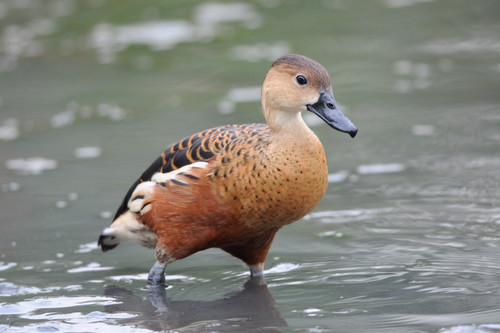
Dendrocygna arcuata (Horsfield, 1824)
Dendrocygna arcuata (Horsfield, 1824)
The wandering whistling duck (Dendrocygna arcuata) is a waterfowl named for its whistling calls and wing noise that lives in wetland habitats.
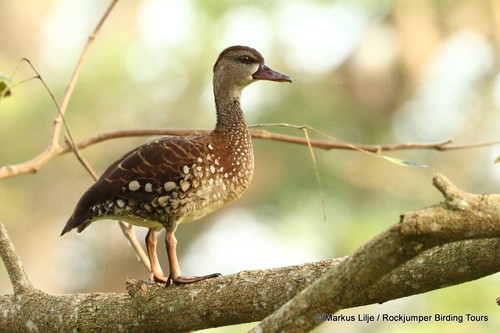
Dendrocygna guttata Schlegel, 1866
Dendrocygna guttata Schlegel, 1866
Dendrocygna guttata, the spotted whistling duck, is a small waterfowl species found across the Philippines, Indonesia, New Guinea, and Australia.
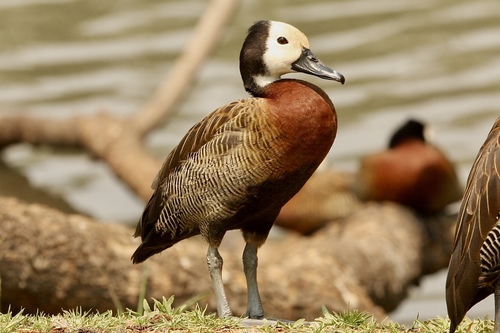
Dendrocygna viduata (Linnaeus, 1766)
Dendrocygna viduata (Linnaeus, 1766)
This is a description of the white-faced whistling duck, covering its appearance, distribution, habitat, and basic behavior.
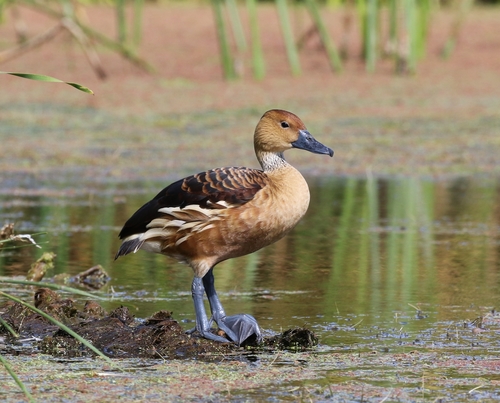
Dendrocygna bicolor (Vieillot, 1816)
Dendrocygna bicolor (Vieillot, 1816)
The fulvous whistling duck (Dendrocygna bicolor) is a brown long-legged duck with a large range across four continents, found in open lowland wetlands.
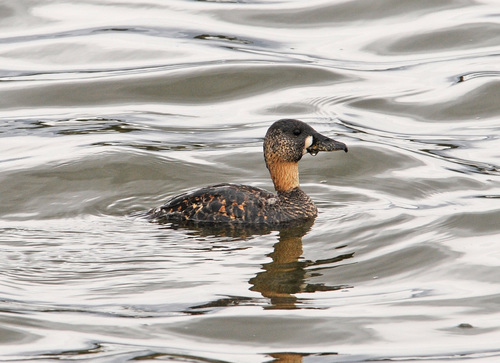
Thalassornis leuconotus Eyton, 1838
Thalassornis leuconotus Eyton, 1838
Thalassornis leuconotus, the white-backed duck, is a diving waterfowl native to Africa that inhabits still freshwater wetlands.
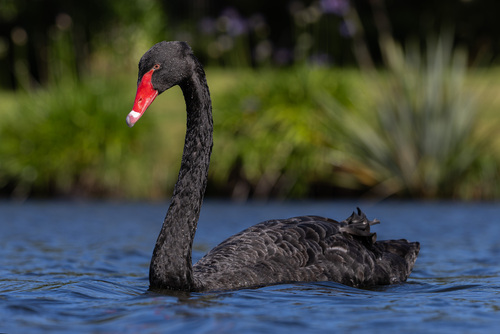
Cygnus atratus (Latham, 1790)
Cygnus atratus (Latham, 1790)
Cygnus atratus, the black swan, is a large nomadic water bird native to Australia, with distinct black plumage and monogamous breeding habits.

Cygnus buccinator Richardson, 1831
Cygnus buccinator Richardson, 1831
This page describes the physical traits, range, and population history of the trumpeter swan, the largest extant waterfowl native to North America.
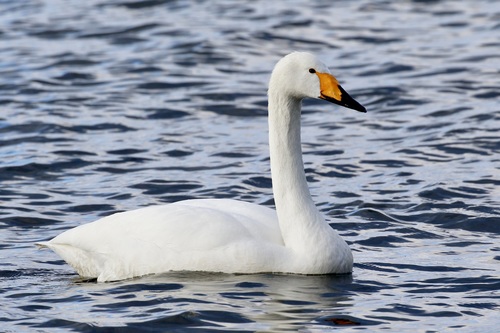
Cygnus cygnus (Linnaeus, 1758)
Cygnus cygnus (Linnaeus, 1758)
Cygnus cygnus, the whooper swan, is a large migratory waterfowl that uses signals to coordinate flock flight takeoffs.
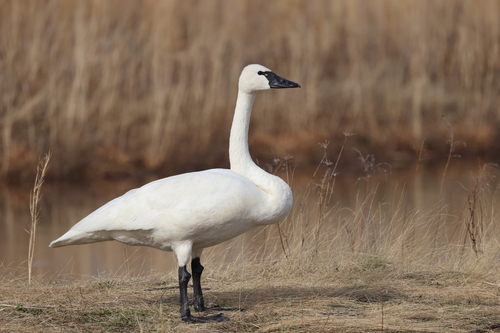
Cygnus columbianus (Ord, 1815)
Cygnus columbianus (Ord, 1815)
Cygnus columbianus, the tundra swan, is the smallest Holarctic swan, with two migratory subspecies breeding in Arctic tundra.
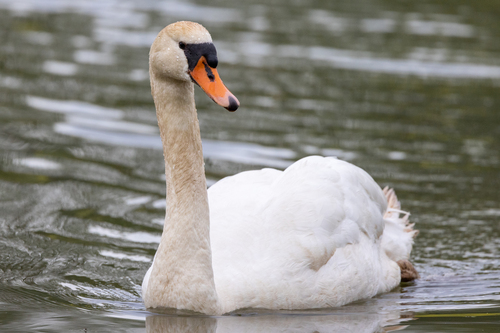
Cygnus olor (J.F.Gmelin, 1789)
Cygnus olor (J.F.Gmelin, 1789)
Cygnus olor, the mute swan, is a large heavy white waterfowl native to Eurasia, naturalized in North America.
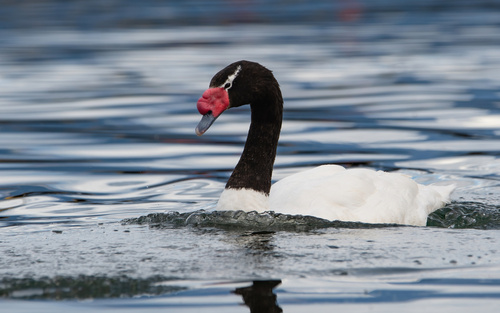
Cygnus melancoryphus (Molina, 1782)
Cygnus melancoryphus (Molina, 1782)
Black-necked swan is the largest native South American waterfowl, described here with measurements, appearance, distribution and habitat.
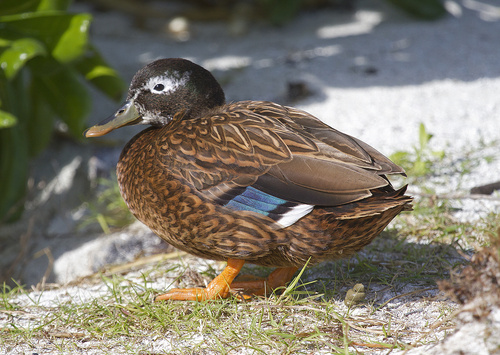
Anas laysanensis Rothschild, 1892
Anas laysanensis Rothschild, 1892
Anas laysanensis, the Laysan duck, is a flightless during molt duck with distinct plumage and nesting habits on Pacific islands.
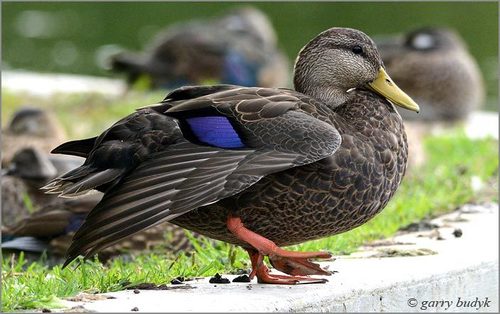
Anas rubripes Brewster, 1902
Anas rubripes Brewster, 1902
The American black duck is a North American dabbling duck that resembles darker female mallards and lives in a wide range of wetlands.
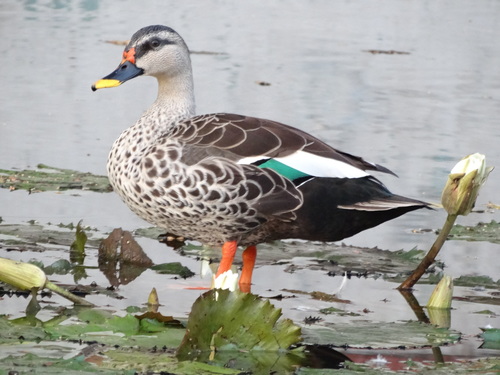
Anas poecilorhyncha J.R.Forster, 1781
Anas poecilorhyncha J.R.Forster, 1781
Anas poecilorhyncha J.R.Forster, 1781, the spot-billed duck, is a mallard-sized duck resident in South Asian freshwater wetlands.
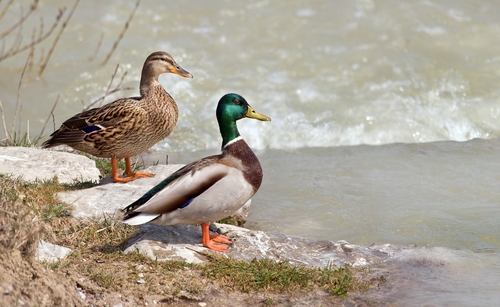
Anas platyrhynchos Linnaeus, 1758
Anas platyrhynchos Linnaeus, 1758
The mallard (Anas platyrhynchos) is a medium-sized dabbling duck with a broad global distribution, used by humans as food.
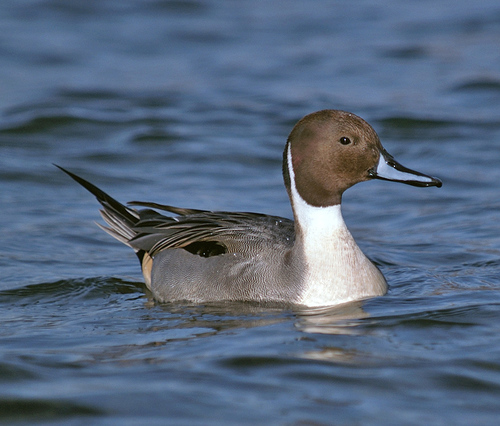
Anas acuta Linnaeus, 1758
Anas acuta Linnaeus, 1758
Anas acuta, the northern pintail, is a distinctively shaped dabbling duck with a wide Holarctic breeding range.
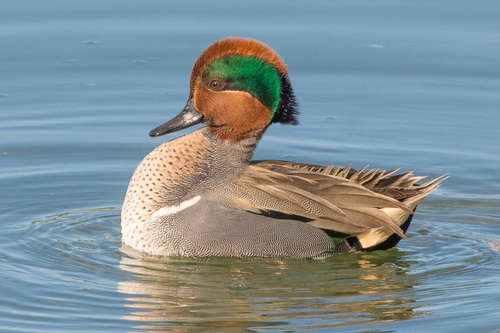
Anas crecca Linnaeus, 1758
Anas crecca Linnaeus, 1758
Anas crecca (Eurasian teal) is a small dabbling duck breeding across the Palearctic, classified as Least Concern.
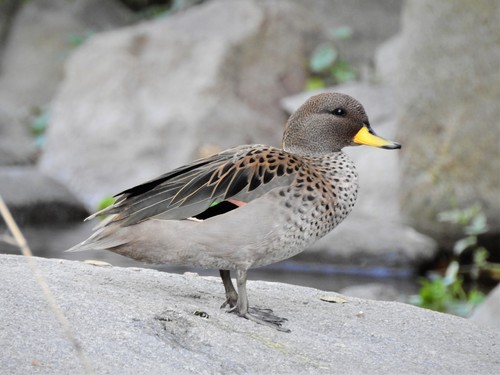
Anas flavirostris Vieillot, 1816
Anas flavirostris Vieillot, 1816
Anas flavirostris Vieillot, 1816 is a duck with a distinct yellow bill, similar to but smaller than the yellow-billed pintail.
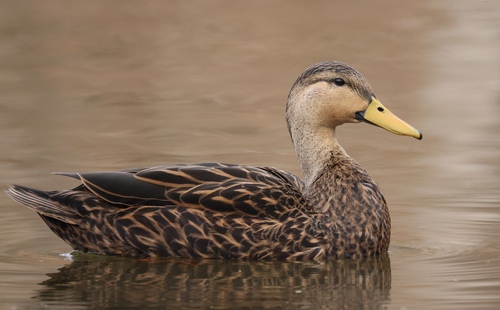
Anas fulvigula Ridgway, 1874
Anas fulvigula Ridgway, 1874
Anas fulvigula, the mottled duck, is a non-migratory North American dabbling duck with distinct plumage markings.
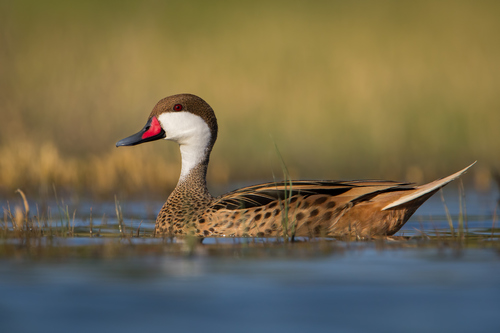
Anas bahamensis Linnaeus, 1758
Anas bahamensis Linnaeus, 1758
Anas bahamensis is a brown, white-cheeked pintail duck found across the Caribbean, South America, and the Galápagos Islands.
Related Families
Start Exploring Nature Today
Download iNature for free. 10 identifications on us. No account needed. No credit card required.
Download Free on App Store
