Accipitridae — Hawk Family

Circaetus gallicus (Gmelin, 1788)
Circaetus gallicus (Gmelin, 1788)
Circaetus gallicus, the short-toed snake eagle, is a large Old World raptor that primarily hunts snakes over open habitats.
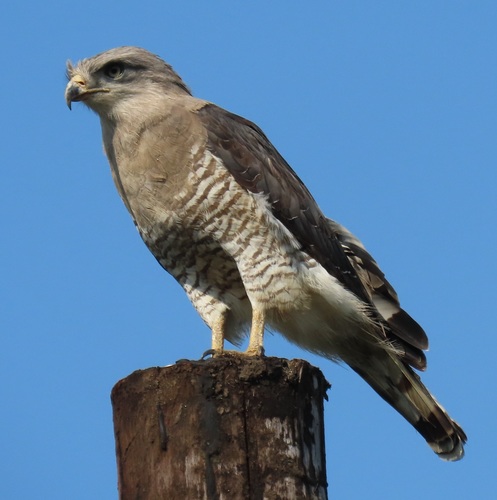
Circaetus fasciolatus Kaup, 1847
Circaetus fasciolatus Kaup, 1847
Circaetus fasciolatus, the southern banded snake eagle, is a small stocky eagle native to eastern African forests.
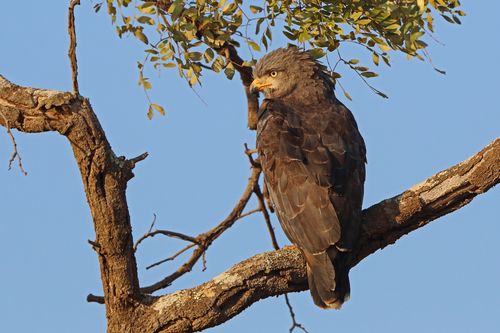
Circaetus cinerascens J.W.Von Muller, 1851
Circaetus cinerascens J.W.Von Muller, 1851
Circaetus cinerascens, the western banded snake eagle, is an uncommon patchily distributed African raptor that preys mostly on reptiles and amphibians.
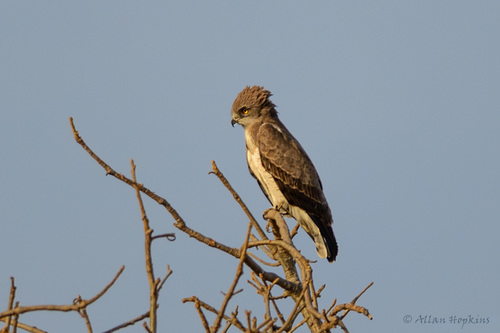
Circaetus beaudouini J.Verreaux & Des Murs, 1862
Circaetus beaudouini J.Verreaux & Des Murs, 1862
Circaetus beaudouini is a large snake eagle found across a narrow band of West and East Africa that makes seasonal nomadic movements.
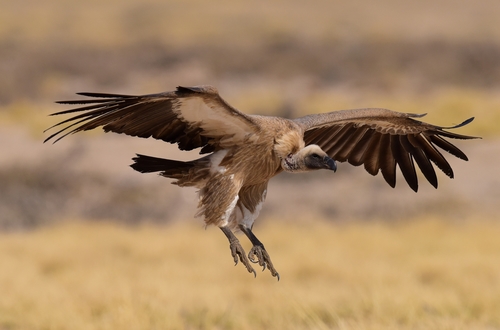
Gyps africanus Salvadori, 1865
Gyps africanus Salvadori, 1865
Gyps africanus, the white-backed vulture, is a common medium-sized African vulture that has recently undergone rapid population declines.
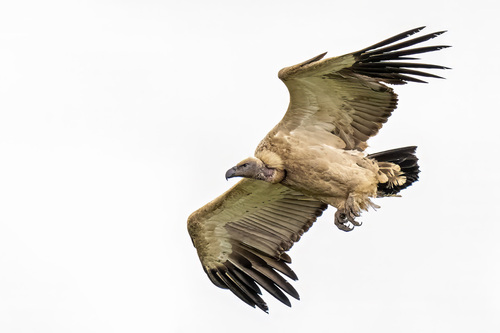
Gyps coprotheres (J.R.Forster, 1798)
Gyps coprotheres (J.R.Forster, 1798)
Gyps coprotheres, the Cape vulture, is a large African Old World vulture and obligate carrion scavenger.
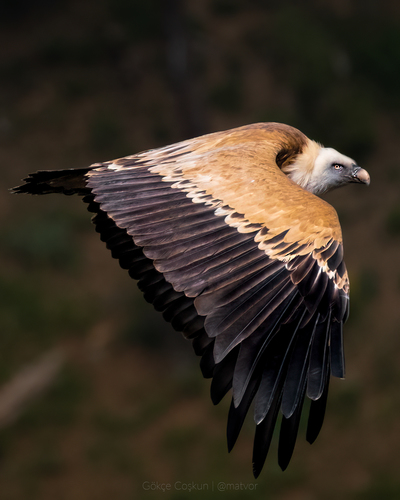
Gyps fulvus (Hablizl, 1783)
Gyps fulvus (Hablizl, 1783)
Gyps fulvus, the Eurasian griffon vulture, is a large resident Old World vulture found across parts of Eurasia and North Africa.
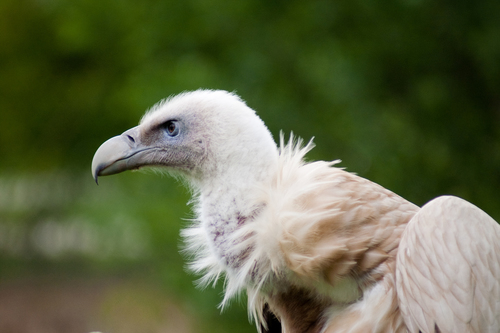
Gyps himalayensis Hume, 1869
Gyps himalayensis Hume, 1869
Gyps himalayensis, the Himalayan vulture, is a large Old World vulture native to the Himalayas and Tibetan Plateau.
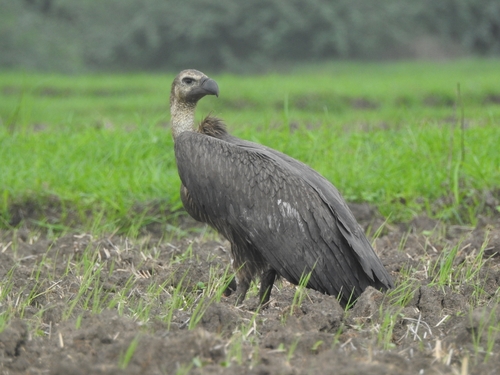
Gyps bengalensis (Gmelin, 1788)
Gyps bengalensis (Gmelin, 1788)
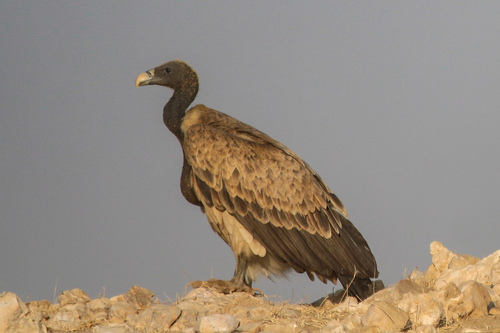
This is the white-rumped vulture (Gyps bengalensis), a small but large Gyps scavenging vulture once common in South and Southeast Asia.
Gyps indicus (Scopoli, 1786)
Gyps indicus (Scopoli, 1786)
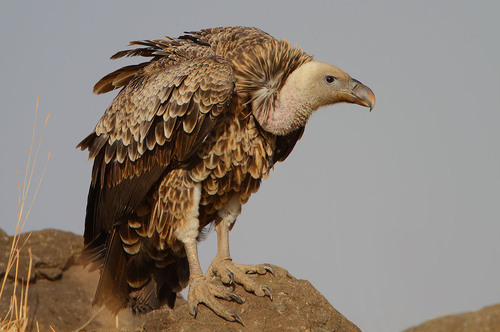
Gyps indicus, the Indian vulture, is a medium-sized scavenging vulture native to South Asia with specific behavioral and breeding traits.
Gyps rueppellii (A.E.Brehm, 1852)
Gyps rueppellii (A.E.Brehm, 1852)
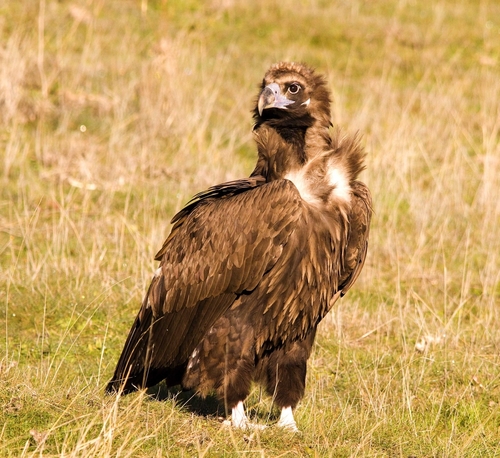
Gyps rueppellii, or Rüppell's vulture, is a large high-flying African vulture with documented flight at over 11,000 meters.
Aegypius monachus (Linnaeus, 1766)
Aegypius monachus (Linnaeus, 1766)
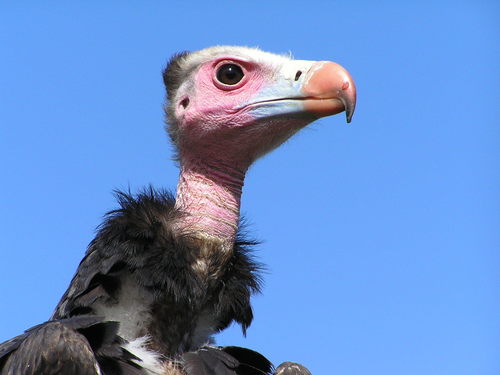
Aegypius monachus, the cinereous vulture, is a large Eurasian accipitrid that inhabits remote mountainous areas and can fly at very high altitude.
Trigonoceps occipitalis (Burchell, 1824)
Trigonoceps occipitalis (Burchell, 1824)
Trigonoceps occipitalis, the white-headed vulture, is a reversed-dimorphic African vulture that often preys on live animals.
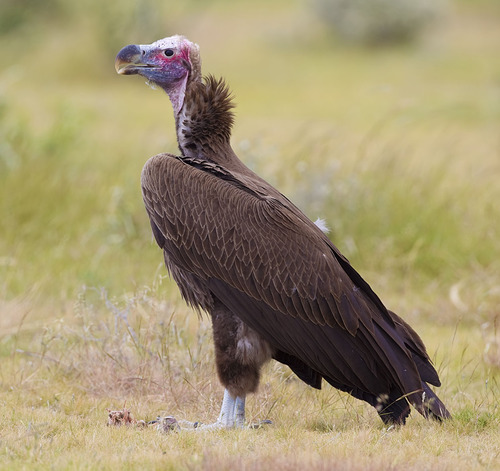
Torgos tracheliotos (J.R.Forster, 1796)
Torgos tracheliotos (J.R.Forster, 1796)
Torgos tracheliotos, the lappet-faced vulture, is a large accipitrid found across parts of Africa and the Arabian Peninsula.
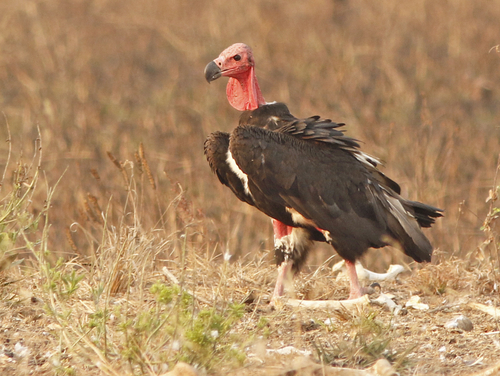
Sarcogyps calvus (Scopoli, 1786)
Sarcogyps calvus (Scopoli, 1786)
Sarcogyps calvus, the red-headed vulture, is a medium-sized vulture now mainly found in northern India.
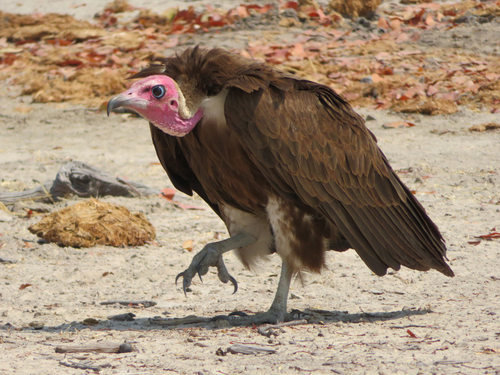
Necrosyrtes monachus (Temminck, 1823)
Necrosyrtes monachus (Temminck, 1823)
The hooded vulture (Necrosyrtes monachus) is a critically endangered Old World vulture native to sub-Saharan Africa, a scavenger often associated with humans.
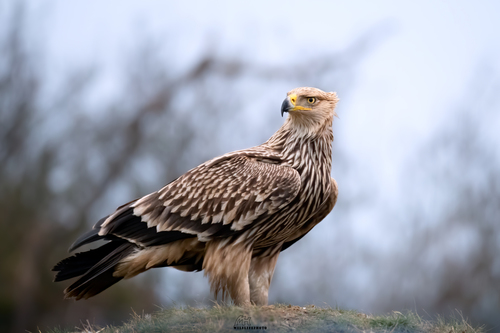
Aquila heliaca Savigny, 1809
Aquila heliaca Savigny, 1809
The eastern imperial eagle (Aquila heliaca) is a large raptor with reverse sexual dimorphism, found in Europe, Asia, and Africa. It has a varied diet, hunts on the ground, and is a partial migrant with a wide breeding and wintering range.
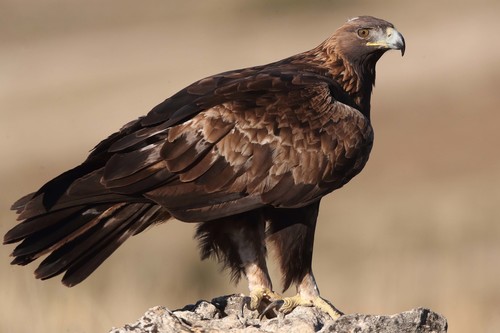
Aquila chrysaetos (Linnaeus, 1758)
Aquila chrysaetos (Linnaeus, 1758)
The golden eagle (Aquila chrysaetos) is a widely distributed Northern Hemisphere bird of prey with six recognized extant subspecies.
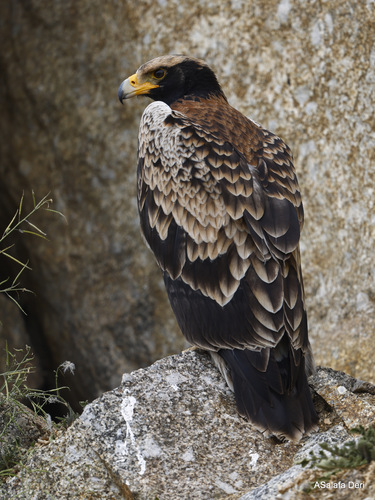
Aquila verreauxii Lesson, 1831
Aquila verreauxii Lesson, 1831
Verreaux's eagle is a very large specialized African eagle, that hunts primarily rock hyraxes in rocky dry habitats.
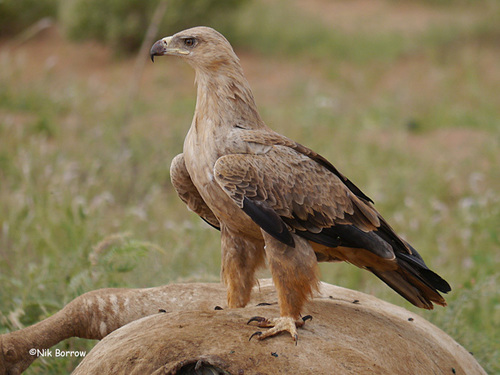
Aquila rapax (Temminck, 1828)
Aquila rapax (Temminck, 1828)
Aquila rapax, the tawny eagle, is a polymorphic large raptor widespread across open dry habitats in Africa and South Asia.
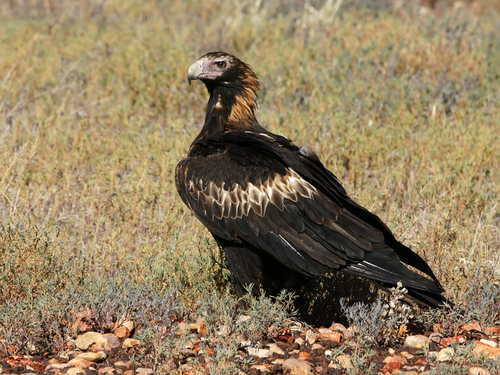
Aquila audax (Latham, 1802)
Aquila audax (Latham, 1802)
Aquila audax, the wedge-tailed eagle, is a large dark raptor found across Australia and southern New Guinea in many habitat types.
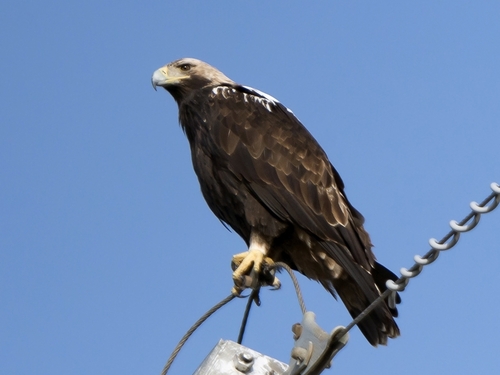
Aquila adalberti C.L.Brehm, 1861
Aquila adalberti C.L.Brehm, 1861
The Spanish imperial eagle (Aquila adalberti) is a large Iberian apex raptor that preys heavily on rabbits.
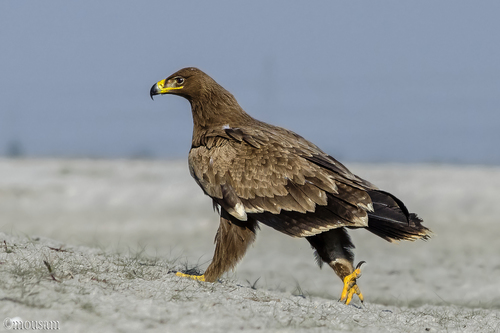
Aquila nipalensis Hodgson, 1833
Aquila nipalensis Hodgson, 1833
Aquila nipalensis (steppe eagle) is a large dark brown migratory eagle breeding in Eurasian steppe and wintering in Africa and south Asia.
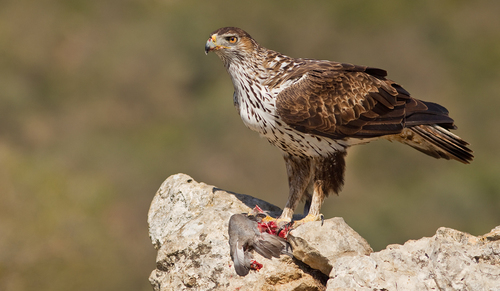
Aquila fasciata Vieillot, 1822
Aquila fasciata Vieillot, 1822
Bonelli's eagle (Aquila fasciata) has distinct adult and juvenile plumages, a spotty global distribution, prefers arid habitats, lives solitarily or in pairs, and is a powerful predator with a wide prey spectrum and a 28.5% average hunting success rate.
Related Families
Start Exploring Nature Today
Download iNature for free. 10 identifications on us. No account needed. No credit card required.
Download Free on App Store
