About Falco moluccensis (Bonaparte, 1850)
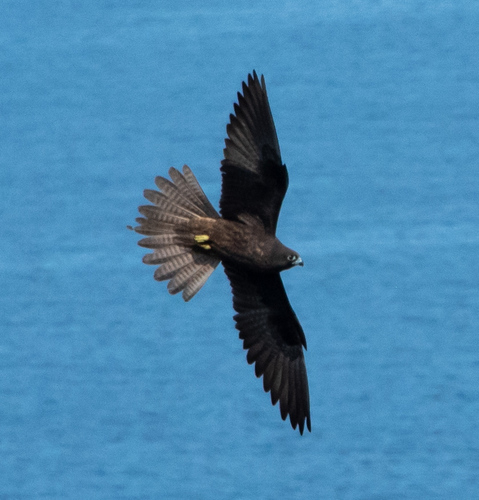
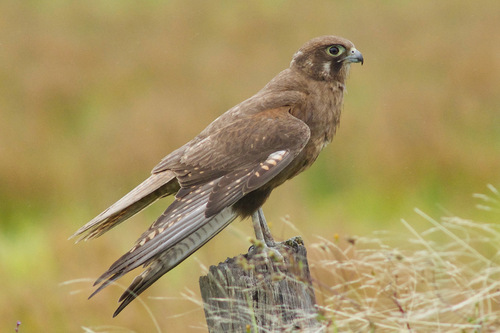
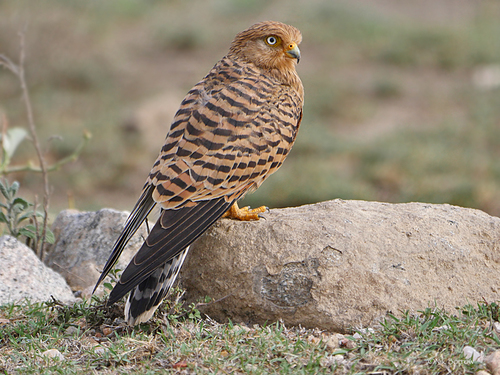
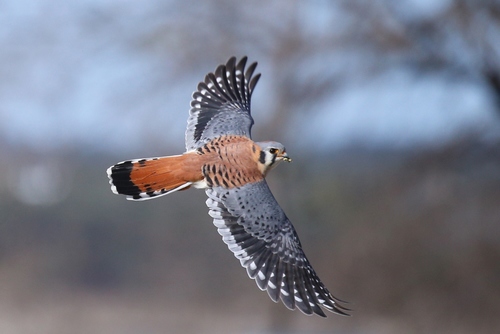
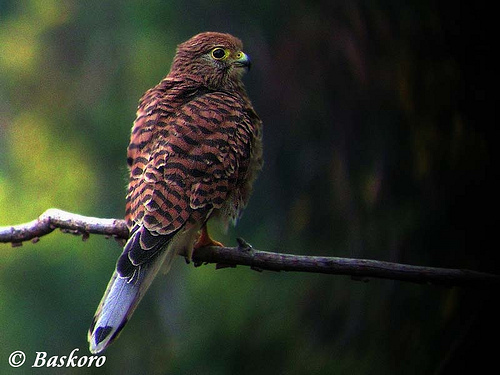
Spotted kestrels (Falco moluccensis) measure 26–32 cm (10–12.5 in) from head to tail, with a wingspan of 59–71 cm (23–28 in). On average, they weigh 162 g (5.7 oz). Sexual dimorphism in size and plumage is less pronounced in this species than in the common kestrel. Males have grey tails with one broad subterminal band and white tips. Females also have grey tails with white tips, but have 9 dark bands instead of one broad subterminal band. Juveniles are very similar in appearance to adult females, but are darker and more heavily marked. The eggs of spotted kestrels resemble those of the common kestrel, and their egg colour and shape is similar to that of the Oriental hobby (Falco severus).
This species is distributed throughout Indonesia, across Wallacea and Java. It inhabits grasslands with scattered trees, lightly wooded cultivation areas, and the edges of primary and tall secondary forest. It occasionally penetrates forests along logging roads, sometimes lives in clearings within forested areas, and has also been recorded living in areas of human habitation. Spotted kestrels likely have small habitat ranges, and move between areas across wet and dry seasons. This inference is drawn from comparing the movements of spotted kestrels to those of their closest relative, the Nankeen Kestrel (F. cenchroides). Both species are more sedentary than the common kestrel (F. tinnunculus).
Little is known about the breeding habits of the spotted kestrel. Pre-breeding behaviour has been observed in June and July, during the dry season. One instance of breeding was recorded in August, and breeding behaviour has also been observed in December and January, during the wet season. It is possible that spotted kestrels breed during both seasons, but more research is needed to confirm this.