About Exidia nigricans (With.) P.Roberts
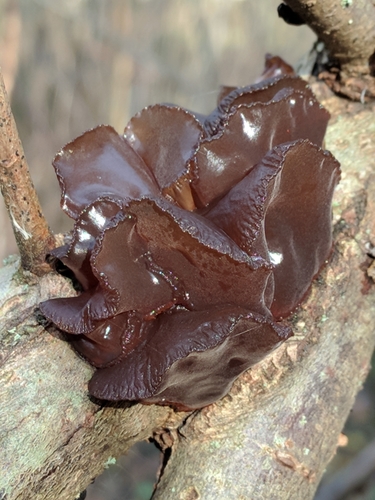
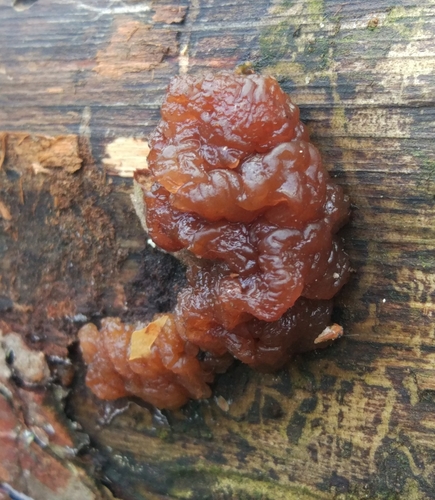
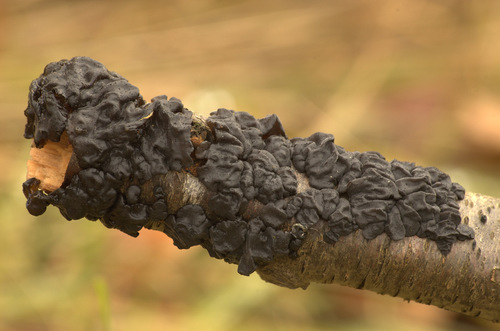
Exidia nigricans produces dark sepia to blackish, rubbery-gelatinous fruit bodies that are button-shaped, measuring 1–2 centimetres (1⁄2–3⁄4 inch) across. These fruit bodies grow in clusters and quickly merge together to form spreading, irregular masses that can reach up to 20 cm (8 in) across. The upper spore-bearing surface of the fruit bodies is shiny and covered in small pimples or pegs. Each individual fruit body attaches to wood at its base, and this species produces a white spore print. Exidia nigricans is a wood-rotting species, most commonly found growing on dead attached branches of many types of broadleaf trees. It can survive for some time on fallen branches and fallen logs. Fruiting typically occurs in autumn and winter. This species is widely distributed across the Northern Hemisphere, including both Europe and North America. In North America, it can be found fruiting from November to March along the west coast, and can fruit year round in other parts of the region.