About Evechinus chloroticus (Valenciennes, 1846)
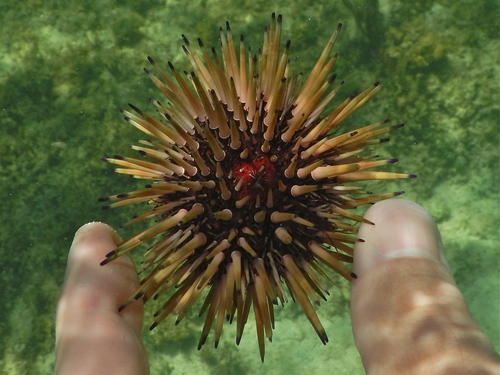
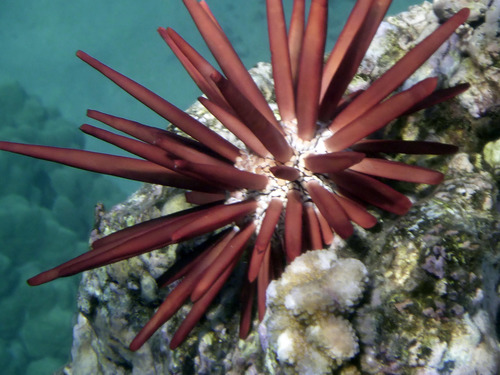
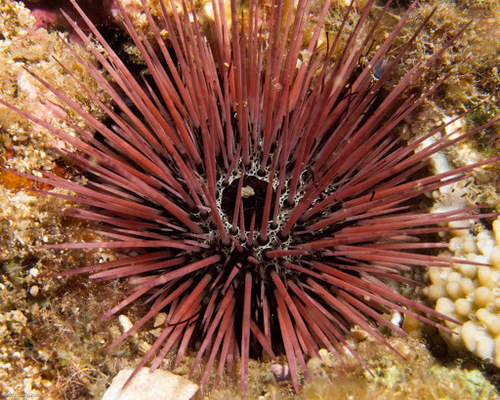
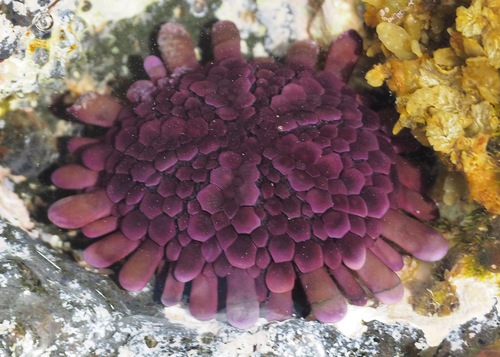
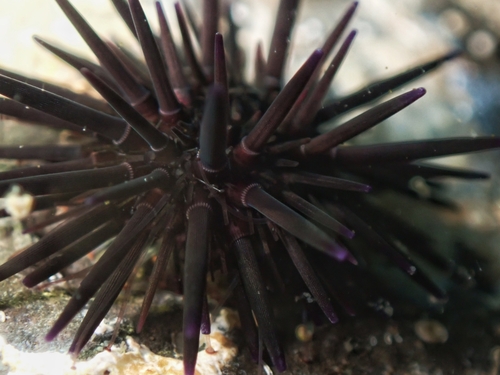
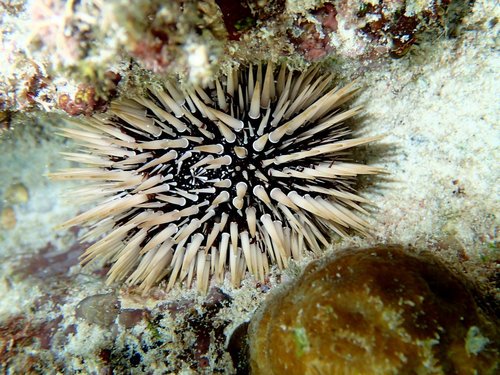
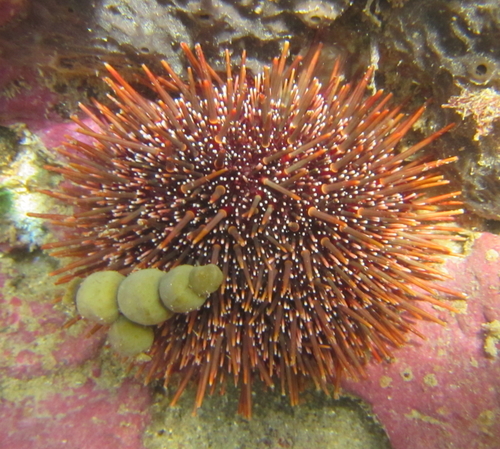
Evechinus chloroticus, also known as kina, is oval-shaped and covered in many spines that it uses for protection. Between these spines are a number of tube feet that help kina move along the seafloor. This sea urchin is found all around New Zealand in shallow waters down to 12–14 metres deep, with intertidal populations present in the northern regions of both the North and South Islands. It prefers areas with moderate wave action. In northern New Zealand, it occurs mostly on rocky seafloor, and can also be found in areas with sandy seafloor. It is also found in high, abundant densities throughout the fiords of the South Island. Individuals less than 1 cm in diameter attach to the undersides of both intertidal and subtidal rocks. Individuals between 1 and 4 cm in diameter are found under intertidal and subtidal rocks, or within small depressions in rocks. Once individuals reach 4 cm in diameter, they migrate into open areas. This species has an annual breeding cycle. It reaches sexual maturity when it is between 3.5 and 7.5 cm in diameter, with the size at maturity varying between populations. Gonads become ripe starting in October, and spawning occurs from November to February. Swimming larvae finish development in the water column over 4 to 6 weeks; studies of larval development note that development in a laboratory setting can take between 22 and 30 days. Larvae of E. chloroticus settle on substrates covered by coralline algal species, including Corallina officinalis, as well as on artificial surfaces. High sedimentation loads in the water column, such as those linked to residential construction, have a negative impact on settling sea urchins. In its first year of life, E. chloroticus grows between 0.8 and 1 cm in diameter, and wild populations have a reported annual growth rate of 1–2 cm in diameter.