About Euzophera pinguis Haworth, 1811
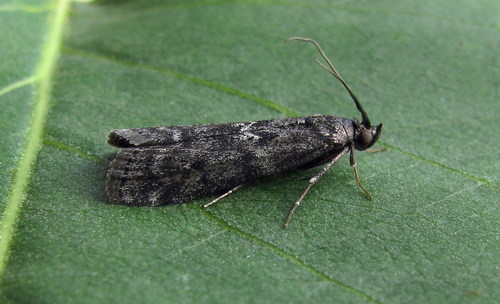
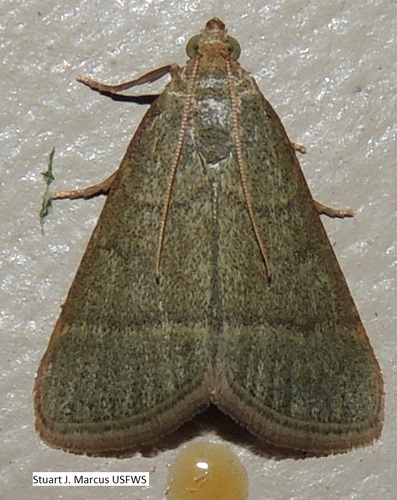
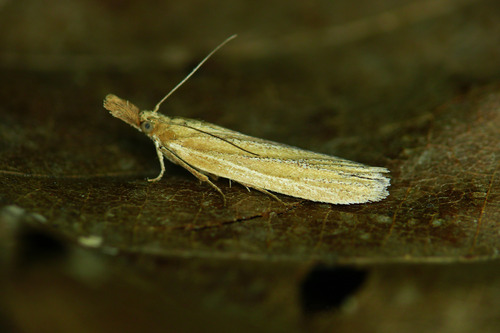
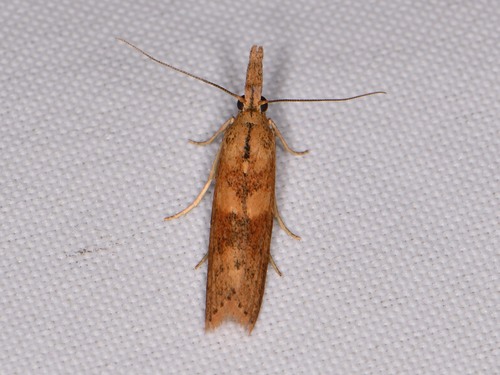
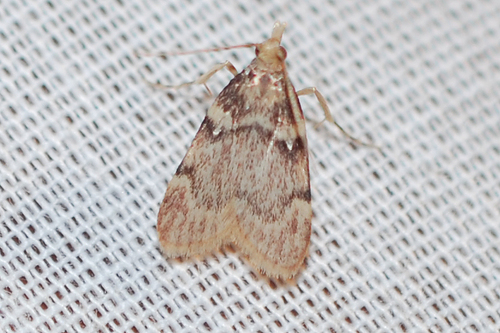
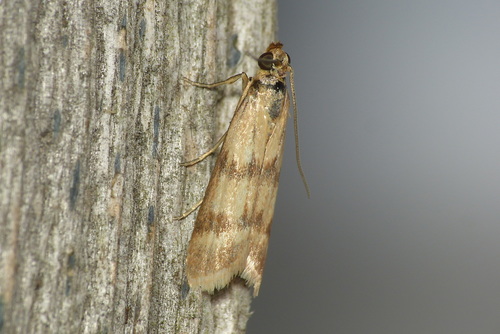
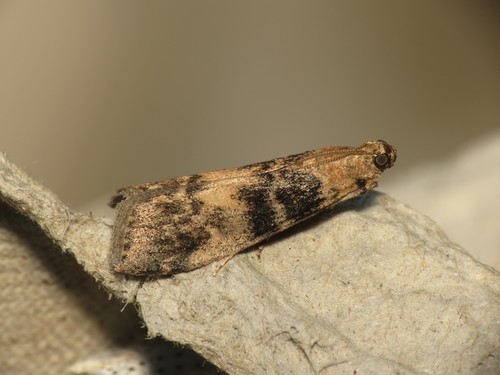
Euzophera pinguis, commonly known as the tabby knot-horn, is a moth species belonging to the family Pyralidae. It was first described by Adrian Hardy Haworth in 1811, and it is found in Europe. This moth has a wingspan ranging from 23 to 28 mm. Its forewings are light brownish-ochreous, with a slight reddish tint and scattered pale and a small number of blackish scales. The lines on the forewings are barely paler than the surrounding wing tissue: the first line is rather curved, bordered anteriorly by a broad blackish band and posteriorly by thick blackish suffusion; the second line is angulated in the middle and is strongly edged with dark fuscous. The terminal area of the forewings is more heavily shaded with dark fuscous. The hindwings are light fuscous. The larva of Euzophera pinguis is pinkish ochreous, with a darker, interrupted dorsal line. It has a lateral spot on the third and twelfth segments, each ringed with reddish-brown. The larva's head and the dorsal plate on the second segment are reddish-brown with blackish markings. Larvae develop within the bark of ash trees, from September to June, and may sometimes take two years to complete development. Adult moths are on wing from July to August, with flight timing varying by location. The larvae feed exclusively on Fraxinus excelsior.