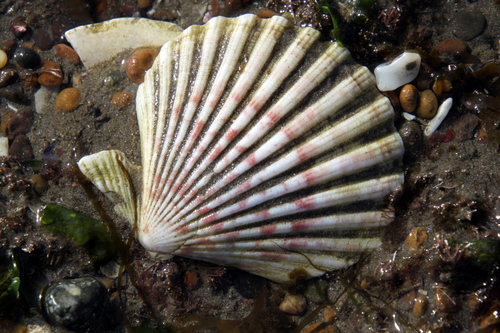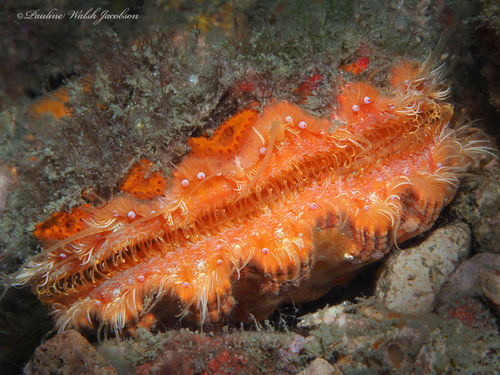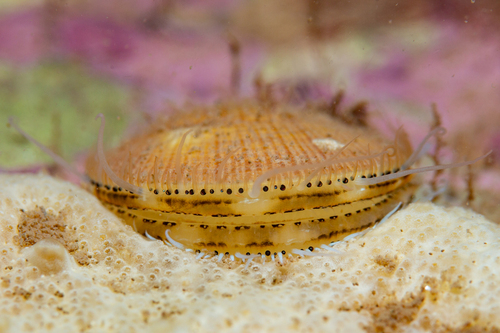
About Euvola ziczac (Linnaeus, 1758)
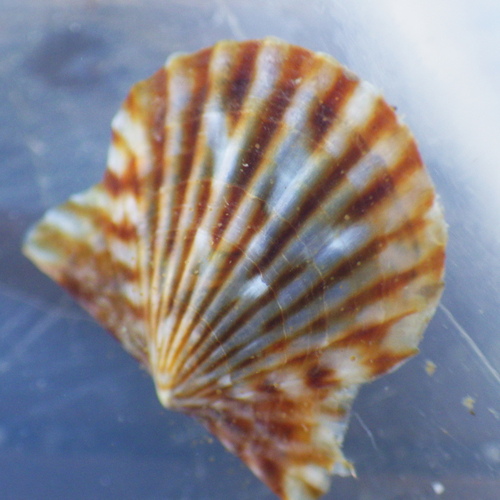
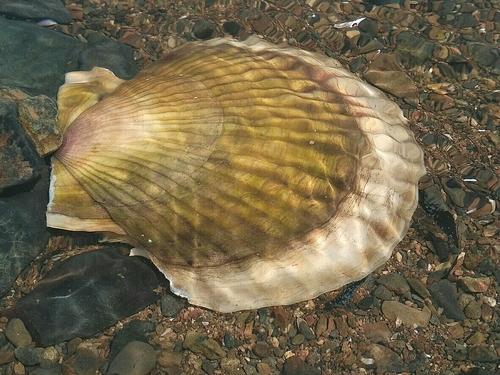
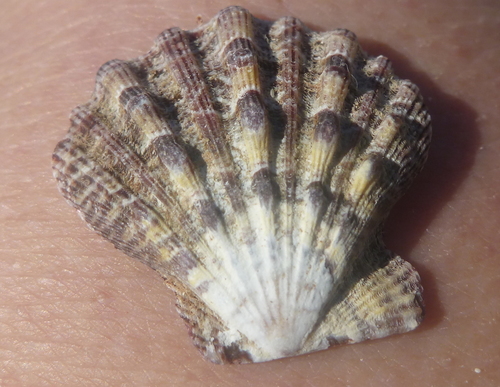
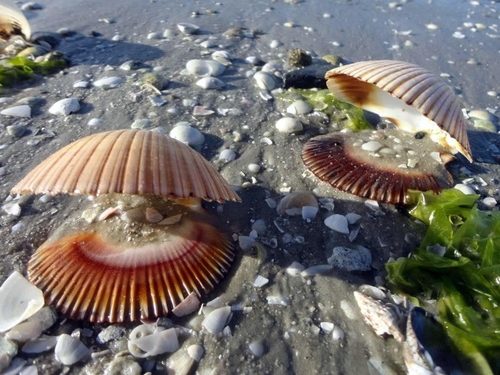
Euvola ziczac, commonly known as the zigzag scallop, is a species of bivalve mollusc that belongs to the family Pectinidae. Its geographic range extends along the Atlantic coast of North America, from North Carolina south to the West Indies and Bermuda. Historically, zigzag scallops occurred in multiple areas around Bermuda, including Harrington Sound, where they were once a popular catch for recreational fishers. Unregulated overfishing through the 1970s severely reduced the Bermudian population, such that a series of 1987 SCUBA surveys conducted around the island only found two individual scallops at two separate sites. Beyond Bermuda, this species can also be found off Cape Hatteras in North Carolina, throughout the entire Gulf of Mexico and Caribbean, and as far south as Santa Catarina, Brazil. Zigzag scallops live in shallow nearshore waters between two and seven meters deep, and form dense beds in areas with sandy substrate. As a group, scallops are specifically adapted to handle the temperature and salinity fluctuations that are characteristic of life in the intertidal zone. Individual zigzag scallops bury themselves in surrounding sediment, leaving only their tentacles projecting above the sediment surface; these tentacles are typically the only part of the animal visible to outside observers. The concave upper valve of each scallop holds a thin layer of sediment, which is thought to block fouling organisms from colonizing the shell. Without this protective layer, a wide range of fouling organisms can colonize scallop shells, including algae, barnacles, polychaete tube worms, sponges, hydrozoans, bryozoans, and even other molluscs. Zigzag scallops are a hermaphroditic species that reproduces via broadcast spawning. In Bermuda, local populations are called "dribble spawners" because while all members of the population spawn within the same general time period each year, no synchronous mass spawning events take place. Instead, individual scallops spawn at slightly different times within the same breeding season. Spawning usually happens twice each year, though the exact timing of spawning periods varies between regions. Small, D-shaped planktonic larvae develop within two days after fertilization and feed on phytoplankton. In total, the larval stage of the zigzag scallop lasts around 12 days. After this period, larvae settle to the substrate and become juvenile scallops, which are called "spat". Spat share the same general body form as adult zigzag scallops. They display a wide variety of body colors, which darken as the juveniles mature into adults.