About Eutypella parasitica R.W.Davidson & R.C.Lorenz
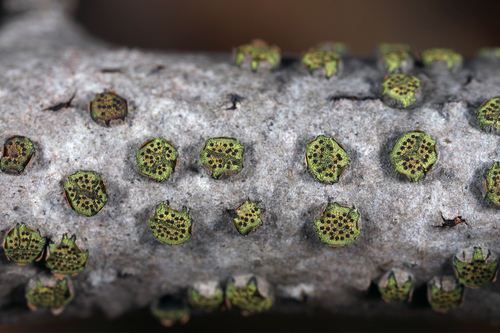
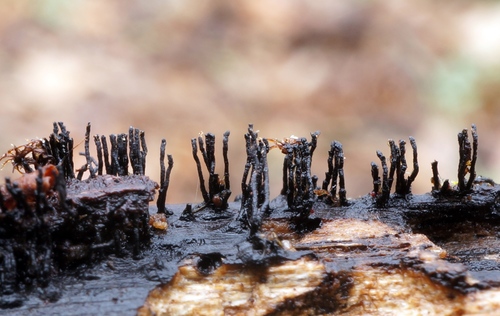
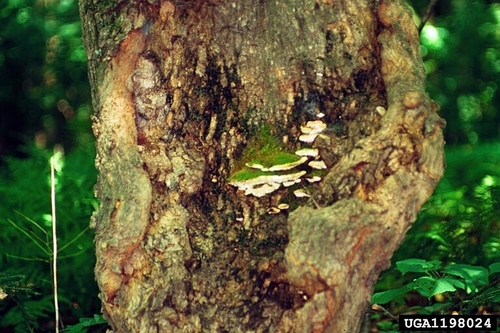
Eutypella canker is a plant disease caused by the fungal pathogen Eutypella parasitica, the species described here. This disease can infect many species of maple trees, and forms a large, easy-to-identify canker on a tree's main trunk. The disease infects new hosts and spreads when ascospores are released from perithecia. Because of this infection process, the most effective management method for Eutypella canker is removal of infected trees. When trees become infected, the disease reduces the quality of wood harvested for lumber, which causes negative economic impacts. Moisture and temperature are the main environmental factors that trigger ascospore release. Ascospores can generally be released whenever temperatures are above freezing, but they are most likely to be released at moderate temperatures between 4–36 °C (39–97 °F). For moisture, humidity alone is not sufficient to trigger spore release from perithecia—perithecia need to be directly wet to release spores. Temperate climates in North America and Europe are the most favorable for Eutypella canker development.