About Euthria cornea (Linnaeus, 1758)
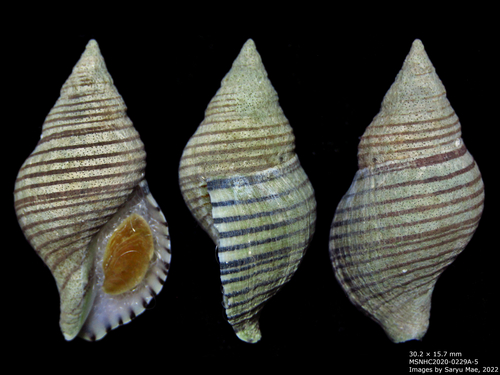
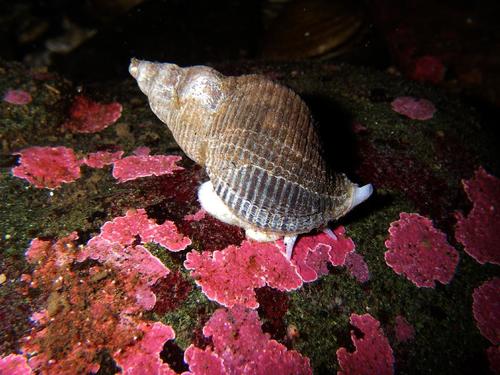
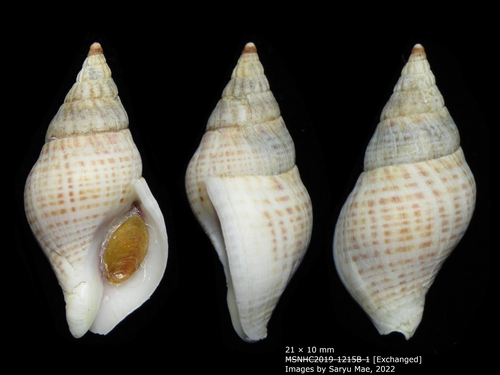
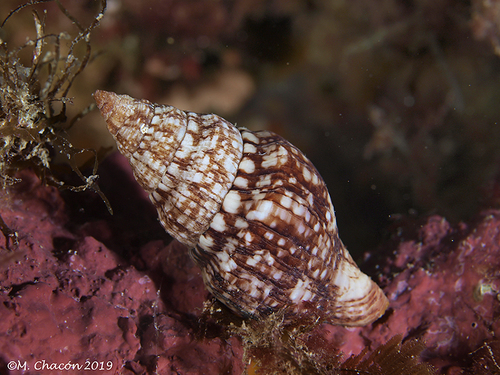
Euthria cornea, first described by Linnaeus in 1758, is a predatory marine mollusk. The adult shell of this species ranges in size from 20 mm to 80 mm. Individuals have a robust, fusiform shell with a sharp apex. The shell’s aperture is wide and oval, marked with faint striae. The species has a horny, oval operculum. Shell coloration is quite variable: irregular dark spots appear over a brownish-gray base background. The soft body of the mollusk itself is orange. As a predator, Euthria cornea feeds primarily on small bivalves. It uses its strong foot to slightly open the bivalve’s valves, then sucks out the soft tissues. This species is distributed in the Atlantic Ocean off the coasts of Portugal and Morocco, and also throughout the Mediterranean Sea. It inhabits depths between 5 m and 30 m, and is most commonly found on rocky substrates.