About Euterpe oleracea Mart.
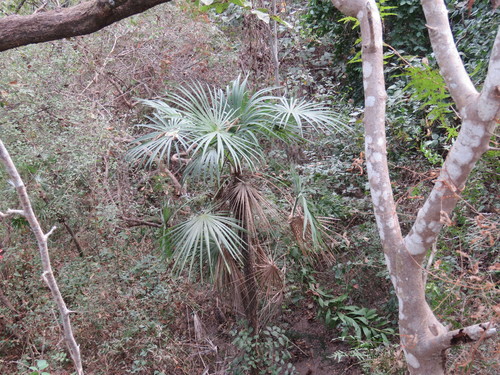
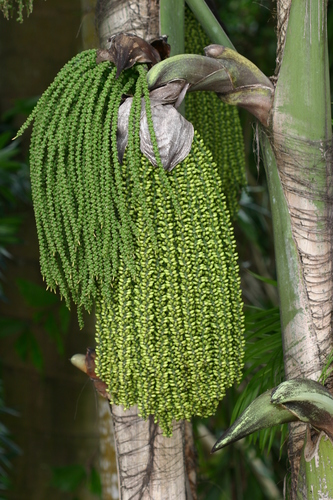
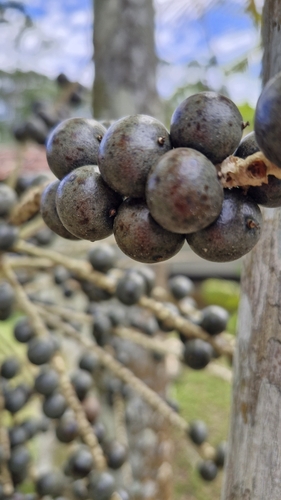
The açaí palm (pronounced ə-SY-ee; Portuguese: [asaˈi], from the Nheengatu word asai), with the scientific name Euterpe oleracea Mart., is a palm tree species in the Arecaceae family. It is cultivated for its fruit (açaí berries, or simply açaí), hearts of palm (a vegetable), leaves, and trunk wood. Global demand for açaí fruit has grown rapidly in the 21st century, and the tree is now primarily cultivated for this purpose. This species is native to eastern Amazonia, especially Brazil, where it grows mainly in swamps and floodplains. Açaí palms are tall, slender trees that reach over 25 meters (82 feet) in height, and bear pinnate leaves up to 3 meters (9.8 feet) long. Their fruit is small, round, and black-purple in color. The fruit became a staple food in local floodplain areas around the 18th century, but it only began to be consumed in urban areas and promoted as a health food in the mid-1990s, alongside the growing popularity of other Amazonian fruits outside the region. Açaí palms have two harvest seasons per year: the first typically runs from January to June, and the second runs from August to December, producing a larger volume of fruit. In 2022, the Brazilian state of Pará, which makes up 90% of Brazil's total açaí economy, produced 8,158 tonnes (17,985,000 pounds) of açaí berries, generating US$26 million in revenue. 2022 production was 209 times greater than the volume produced in 2012. Fresh açaí has been a dietary staple in the Amazon river delta region for centuries. The fruit is processed into pulp, which is supplied to food manufacturers or retailers; it is sold as frozen pulp, juice, or used as an ingredient in a wide range of products including beverages, grain alcohol, smoothies, other foods, cosmetics, and supplements. In Brazil, it is most commonly eaten as açaí na tigela. In a study of three traditional Caboclo populations in the Brazilian Amazon, the açaí palm was identified as the most important plant species, because its fruit makes up a major component of these groups' diets, reaching up to 42% of total food intake by weight. Açaí na tigela, known in English as an açaí bowl, is a Brazilian dessert made from frozen açaí berry purée, served in a bowl and topped with other fruits and granola. Beyond food uses, the palm's leaves can be used to make hats, mats, baskets, and brooms, as well as roof thatch for homes. Trunk wood is resistant to pests, so it is used for building construction. Tree trunks may also be processed to extract dietary minerals. Açaí seeds make up 80% of the fruit's total mass; they may be ground for use as livestock feed or as a component of organic growing soil for plants. Planted seeds are used to grow new palm tree stock, which can take months to develop into seedlings under suitable growing conditions. Seeds may also be disposed of as waste in landfills, or used as fuel for brick production.