About Euspira catena (da Costa, 1778)
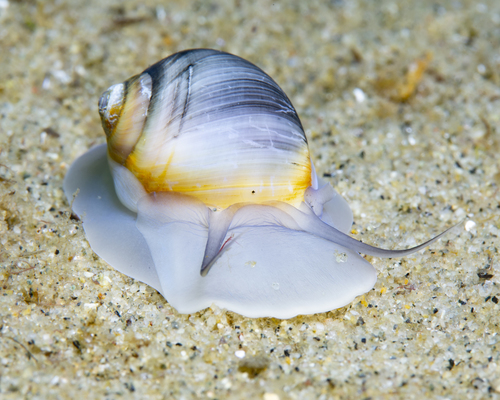
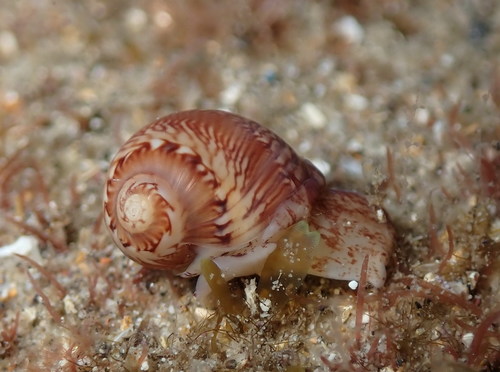
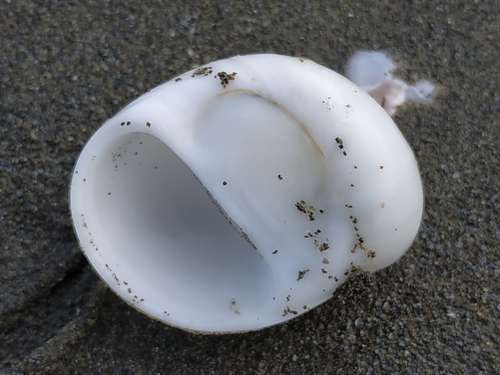
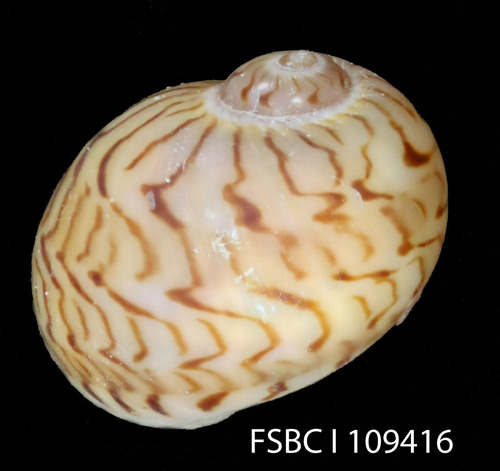
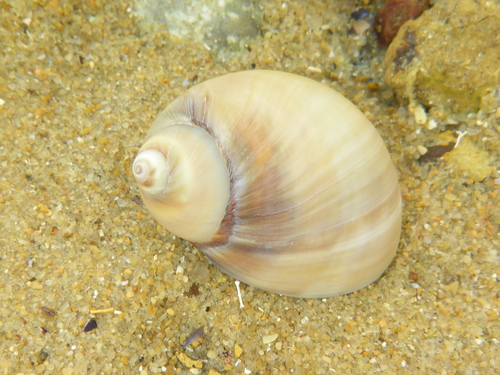
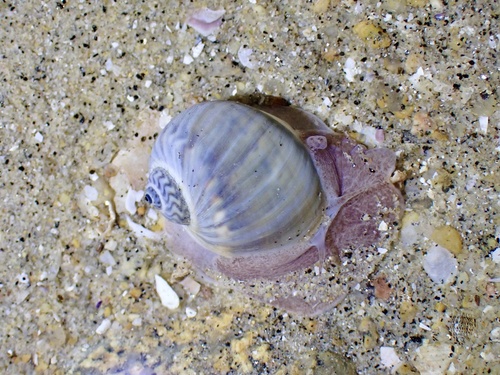
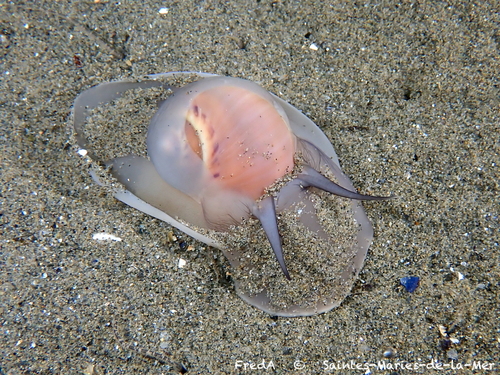
This species, scientifically named Euspira catena (da Costa, 1778), is commonly called the large necklace shell. It has a rounded, thin, polished brownish-yellow shell, with a row of reddish markings located just below the suture of its last whorl. Mature specimens can reach a size of approximately 3 cm (1 in). The shell features a short spire and seven rounded whorls that are separated by distinct sutures; the lowest whorl makes up around 90% of the shell's total volume. This species has a large umbilicus, and its operculum is ear-shaped and spirally wound. The animal's foot is cream-colored, very large, and partially covers the shell when the animal is moving. Its head bears two long flattened tentacles, plus a short snout with an extensible proboscis. The large necklace shell can be mistaken for the similar but smaller common necklace shell, Euspira pulchella. This species is distributed along the coasts of Northwest Europe; its range extends from the Mediterranean Sea to the Skagerrak, and it also occurs in the Northeast Atlantic Ocean.