About Euscorpius flavicaudis (DeGeer, 1778)
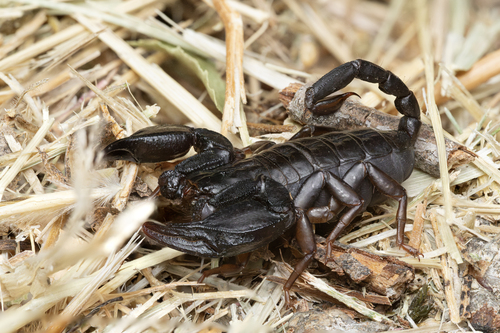
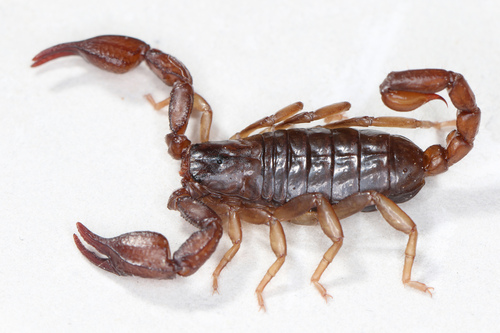
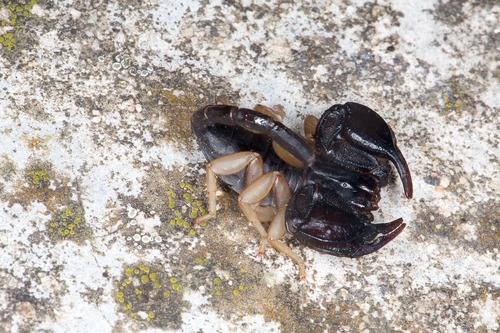
Tetratrichobothrius flavicaudis, commonly known as the European yellow-tailed scorpion, is a small black scorpion with yellow-brown legs and tail (metasoma). Fully grown adults measure 35–45 mm (1+2⁄5–1+4⁄5 inches) in length. This species has relatively large, strong claws (pedipalps) and a short, thin tail. It is native to Southern Europe and Northwest Africa, with an introduced population established in the United Kingdom. The species' native range spans Northwest Africa and Southern Europe. It was accidentally introduced to the United Kingdom at Sheerness Dockyard on the Isle of Sheppey, Kent, and also occurs in parts of east London. This introduction is thought to have happened in the early 19th century, carried via a shipment of Italian masonry. In 2013, the established colony numbered between 10,000 and 15,000 individuals, making it the northernmost population of scorpions outside the Americas. In warm temperate climates, this species can be found in built-up areas. In the UK, the scorpion lives in cracks and holes in walls where mortar pointing has crumbled away. The species' gestation period lasts 10–14 months, varying based on food availability and current climate conditions. After mating with a male, a pregnant female seeks out a secluded, humid location to give birth to live young. Brood size ranges from just a few individuals to around 30, and newborn young are white, soft, and swollen. The mother raises her forelegs to help release the young, which then climb onto her back and remain there until their first moult, which occurs around 6 days after birth. After moulting, the young begin to wander the surrounding area, but stay grouped close to the hiding place for several additional days. Young scorpions reach adulthood between 1 and 2 years after birth.