About Eurystomus orientalis (Linnaeus, 1766)
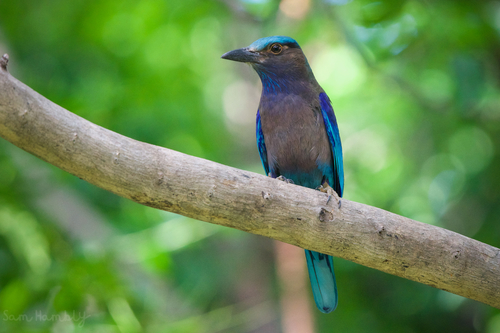
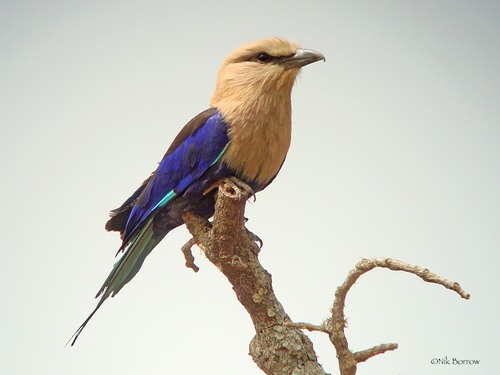
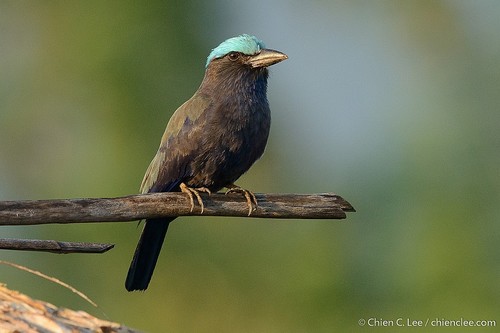
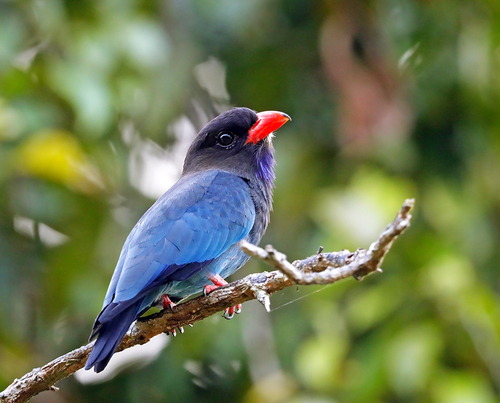
The oriental dollarbird, Eurystomus orientalis, reaches a maximum length of 30 centimeters. Its base plumage is dark brown, with a prominent bluish-green sheen covering its back and wing coverts. The belly and undertail coverts are light in color, while the throat and undertail display bright glossy blue. Flight feathers are a darker shade of blue. The species has a short, wide bill; in mature individuals, the bill is orange-red with a black tip. The outer portions of the wings hold very light blue patches that become highly visible during flight, and these patches give the species its common name. Females are slightly duller in plumage than males, but the two sexes are overall very similar in appearance. Immature oriental dollarbirds are much duller than adults, and lack the blue throat coloration seen in mature birds. Unlike adult red bills and feet, juveniles have brown bills and feet. The oriental dollarbird ranges across a wide area from Australia to Japan and India. At least some subspecies, such as E. o. pacificus, are migratory. This subspecies breeds in northern and eastern Australia between September and April, and winters in New Guinea and surrounding islands. These birds prefer open wooded habitats that contain trees with hollows suitable for nesting. The oriental dollarbird is most often encountered alone. It typically perches in an upright, distinct silhouette on a bare high tree branch. From this perch, it hawks flying insects, and returns to the same perch within a few seconds after each pursuit.