About Eurydema ventralis Kolenati, 1846
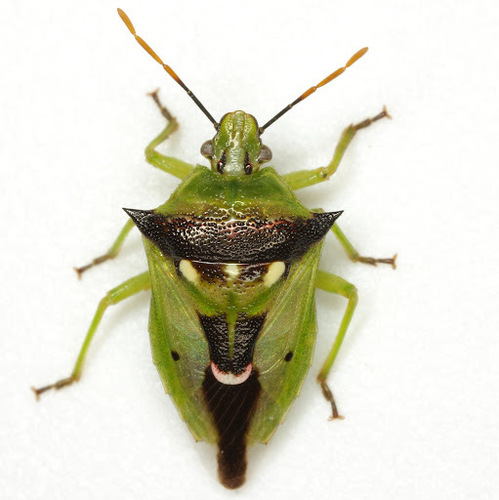
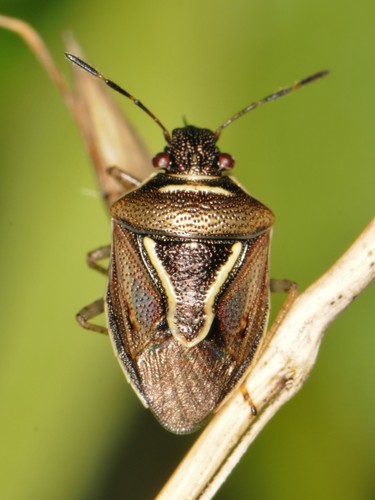
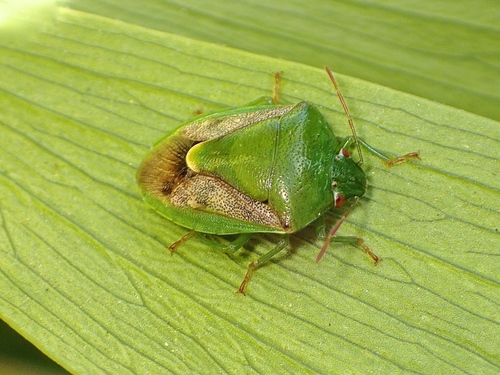
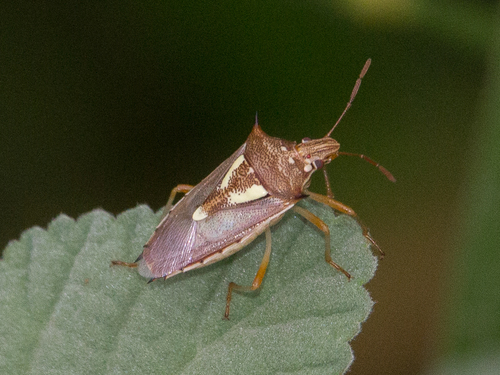
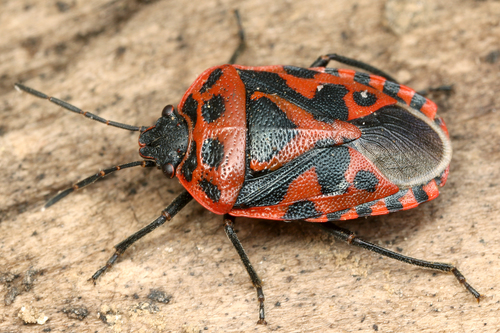
Eurydema ventralis reaches an approximate length of 10 millimetres (0.39 in). This species typically shows two-tone coloration, with a yellow or red base marked by black patterns. Its body is flattened, the head is rounded, and the sinuous cheeks have narrow edges. When adults first emerge from the last instar, they are white or ivory with black spots. They gradually develop their final red coloration, shifting first to yellow, then orange, before turning red. Fully white-and-black specimens are immature individuals. Eurydema ventralis can damage crucifer (Brassicaceae family) crops, and sometimes also damages potato and cereal crops. This species occurs across most of Europe. For its life cycle, adults overwinter, reemerge in spring, and attack cabbages. Mating begins in the first half of April, and egg laying follows mating. Nymphs hatch in mid-May, and reach maturity in June. In summer, females lay eggs for the second generation, on both crucifers and other plants including roses and alfalfa. Eggs of the second generation hatch in July, and larvae mature in August. Adults of the second generation return to crucifers and stay there until September. When the first cold autumn days arrive, adults move to winter shelters to overwinter.