About Eurycea cirrigera (Green, 1831)
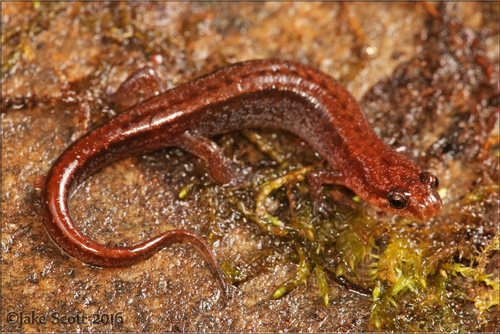
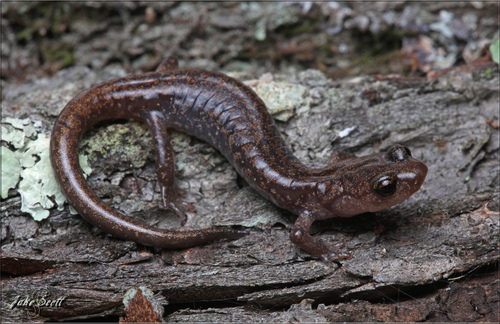
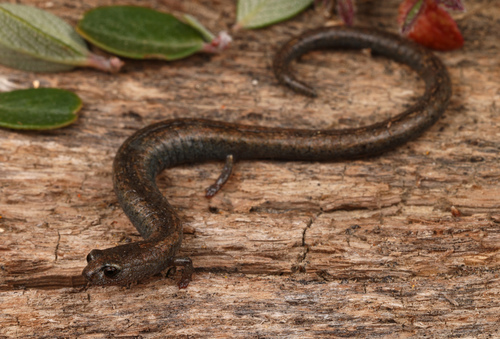
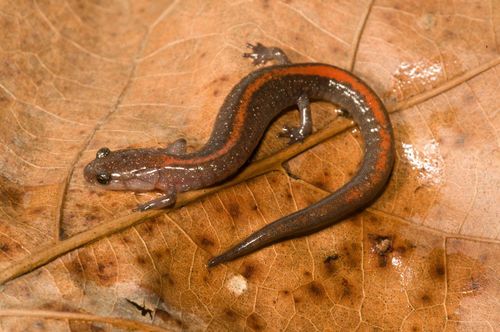
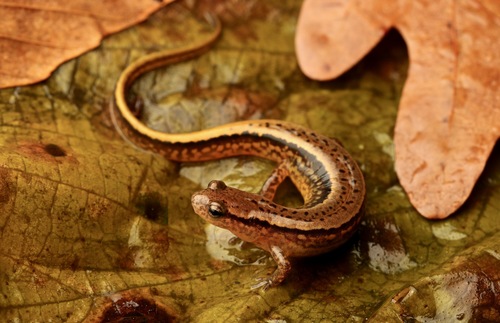
The southern two-lined salamander, scientifically named Eurycea cirrigera (Green, 1831), is a species of salamander in the family Plethodontidae that is endemic to the United States. Its natural habitats are temperate forests, rivers, intermittent rivers, swamps, and freshwater springs. This salamander occurs across the Southeast United States, excluding peninsular Florida. Adult southern two-lined salamanders occupy small, rocky streams or seeps in forested areas, and can also be found in and around springs. Eggs are laid in shallow, flowing water with a gravelly substrate, attached singly to the undersurfaces of submerged rocks or logs. Southern two-lined salamanders reproduce via external fertilization. Between mid-March and April, females lay single-layer clusters of 20 to 100 eggs and deposit them under flat rocks in shallow flowing streams. Females guard their nests against predators. During the breeding season, the premaxillary teeth of males become enlarged. When courting, the male scrapes the female's head, an action that aids in the release of secretions from the mental gland.