About Eurybia radula (Aiton) G.L.Nesom
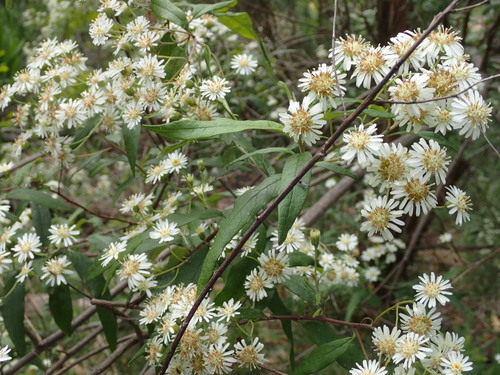
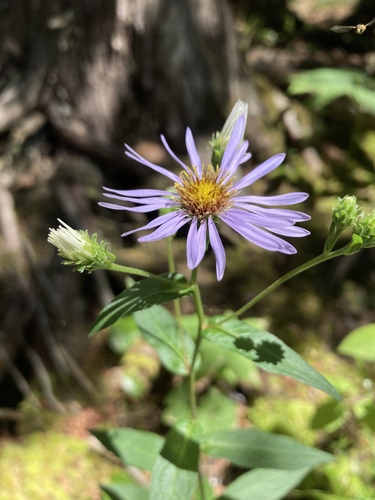
Eurybia radula (Aiton) G.L.Nesom, commonly called the low rough aster or rough wood aster, is an herbaceous perennial plant in the Asteraceae family. It is native to eastern North America. In Canada, it ranges from Newfoundland and Labrador in the far northeast, west to Ontario, and occurs in every Canadian province east of and including Ontario. It is also found on the French overseas territory of St. Pierre and Miquelon, which lies just south of Newfoundland. Its northwestern limit is in northeastern Ontario south of James Bay, where it is rarely encountered. In the United States, it occurs from Maine south to Kentucky and Virginia, and is not found in Ohio or any states west of Ohio. It is listed as endangered by the U.S. states of Connecticut, Kentucky, Maryland, New Jersey and New York. While it is not considered threatened across most of its overall distribution, it is classified as imperiled or possibly extirpated over much of its range within the United States. This species typically grows in wet soils across a wide variety of habitats. It can grow in very wet locations with widely differing pH values, including fens and sphagnum bogs. Additional habitats it occupies include lake and creek shores, wet meadows, and ditches. It does not tolerate deep shade, but it can grow in open boggy woods, as well as along the edges and at the openings of wet spruce and tamarack larch forests. Its elevational range spans from sea level to over 600 metres. Its flower heads bloom from late summer to early fall, and feature pale blue-violet ray florets surrounding yellow central discs.