About Eurybia macrophylla (L.) Cass.
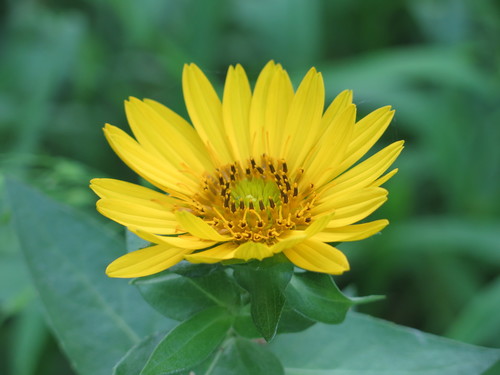
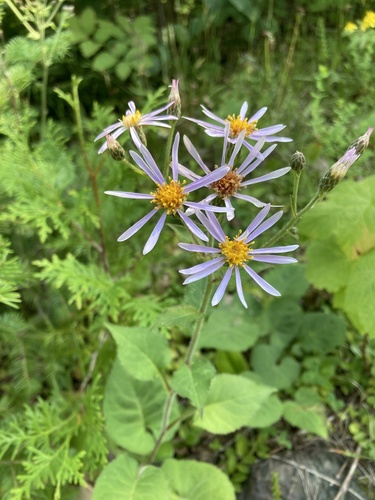
Eurybia macrophylla (L.) Cass. is a perennial herbaceous plant with alternate, simple, toothed leaves. Its basal leaves are large and heart-shaped, while the upper leaves growing along the stem are smaller and lance-shaped. Its flowers are arranged in flat-topped clusters called corymbs.
This species is native to southern areas of eastern and central Canada, and northern areas of eastern and central United States, reaching as far south as northern Georgia in the Appalachian Mountains. Within Canada, it is common in Manitoba, Ontario, Quebec, New Brunswick, Nova Scotia, and Prince Edward Island. Within the United States, it occurs in all states east of and including Minnesota, Iowa, Illinois, Missouri and Tennessee, and may also be present in Mississippi. It has been introduced outside its native range to northern Europe.
Eurybia macrophylla is most commonly found at elevations from 0 to 1300 metres (0 to 4300 feet), growing in moist to dry soils. It is associated with hemlock-northern hardwood forests, beech-maple forests, pine forests, and Appalachian spruce-fir forests, and can also grow in aspen, pine, or open spruce woodlands, thickets, clearings, and along shaded roadsides.
The large, thick young leaves of Eurybia macrophylla can be cooked and eaten as leafy greens, and this use is practiced by the Algonquin people of Quebec. The Iroquois use the root as a medicine for the blood, and prepare a compound decoction of the roots to loosen the bowels for the treatment of venereal disease. The Ojibwa use an infusion of this plant as a head bath to treat headaches, and smoke the plant as a hunting charm to attract deer. They also eat the young leaves as both food and medicine, and use the roots to make soup.