About Eurois occulta Linnaeus, 1758
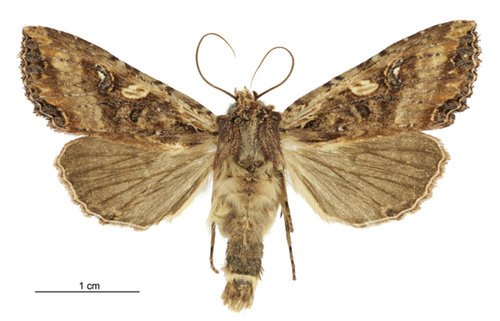
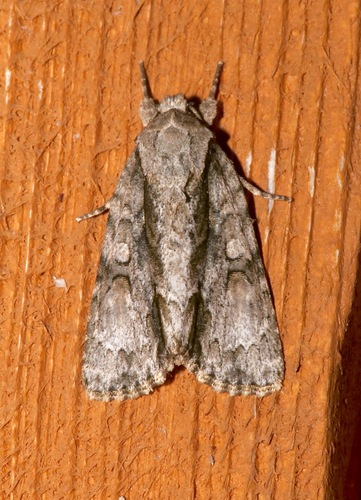
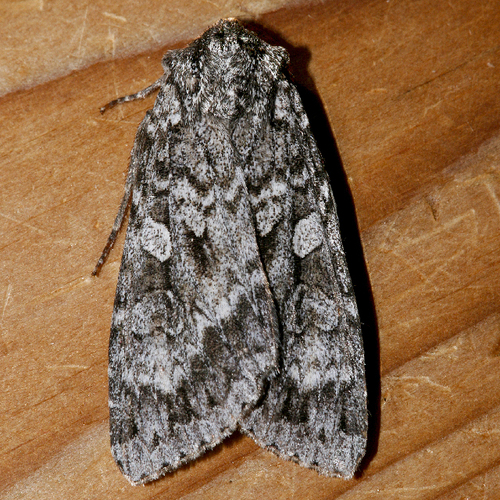
Eurois occulla, described by Linnaeus in 1758, has a wingspan of 50 to 60 millimeters. Its forewings are pale grey, more or less suffused with dark grey, with a black streak running from the base below the cell. The stigmata are large, grey, with black outlines, and the cell itself is dark. The inner and outer lines are filled with whitish coloring, and the submarginal line is formed of large black and white teeth. The hindwing is fuscous, with a white fringe. A nearly black mountain form, called implicata, is found in Finland, the Harz Mountains in Germany, and Scotland. The form ab. extricata Zett., from Lapland, is an intermediate shade between the typical form and implicata. Based partly on pupal remains found in peat, it has been suggested that outbreaks of this species contributed to the collapse of Norse settlements in Greenland. The deposits at Anavik that contained these remains are now dried out, and any potential evidence from them has been lost. The larva is brown with darker mottling. It has yellowish dorsal and subdorsal lines, a white spiracular line, and a series of oblique lateral dark stripes. Larvae live on a variety of low plants, and feed on Myrica gale, Vaccinium, birch, willow, and other herbaceous plants.