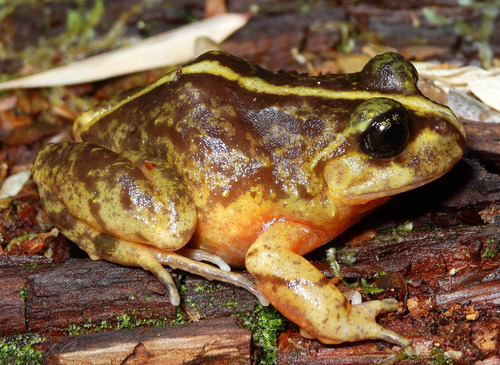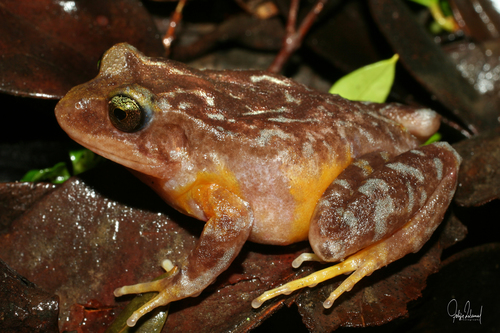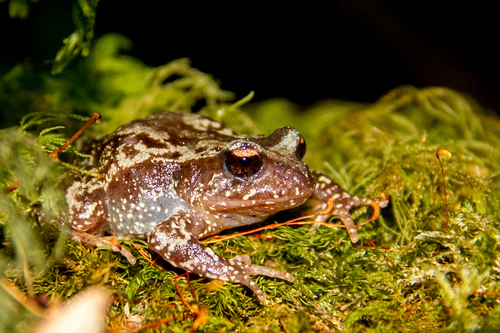
About Eupsophus roseus (Duméril & Bibron, 1841)
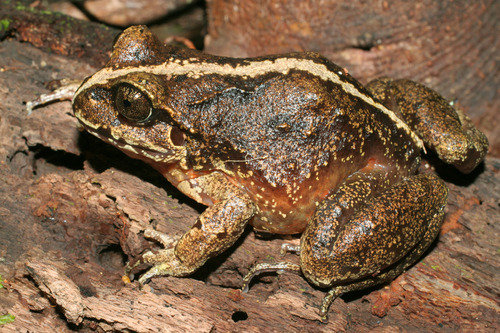
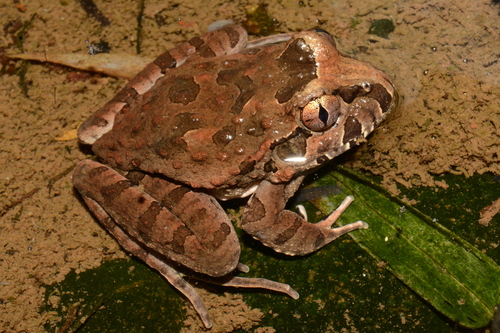
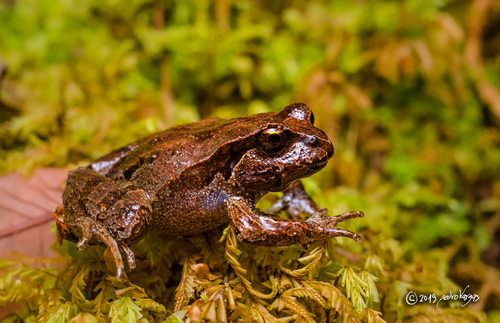
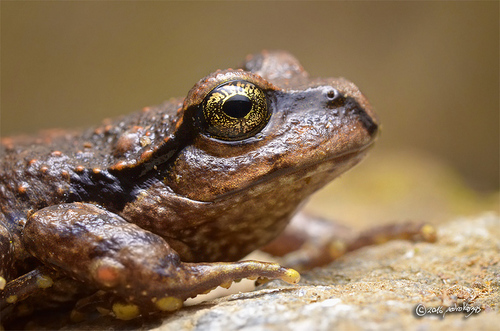
Scientific name: Eupsophus roseus (Duméril & Bibron, 1841). This species was originally described by Duméril, A. M. C. and G. Bibron in 1841, published in Erpétologie Genérale ou Histoire Naturelle Complète des Reptiles, Volume 6, released in Paris by Librairie Encyclopedique de Roret. This frog species has been recorded in Nothofagus forests and pine tree farms, where individuals live on top of leaf litter. Its range in elevation spans from 50 to 1200 meters above sea level. It has been observed within several protected areas: Monumento Natural Cerro Ñielol, Parque Nacional Nahuelbuta, Monumento Natural de Contulmo, Reserva Nacional Nonguén, and Reserva Costera Valdiviana. For reproduction, males of this species are known to call from September through January, which aligns with the local rainy season. Females lay approximately 200 eggs per clutch, deposited in water-filled hollows in the ground. The endotrophic tadpoles stay within the nesting site, and scientists suspect this species provides parental care.