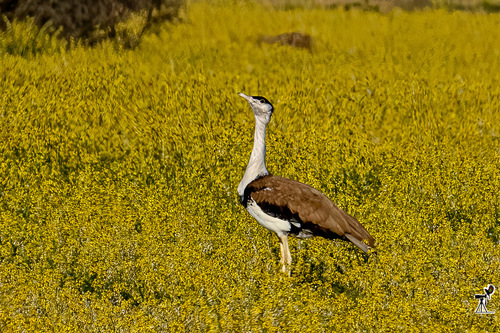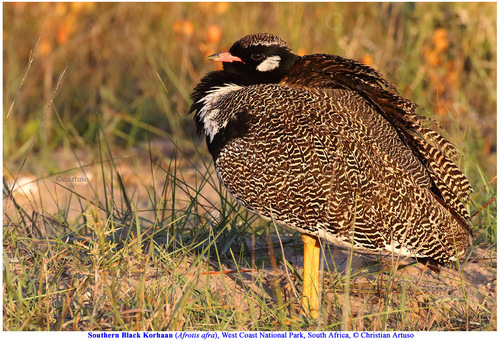
About Eupodotis vigorsii (A.Smith, 1831)
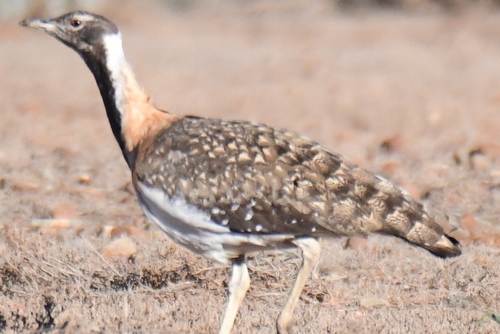
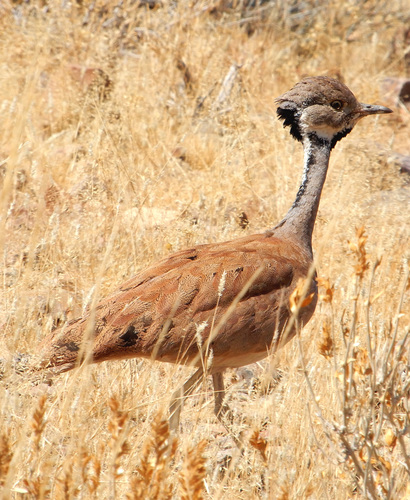
The karoo korhaan, also called karoo bustard, is a species of bird in the bustard family Otididae that is native to Southern Africa. This species has two recognized subspecies: the nominate race, which occurs in south-eastern South Africa, and H. v. namaqua (Roberts, 1932), which is found in north-western South Africa and southern Namibia. The karoo korhaan inhabits a range of arid habitats linked to the Karoo and other arid scrubland areas in western South Africa and Namibia. It also occurs in slightly denser scrubland, and prefers habitats where vegetation cover reaches 10 to 50 cm (3.9–20 in) above the ground. A small population of karoo korhaans also lives in karoo-like fynbos habitat in South Africa's Western Cape province. The karoo korhaan is a small bustard species with a total length of 60 cm (24 in). Males are larger and heavier than females, weighing an average of 1,600 g (56 oz) while females average 1,350 g (48 oz). For the nominate subspecies, the head, neck, and breast are grey-brown, with a black chin and throat bordered by white. The belly is pinkish white, and the wings are brown. Females have similar plumage to males, but have less black coloration on the throat. The subspecies E. v. namaqua has a greyer neck and breast than the nominate subspecies. Karoo korhaans are omnivorous, but plant material makes up the majority of their diet. They consume flowers, fruit, leaves, and corms, and flowers from the plant families Asteraceae, Brassicaceae, and Mesembryanthemaceae are seasonally important food sources for this species.