About Eupithecia pulchellata Stephens, 1831
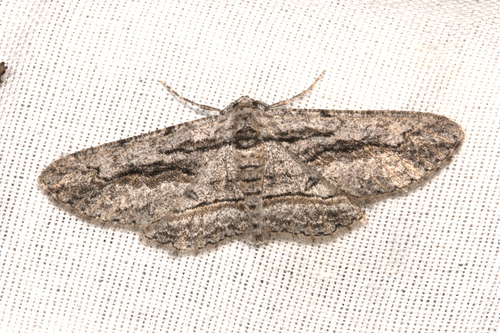
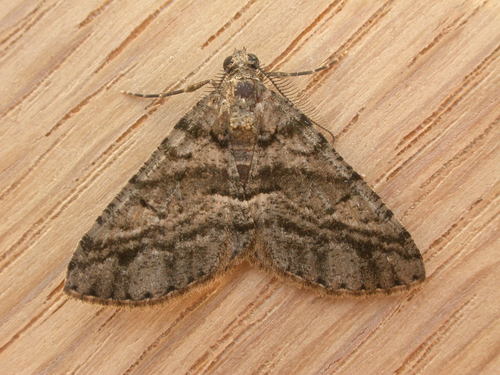
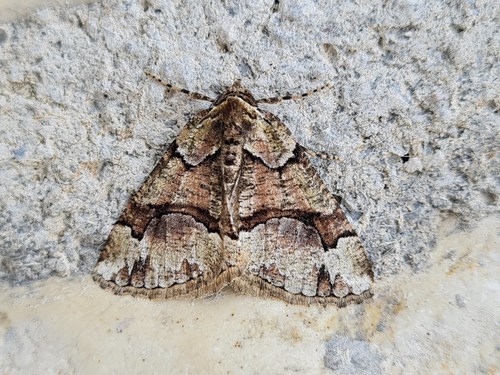
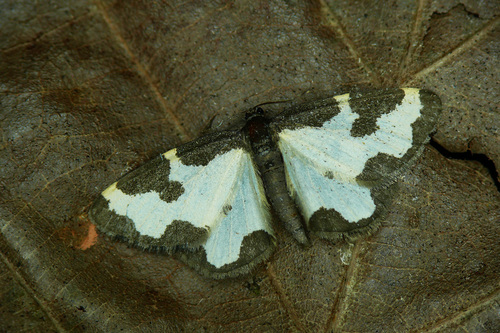
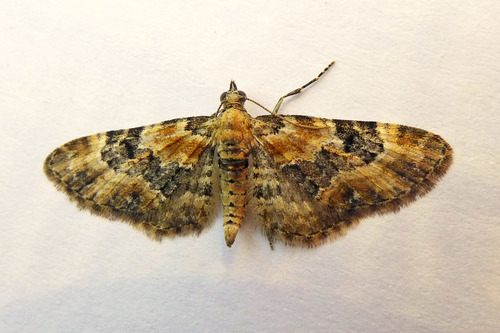
Eupithecia pulchellata Stephens, 1831 has a wingspan of 18–22 mm. For a species of its genus, it is quite colourful, with alternating bands of dark brown and buffish orange on the forewings. In some races, the buff bands can be very pale, and dark crosslines are present. The forewing ground colour is yellow-red, with a broad dark grey to dark brown central band that is lightly edged; the black central spot on the forewing barely stands out from this band. The forewing margin has dark areas, and from base to outer edge, the forewing is coloured as follows: dark grey at the base, then a broad ochre-yellow transverse band, then an equally broad dark grey transverse band with white edges, then a whitish-yellow area, then an irregular brownish ochre-yellow transverse band that is usually somewhat darker than the ochre-yellow band closer to the wing base, then a white zigzag transverse stripe, and finally grey at the outermost portion. The hindwings are slightly lighter than the forewings, have a darkened fringing edge, and bear a small black central spot. This species flies at night during May and June, and is attracted to light. The larva is quite variable in appearance, but is normally yellowish-green with purplish markings. It usually feeds inside the flowers of foxgloves (Digitalis species). After hatching, the larva bores through the side of the flower, seals the flower mouth with silk, and feeds on the flower's reproductive parts: the stamen and developing seeds. Larvae can be found from June to August by searching for discoloured foxglove flowers. The corolla of infested flowers can persist on the plant long after uninfested flowers have fallen. The pupa overwinters in soil, remaining through the winter until May and June of the following year; the species as a whole overwinters in the pupal stage. Despite its very specialized feeding ecology, it has also been recorded feeding on Brassica oleracea in Malta. Its preferred habitat includes woodland edges, glades, park landscapes, gardens, and warm mountain slopes. It has a scattered distribution across Europe that closely follows the range of its primary food plant. Where the species occurs, it can be very common. The nominate subspecies E. pulchellata pulchellata is found in the British Isles, while E. pulchellata intermedia is the subspecies present in Central Europe. In the Pyrenees, it occurs up to an elevation of 2,400 metres.