About Eupithecia nanata (Hübner)
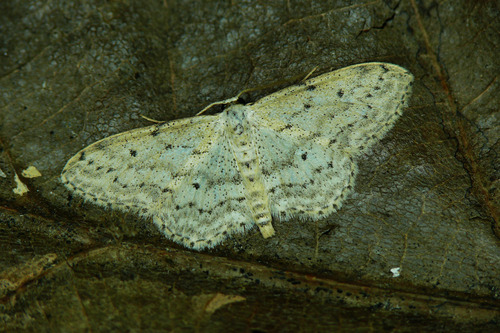
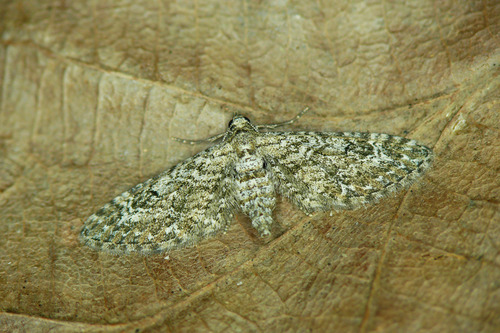
Eupithecia nanata, commonly known as the narrow-winged pug, is a moth belonging to the family Geometridae. This species was first described by Jacob Hübner in 1813. It can be found across the whole of Europe, including Russia as far north as the Kola Peninsula and Ukraine. In the Alps, it occurs at elevations up to 2,200 metres (7,200 ft) above sea level, and in the Pyrenees it reaches elevations of 2400 meters. This moth species prefers dry or boggy heathland habitats. The wingspan of Eupithecia nanata measures 13–17 millimetres, which is 0.51–0.67 inches. Eupithecia nanata is a highly variable species. Its forewings are pointed in shape. The base color of the forewings ranges from gray through brown to yellowish brown. In the midsection of the forewing, a contrasting dark lateral band stands out; this band initially runs at a right angle starting from the costa. The black discal spot is sometimes unclear in definition. There is a wavy white marginal line that extends onto the hindwings. The hindwings are partially paler than the forewings and also bear a small black discal spot. The fringes are a brindled mix of gray or brown with white. For additional information, see Prout. The caterpillars of this species occur in two distinct color variations. Early in the flowering period of their food plant, caterpillars have alternating greenish and reddish coloring, with distinct reddish diamond-shaped spots along the back. Their lateral stripes are white and interrupted. When the food plants reach their main flowering period, caterpillars only display a color range spanning reddish to violet, which provides excellent camouflage against predators. Adult moths fly from March to September, with flight timing varying depending on the location. The larvae feed on species in the genus Calluna, and sometimes feed on Achillea millefolium.