About Eupithecia abietaria (Goeze, 1781)
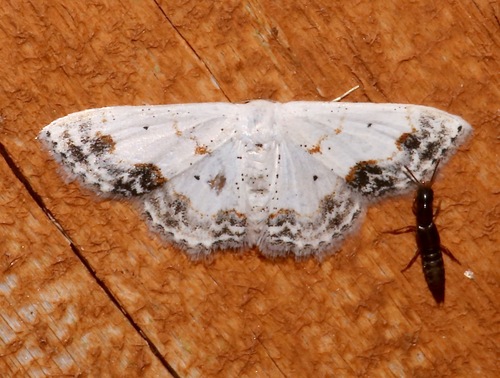
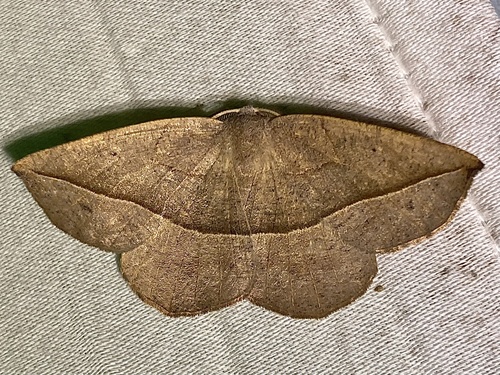
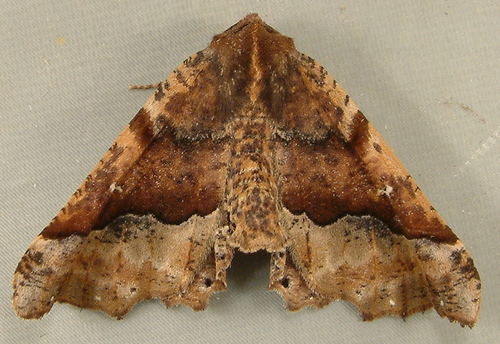
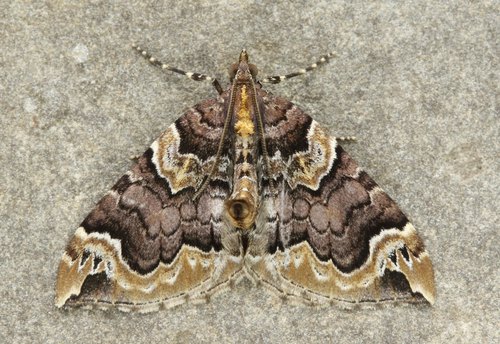
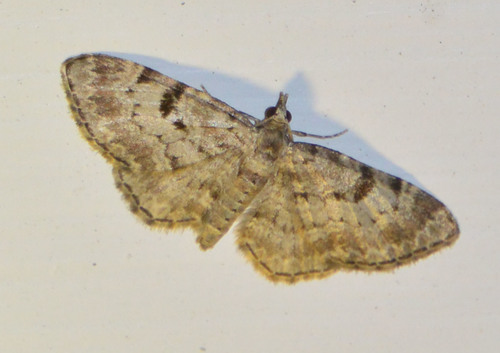
The cloaked pug, Eupithecia abietaria, is a moth in the family Geometridae. It was first described by Johann August Ephraim Goeze in 1781, and is distributed across Europe, extending east to Siberia and Japan. This species has a wingspan of 21–23 mm. It is a large, handsome species, with sharply defined lines marked with black teeth or dashes on the veins. It has a very large discal dot and two red-brown bands. The face does not have a well-developed cone of scales, and the palpus is approximately twice as long as the diameter of the eye. The forewing has a double areole. The aberration constricta ab. nov. [Prout] has a median area reduced to only 1-2 mm in width, with the antemedian and postmedian lines connected by black veins. The form debrunneata Stgr., found in the Ussuri district, has more blackish mixed coloration, and lacks the red-brown tone seen in the base species. The taxon gigantea Stgr., now recognized as the full species Eupithecia gigantea Staudinger, 1897, occurs in the Ussuri district and Japan. It is darker grey than debrunneata, with strongly developed reddish bands similar to those seen in rufescens. The oval egg of Eupithecia abietaria has a shell marked with characteristic regular, large, hexagonal depressions. Final instar larvae are thick, fleshy, solid red, with no distinct patterns. The pupa is dark reddish-brown, and has two strong hook bristles on the cremaster, alongside several fine bristles. Adult moths fly from June to July, with timing varying by location. Larvae feed on the needles of Picea abies, Picea sitchensis and Abies procera.