About Euphorbia glauca G.Forst.
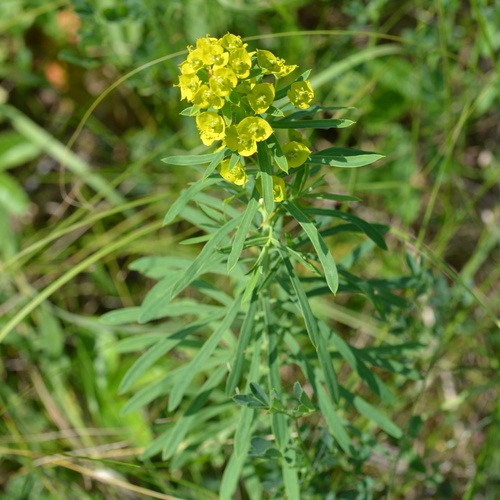
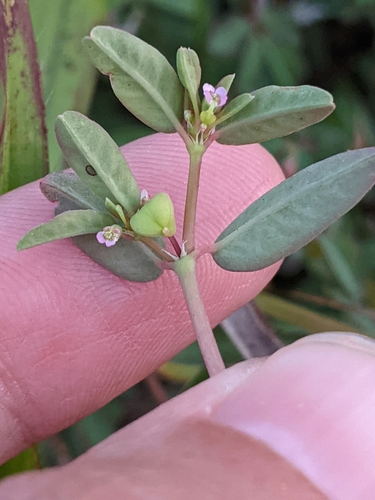
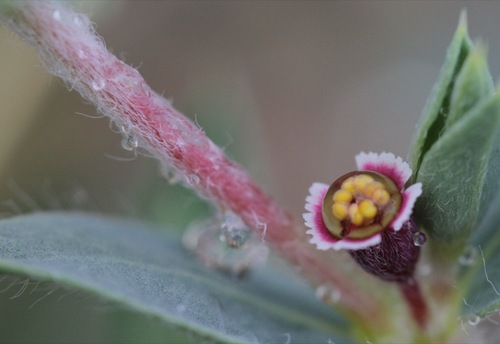
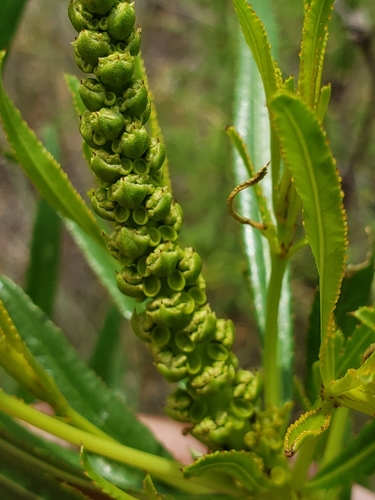
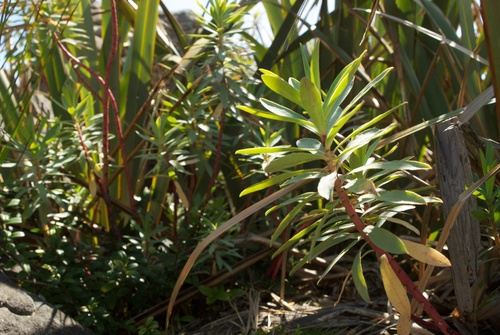
Euphorbia glauca G.Forst. is a perennial herb that grows multiple erect reddish stems reaching around 1 metre in height. Its foliage is blue-green in colour. It typically flowers between September and March, though sporadic flowering can occur at other times of the year. Flowers grow at the tips of stems, and each individual flower is surrounded by a deep red cup-shaped structure. Fruits develop from December to May. This plant produces an irritating milky sap. This species is endemic to New Zealand, where it grows on coastal cliffs, sand dunes, banks, slopes, and rocky lake shore scarps. It faces threats from browsing by domestic and feral animals including pigs, cattle, sheep, and possums. Its habitat can also be damaged by road widening or erosion. A fungal disease is thought to have impacted populations of this species on the West Coast of the South Island of New Zealand. A 1930s New Zealand Cookery Calendar published by the Poverty Bay Federation of Women's Institutes notes that E. glauca could be used to treat skin conditions. The recommended preparation method calls for boiling the plant for an hour in a bathtub full of water, then bathing in the strained liquid. In the wild, the seeds of this plant are naturally dispersed by wind and water. It can be cultivated from seed, cuttings, or plant division. It is propagated in nurseries, and grows best in sunny locations with well-drained soil.