About Euphlyctis cyanophlyctis (Schneider, 1799)
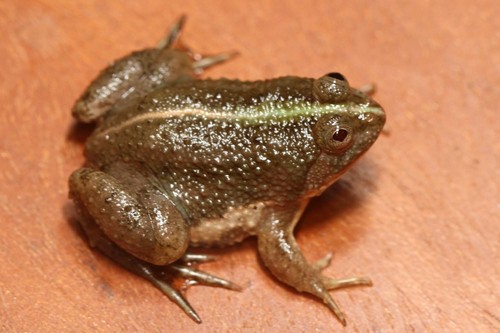
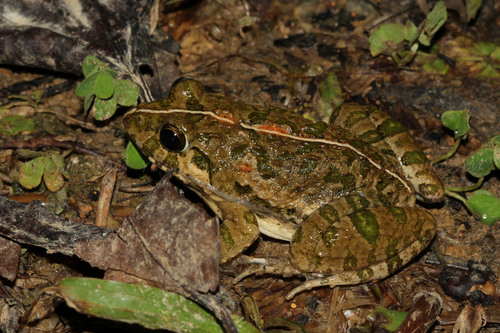
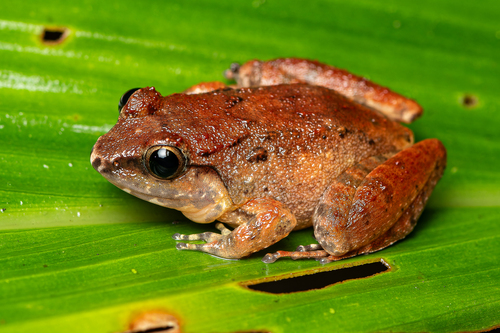
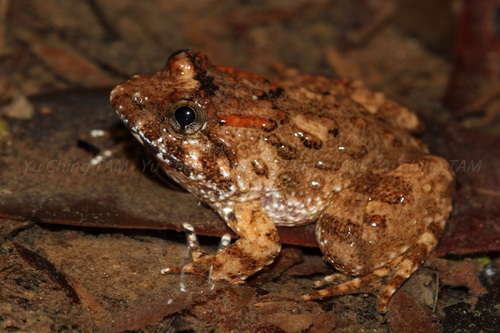
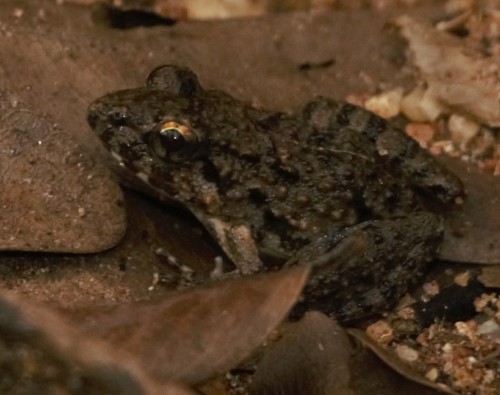
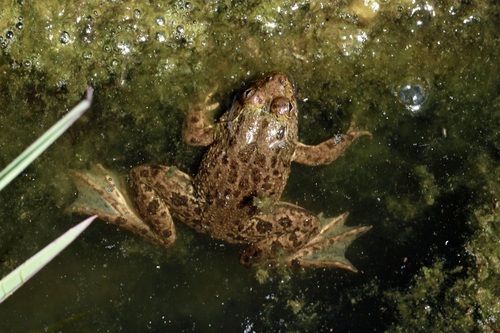
This species is Euphlyctis cyanophlyctis, first described by Schneider in 1799. The following description is taken from George Albert Boulenger: Vomerine teeth form two small oblique series that extend slightly beyond the hinder edge of the choanae. The head is moderate in size; the snout is scarcely pointed; the canthus rostralis is indistinct; the interorbital space is much narrower than the upper eyelid; the tympanum is distinct, and measures about two-thirds the size of the eye. The fingers are slender and pointed, with the first finger not extending beyond the second; the toes are webbed all the way to the pointed tips, and the fourth toe is not much longer than the third or fifth; the outer toe has a strong fringe; the subarticular tubercles are small; the inner metatarsal tubercle is small, conical, and very similar to a rudimentary toe. The tibiotarsal articulation usually reaches a little beyond the eye. The dorsal skin has small tubercles and units, along with more or less distinct rows of pores. The dorsal coloration is brown or olive, with dark spots or marbling; two blackish streaks are present on the hinder side of the thighs, and are rarely absent; the ventral surface is often speckled with blackish. Males have two external vocal vesicles, which open via two slits beneath the angles of the mouth. Individuals of this species have the ability to leap out of water from a floating position. A cross-section of the phalanx bones shows annual growth rings, which can be used to determine the individual's age. This species is widely distributed across South Asia and Southeast Asia. Its confirmed range extends from southeastern Iran, southern Afghanistan, Pakistan, Bhutan, Nepal, and eastern India at low to moderate elevations, eastward through Bangladesh and northeastern India to extreme western Myanmar. Additional records exist from Sri Lanka (though these likely refer to Euphlyctis mudigere), Thailand (where the species may be introduced), and Vietnam. The species has recently also been reported from Bhutan. Older records from Bangladesh have recently been reassigned to Euphlyctis kalasgramensis. The International Union for Conservation of Nature (IUCN) does not include any areas east of India and Bangladesh in the species' accepted distribution area. Euphlyctis cyanophlyctis is a highly aquatic frog species that inhabits marshes, pools, and a variety of other wetland habitats.