About Eupentacta quinquesemita (Selenka, 1867)
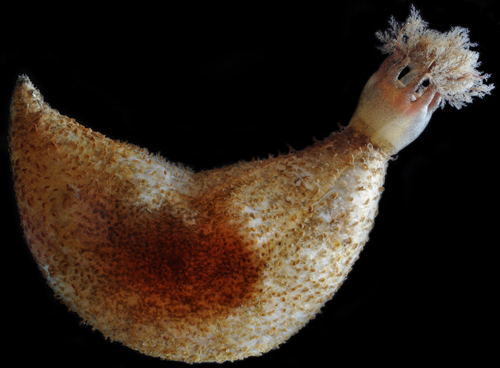
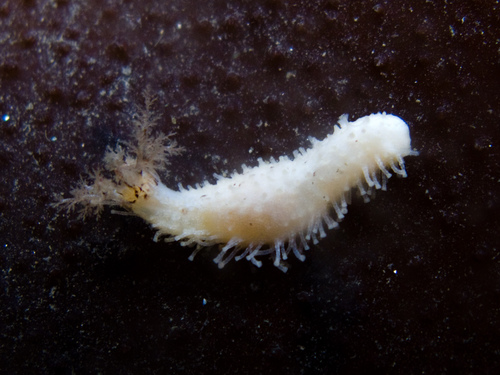
Eupentacta quinquesemita can reach a maximum length of 8 cm (3 inches). Its tube feet are arranged in four longitudinal rows, are non-retractable, and give the animal a spiny look. The skin between the tube feet is smooth, but both the body wall and tube feet contain calcareous ossicles that make them stiff. The mouth is surrounded by ten branched feeding tentacles, with the two lowest tentacles being smaller than the others. The general body color is white, and the tentacles (which are often the only visible part of the animal) are creamy-white, frequently with yellowish or pinkish bases. Fragments of shell or other debris often stick to the tube feet. E. quinquesemita is found in the northeastern Pacific Ocean, with its range stretching from Alaska to California. It inhabits rocky shores in the low intertidal and shallow subtidal zones, where it typically hides in crevices and under boulders. It is common around harbour installations, pilings and floats, especially in areas with strong water movement. Larvae often settle in locations with strong currents, among hydroids and algae. E. quinquesemita is both a deposit and suspension feeder. It uses its feeding tentacles to push material into its mouth, extracts edible material, and eliminates unwanted debris. The larvae of the parasitic snail Thyonicola americana enter the sea cucumber through this feeding process, and develop into adults that invade the sea cucumber’s viscera. The adult parasites maintain a connection to the gut lumen to release their offspring. This sea cucumber is preyed on by several species of starfish, including Solaster stimpsoni, Pycnopodia helianthoides and Leptasterias hexactis, and by fish such as the kelp greenling Hexagrammos decagrammus. This sea cucumber carries out seasonal evisceration: it expels its internal guts in autumn and grows a new set of guts in spring. This process prevents a high proportion of T. americana parasites from completing their life cycle, though not all individual sea cucumbers perform evisceration. Breeding occurs between March and May. Females release large, yolky eggs into the sea, where they are fertilized by sperm released by males. The larvae are well-ciliated but do not feed. They develop their calcareous armour in around two weeks before settling.