About Eupatorium cannabinum L.
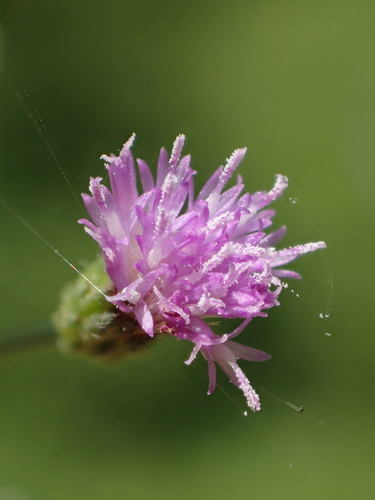
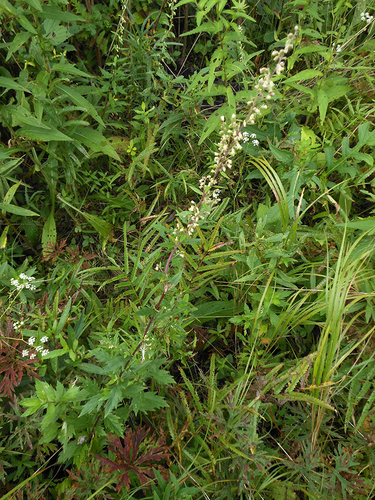
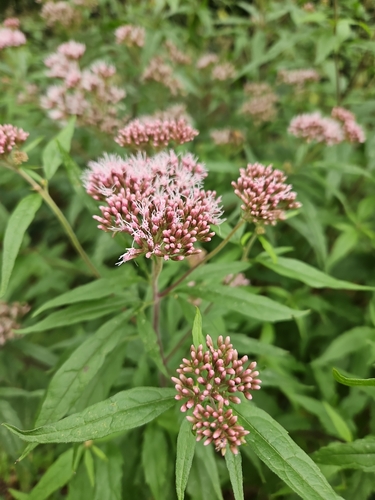
Eupatorium cannabinum L. is a perennial herb that grows up to 1.75 metres (5.7 feet) tall, and forms extensive clumps. Its reddish stems are covered in small hairs. Leaves are oppositely arranged, deeply 3-lobed (occasionally 5-lobed), and have serrated margins. This species is dioecious, and produces racemes of mauve flower heads that are pollinated by insects from July to early September. Many types of insects visit its flowers, and it has a generalised pollination syndrome. Flower heads are made up of dense clusters of 2–5 mm long florets with a fluffy appearance; florets may be pink, purple, or rarely whitish. Its fruit is an achene around 2 to 3 mm long, carried by a pappus with 3 to 5 mm long hairs that allows wind dispersal. The plant overwinters as a hemicryptophyte. Eupatorium cannabinum contains tumorigenic pyrrolizidine alkaloids, which may be present in plant material as their N-oxides. In the folk medicine of the Indian state of Sikkim in the Eastern Himalayas, this plant, called Banmara and Kalijhar by local Nepali communities, is used as a styptic. This plant is an introduced non-native species to this region. Fresh leaves and tender stems are crushed, and their juice is applied to cuts and bruises. For large wounds, the squeezed plant residue is sometimes applied as a poultice over the wound; this is said to stop bleeding immediately and protect wounds from infection.