About Euonymus europaeus L.
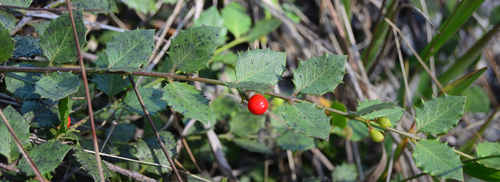
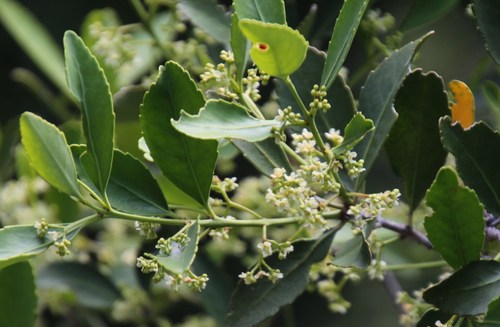
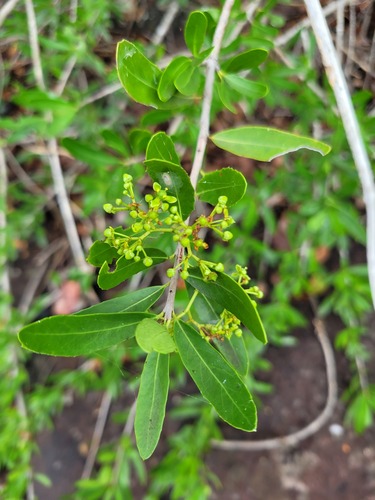
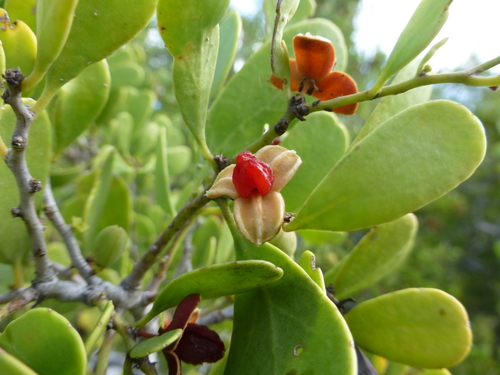
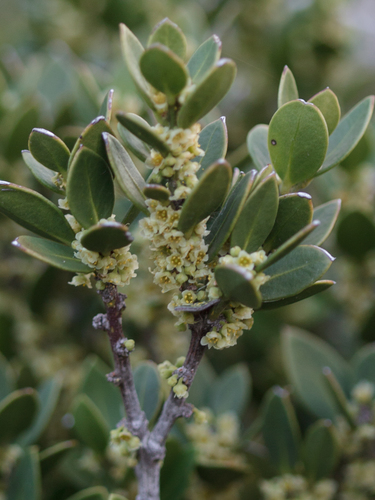
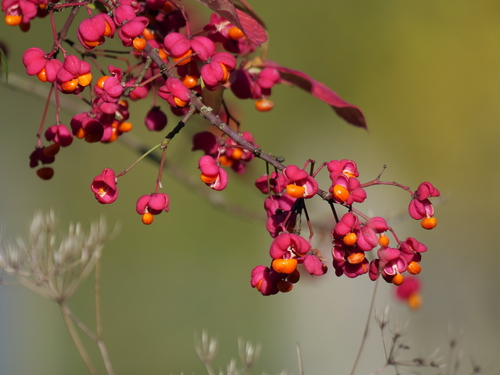
Euonymus europaeus L., commonly called European spindle, grows 3 to 6 meters (10 to 20 feet) tall, and rarely reaches 10 meters (33 feet) tall. Its stem can grow up to 20 centimeters (8 inches) in diameter. Its leaves are arranged oppositely, shaped lanceolate to elliptical, 3 to 8 cm long and 1 to 3 cm broad, with finely serrated edges and a cuneate base. Leaves are dark green through the summer, and turn from yellow-green to reddish-purple in autumn depending on environmental conditions. This species produces hermaphrodite flowers in late spring, which are pollinated by insects. The flowers are small and rather inconspicuous, with yellowish-green petals, and grow in cymes holding 3 to 8 flowers each. The species produces capsular fruit that ripens in autumn. The ripe fruit is red to purple or pink, roughly 1 to 1.5 cm wide, and splits open along four lobes to expose its orange seeds.
In its natural habitat, Euonymus europaeus grows as an understorey shrub or small tree. It occurs primarily in old hedgerows, open woodland clearings and margins, and scrubland growing on base-rich or calcareous soils, and it is also able to tolerate shade. It rarely invades open habitats like grasslands unless abundant hedges are already present. In Ireland, it can additionally be found growing on rocky limestone outcrops, rocky lake shores, and limestone pavements. It is a characteristic species of Fraxinus excelsior – Acer campestre – Mercurialis perennis woodland (W8), and is a frequent companion of Cornus sanguinea in open-stand scrub over limestone. Across its range, it generally occurs in low frequency and abundance, with a usually scattered distribution, though it may occasionally grow remarkably commonly at a local scale. One example of this local abundance is the so-called "Spindle Valley" in the Chilterns. Its scattered distribution is likely limited by how birds and rodents disperse its seeds.
Euonymus europaeus is the almost exclusive winter host of the black bean aphid. Because this aphid feeds on cultivated broad beans and sugar beet and can cause economic loss, European spindle was commonly removed from hedges and woodlands in the past to control aphid outbreaks and prevent agricultural yield losses. However, this widespread removal does not appear to have impacted the species' current populations. In 1944, The Biology War Committee launched a campaign to study the distribution and ecology of Euonymus europaeus to create a basis for aphid control measures.
It is a popular ornamental plant grown in gardens and parks, valued for its bright pink or purple fruits and attractive autumn foliage. In cultivation in the UK, the cultivar 'Red Cascade' has earned the Royal Horticultural Society's Award of Garden Merit. The wood of European spindle is very hard and can be sharpened to a fine point. In the past, it was used to make spindles for spinning wool and butchers' skewers. Charcoal made from this plant is highly prized by artists for its exceptional strength and density. Parts of the plant have been used for medicinal purposes, but the fruit is poisonous and contains multiple toxic substances. These include the alkaloids theobromine and caffeine, plus many more toxic compounds such as cardiac glycosides and an extremely bitter terpene. Poisoning is most common in young children, who are often attracted to the plant's brightly coloured fruits. Ingesting the fruit can cause liver and kidney damage, and even lead to death.