About Euonymus atropurpureus Jacq.
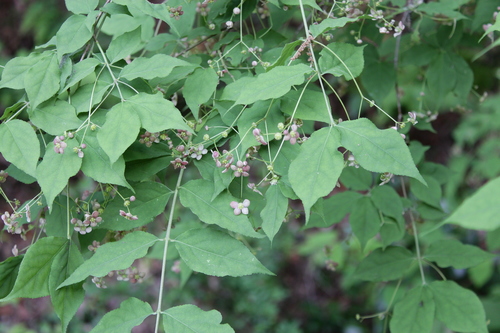
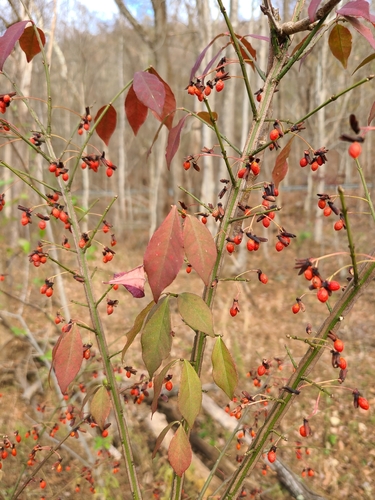
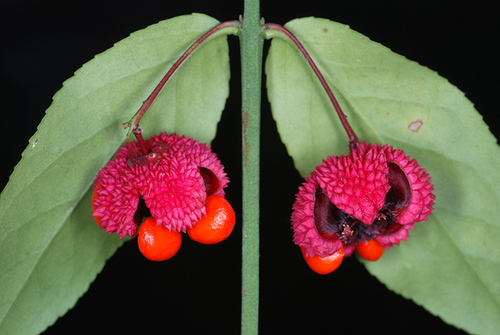
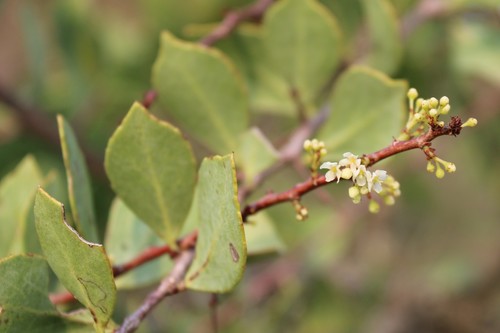
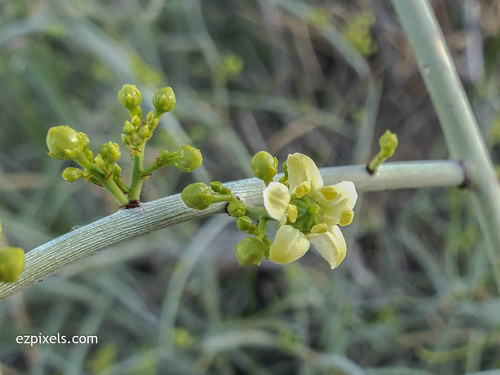
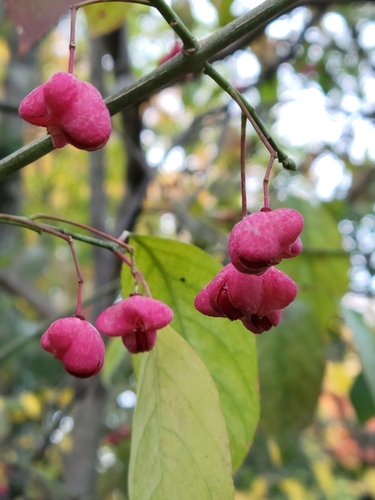
Euonymus atropurpureus Jacq. is a deciduous shrub that reaches up to 8 meters in height, with stems growing up to 10 centimeters in diameter. Its bark is gray, smooth, and lightly fissured. The twigs are dark purplish-brown, slender, and sometimes four-angled or slightly winged. Its leaves are arranged oppositely, elliptical in shape, 8.5–11.3 cm long and 3.2–5.5 cm broad, with an abruptly long pointed tip and a finely serrated margin. Leaves are green on the upper surface, paler and often covered in fine hairs on the lower surface, and turn bright red in autumn. The flowers are bisexual, 10–12 mm in diameter, with four greenish sepals, four brown-purple petals, and four stamens. Flowers grow in small axillary cymes. The fruit is a smooth reddish to pink four-lobed capsule, up to 17 mm in diameter, sometimes with one or more aborted lobes. Each lobe holds one seed, which is orange with a fleshy red aril. This species is primarily found in the Midwestern United States, and its range extends from southern Ontario in Canada south to northern Florida and Texas in the United States. It grows in low meadows, open slopes, open woodland, stream banks, and prairies, favoring moist soils, particularly in thickets, valleys, and forest edges. The fruit of this species is poisonous to humans, but is eaten by several bird species, which disperse the seeds through their droppings. It is used for medicinal purposes across the United States and southeastern Canada. Native Americans and early pioneers used the powdered bark of this plant as a purgative.