About Euonymus alatus (Thunb.) Siebold
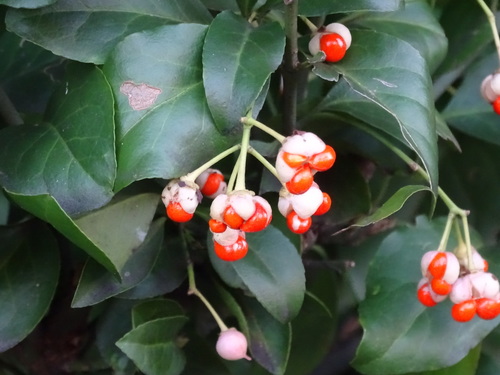
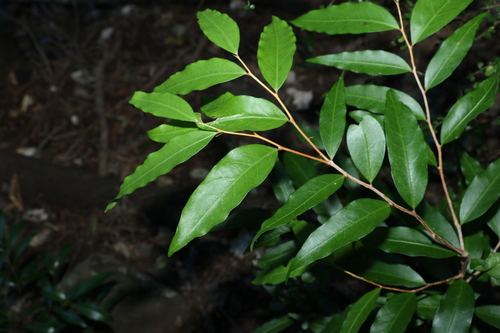
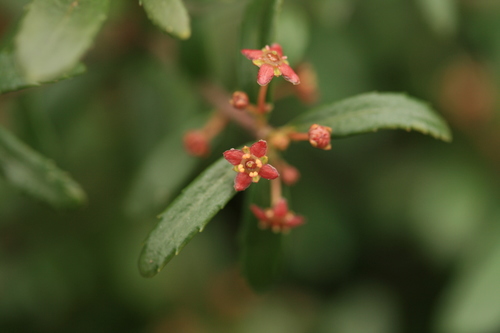
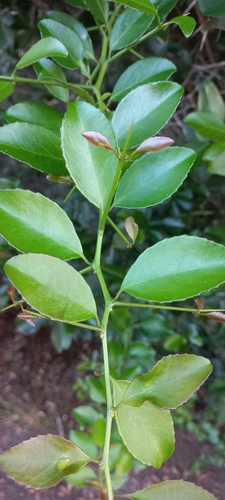
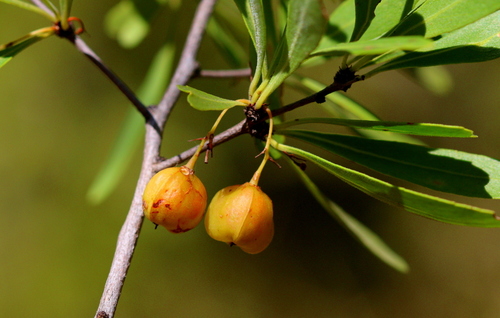
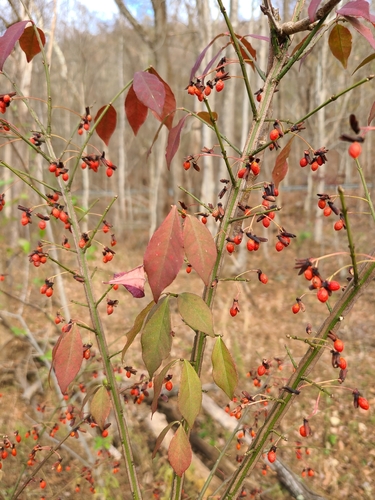
This plant, scientifically named Euonymus alatus (Thunb.) Siebold, is a deciduous shrub that grows up to 6.1 m (20 ft) tall, and is often wider than it is tall. Like the related species Euonymus phellomanus, its stems are well known for four corky ridges called "wings". The specific epithet alatus (formerly sometimes used as alata) is Latin for "winged", a reference to these winged branches. The wing structures develop from cork cambium deposited in longitudinal grooves in the twigs during their first year of growth; this development is different from that of similar wings found on other plants such as Quercus macrocarpa. Its leaves measure 2–7 cm (3⁄4–2+3⁄4 in) long and 1–4 cm (1⁄2–1+1⁄2 in) broad, are ovate-elliptic in shape, and have an acute apex. Its flowers are greenish and bloom over a long period in spring. The fruit consists of a red aril enclosed by a four-lobed capsule that may be pink, yellow, or orange. All parts of this plant are toxic if ingested, and cause severe discomfort. The native distribution of Euonymus alatus ranges from northeastern Asia to central China. In addition to central and eastern China, it is also found in Korea, Japan, and the Russian island of Sakhalin. Within its native range, it grows in forests, woodlands, and scrublands, from sea level up to 2,700 m (8,900 ft) in elevation. Euonymus alatus is not native to North America. It was first introduced to the United States in the 1860s, and now occurs in New England, from Illinois south to northern Florida, and along the United States Gulf Coast. It can also be found in southeastern Canada. It is generally cultivated for its ornamental value, its attractiveness to wildlife, and its ability to adapt to urban and suburban environments. The shrub is commonly used for foundation planting, hedges, and planting along highways and commercial strips. Annual sales of Euonymus alatus across the United States total tens of millions of dollars. Its corky winged stems are used in traditional Chinese medicine and traditional Korean medicine to treat conditions including cancer, hyperglycemia, and diabetic complications. Chemical compounds that have been isolated from this plant include flavonoids, terpenoids, steroids, lignans, cardenolides, phenolic acids, and alkaloids.