About Eunicella singularis (Esper, 1791)
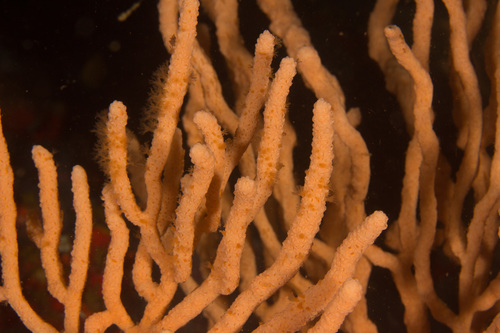
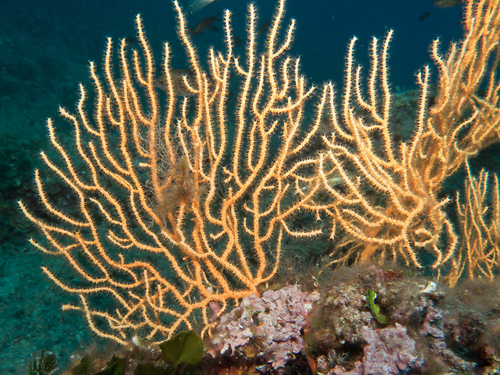
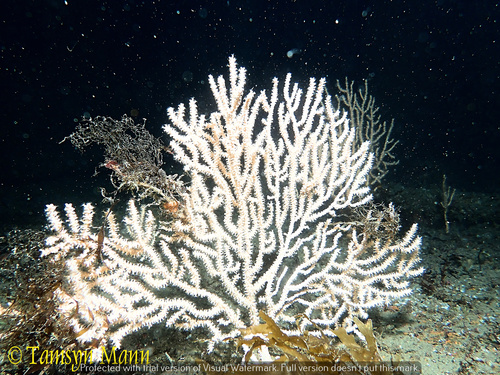
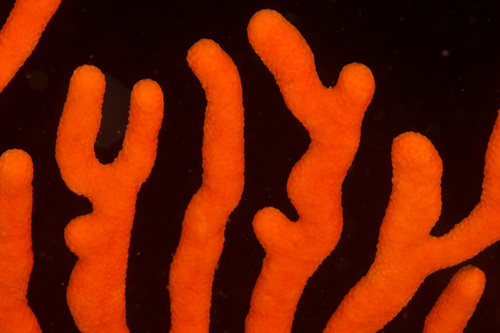
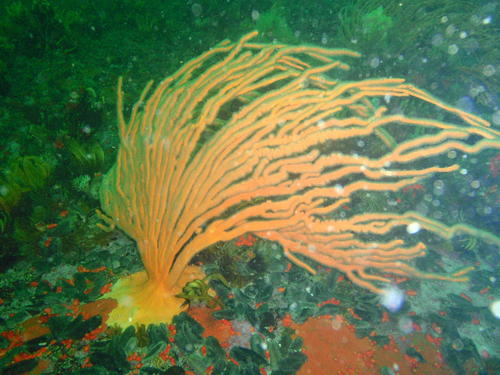
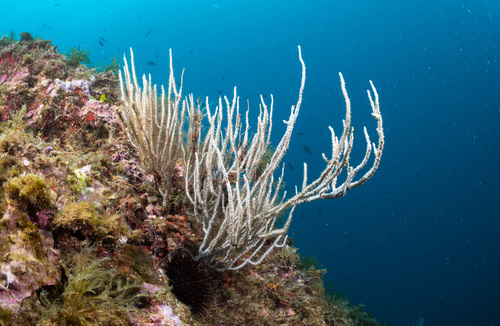
Eunicella singularis (Esper, 1791) grows to around 70 centimeters (28 inches) in both height and width. It has a branching structure, growing from a thickened base that produces a small number of nearly vertical main branches, plus a few additional side branches. The branch surfaces are smooth, and the calyces from which polyps protrude are not distinctly visible. The overall color of this sea fan is white, while its polyps are translucent, and colored yellowish-brown or olive. Eunicella singularis is native to the western Mediterranean Sea and the Adriatic Sea, where it lives at depths between 10 and 60 meters (33 to 197 feet). It grows most commonly on shallowly sloping rock surfaces that are often partially covered by sediment, and can also grow on pebbles, shells, or other objects surrounded by sediment. It prefers well-lit habitats. In the Mediterranean Sea, the soft coral Alcyonium coralloides often overgrows Eunicella singularis, killing the sea fan’s soft tissues as it spreads along the branches of this slow-growing host. The nudibranch Marionia blainvillea feeds on Eunicella singularis, and the whip fan nudibranch (Tritonia nilsodhneri) also feeds on it where their ranges overlap. The gastropod mollusc Simnia spelta mimics Eunicella singularis, and both feeds and lays its eggs on the sea fan’s branches. Bare areas left after this mollusc removes coenenchyme tissue are quickly colonized by epibionts including algae, tube worms, bryozoans, and colonial tunicates. The sea fan’s tissue can regrow over these areas, forming cavities that allow other organisms to thrive, resulting in the development of a small but biodiverse community centered on the sea fan.