About Eumeta variegatus (Snellen, 1879)
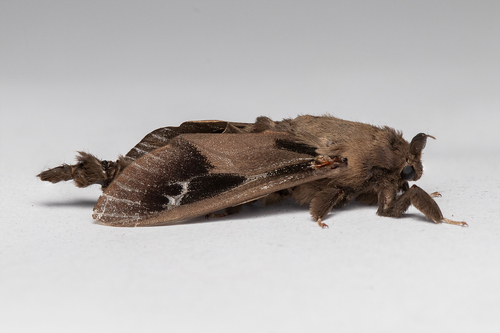
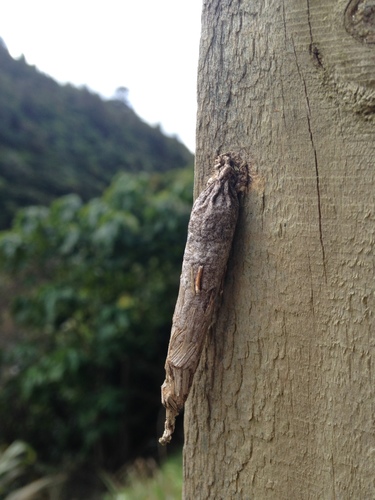
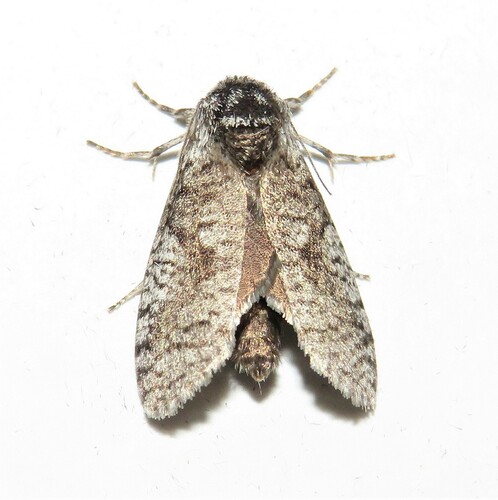
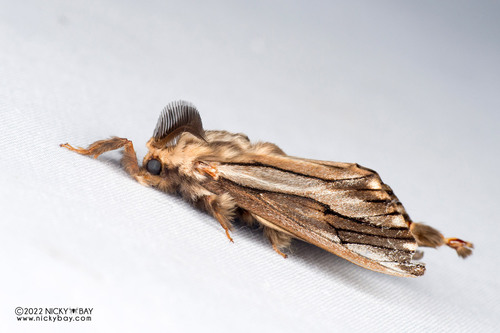
Adults of Eumeta variegatus exhibit strong sexual dimorphism. Adult females are wingless and spend their entire lives inside the larval case, while adult males have fully functional wings. This difference in wing development arises in the final larval instar: male larvae develop normal wing discs, while female larvae only have rudimentary wing discs. The protective larval case of this species is about 5 cm long. The silk it produces is composed entirely of glycine-alanine repeats and poly-alanine stretches. In male development, wing discs proliferate rapidly during the eighth instar and continue proliferating after this stage. A distinct peripodial epithelium forms, and hemopoietic organs break down and disappear completely by the prepupal stage. In female development, wing discs remain in the same state they had in the seventh instar, with no internal cell proliferation. No peripodial epithelium forms, and hemopoietic organs remain attached to the wing discs. By the prepupal period, the entire wing disc of females transforms into a plain, thick epidermis. Ecologically, Eumeta variegatus is a documented polyphagous pest that affects Citrus and tea cultivation. It is also a known pest of mango, cashew, casuarina, cinnamon, and Shorea robusta. Known natural parasites of this species are Apanteles claniae, Aulosaphes fujianensis, Chouioia cunea, Exorista japonica, Nealsomyia rufella, Sarcophaga caudagalli, and Sclerodermus guani. Documented pathogens that affect the species are Bacillus thuringiensis and Nucleopolyhedrosis virus.