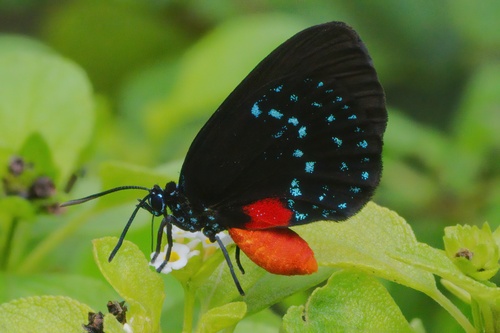
About Eumaeus atala (Poey, 1832)
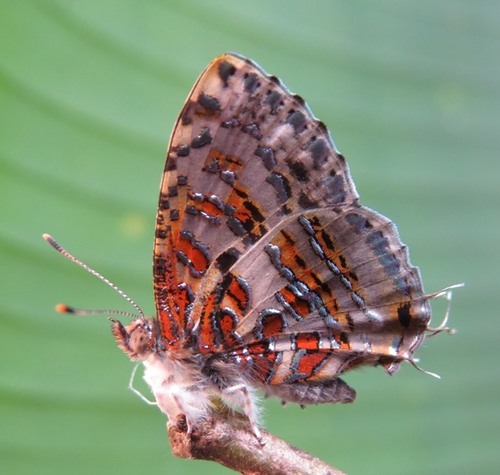
The Atala butterfly, scientifically known as Eumaeus atala, is an excellent example of species that display aposematic (warning) coloration across all stages of its life cycle. Its brightly colored larval caterpillar feeds on cycads that contain a toxic secondary plant chemical called cycasin, which the caterpillar retains in its body for the rest of its life. While birds, lizards, and other animals may try to prey on Atala butterfly larvae, pupae, and adults, these predators find the insects distasteful and learn to avoid their brightly patterned bodies. Unlike many other Lycaenidae butterflies, which have swift, erratic flight, the Atala butterfly has slow flight. Across its entire range, Atala butterfly larvae feed on the native cycad Zamia integrifolia, commonly known as coontie palm or arrowhead, as well as Zamia pumila and other exotic ornamental cycads. In Cuba, larvae also feed on the introduced cycad Cycas revoluta. Adult Atala butterflies feed on flower nectar and sometimes roost in trees. Adults are active and fly through most of the year. The species' natural habitat consists of open brushy areas and tropical hammocks, often found within pine woodlands. Many modern populations of Atala butterflies now live in suburban areas that contain ornamental cycads. Male Atala butterflies stay close to sites that host their food plants, and often form small colonies made up of just a few individuals. Females, by contrast, may disperse to search for additional host plants. Atala butterfly larvae feed exclusively on the leaves of coontie, Zamia integrifolia. They sequester toxic cycasin compounds from these leaves, which makes both the caterpillars and adult butterflies distasteful to predators.