About Eulemur coronatus (Gray, 1842)
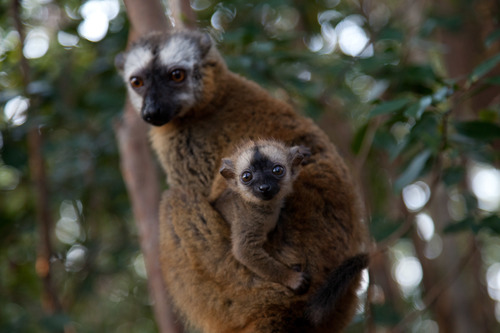
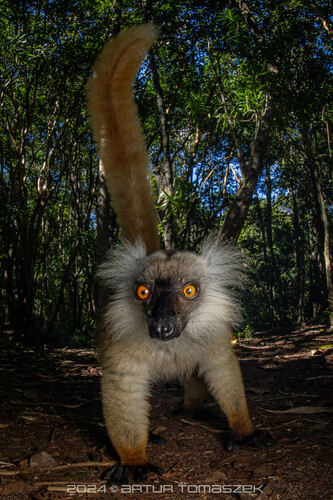
Eulemur coronatus, commonly known as the crowned lemur, is a primate species endemic to Madagascar. This species has a distinctive brown-orange crown on the top of the head; females have a gray body paired with an orange crown, while males have a darker reddish brown body and a crown marked with black and orange. Crowned lemurs have an approximate lifespan of 20 years, and reach sexual maturity after 20 months. Following a 125-day gestation period, they usually give birth in late September or early October. As members of the order Primates, crowned lemurs have characteristic traits including pseudo-opposable thumbs, binocular vision, and high intelligence. As part of the family Lemuridae, they share key features with other lemurids: long and slender limbs, a slightly longer nose, a smaller brain, and a 'grooming comb' formed by the incisors and canine teeth. They have a long non-prehensile tail, which they use for balance when jumping between branches and for communication within their closely knit, female-led social groups. This member of the genus Eulemur is primarily diurnal, but also has periods of feeding activity at night. Its diet is made up mostly of flowers, fruits, and leaves. As of 2004, the total population is estimated at 1,000 to 10,000 individuals, most of which live within Ankarana Special Reserve. Additional populations exist in Montagne d'Ambre National Park and the Andrafiamena forest. This species lives exclusively in northern Madagascar, with a range that starts at the island's northernmost point on the Cap d'Ambre Peninsula, extends south to the east bank of the Mahavavy River, and extends east to the area north of Sambava along the banks of the Manambato River. It can be found across a range of habitats, from the tropical dry forests of Ankarana Reserve to the mid-altitude rainforests of Montagne d'Ambre, at altitudes between sea level and 1,400 m (4,600 ft). Crowned lemurs live in sympatry, sharing the same habitat, with Eulemur sanfordi, Sanford's brown lemur. Sanford's brown lemurs can be distinguished by their color: they are mostly gray and brown, and do not have a v-shaped crown on the forehead. Male Sanford's lemurs also have characteristic white ruffs around their ears and cheeks that are not present on crowned lemurs. The crowned lemurs of Ankarana Reserve are the only lemurs in this region known to cross the razor-sharp tsingy — eroded limestone rock that is characteristic of this national park. They cross this terrain to enter the forest early in the morning, and leave the forest just before sunset to cross back and settle for the night in the safer canyon forest in the center of these rock fields.