About Eugnorisma depuncta Linnaeus, 1761
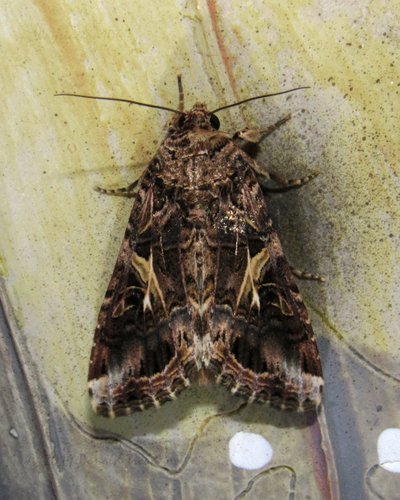
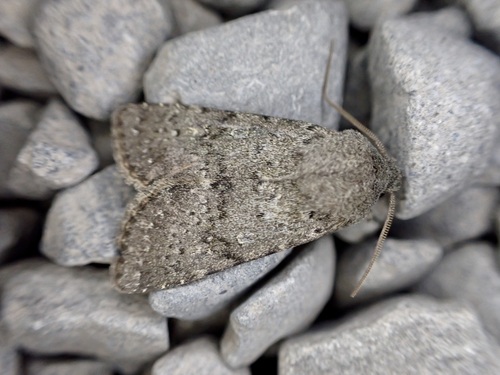
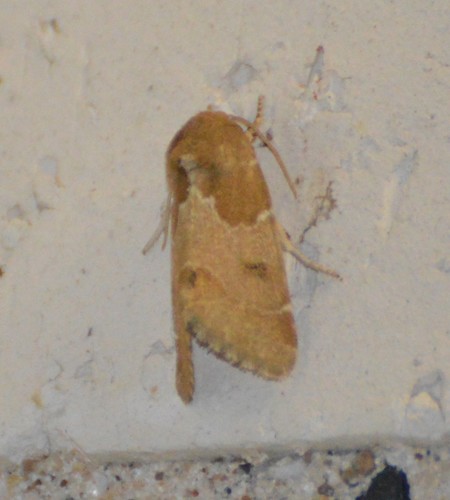
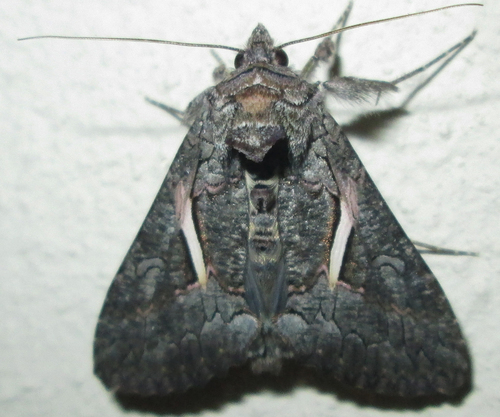
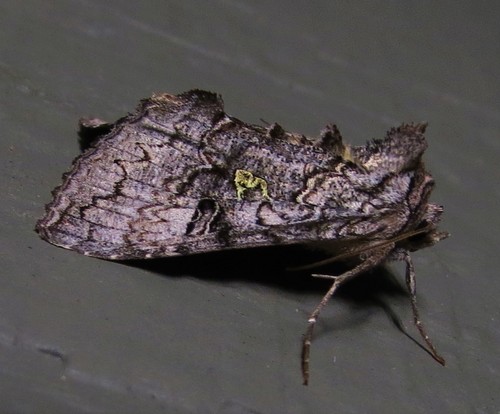
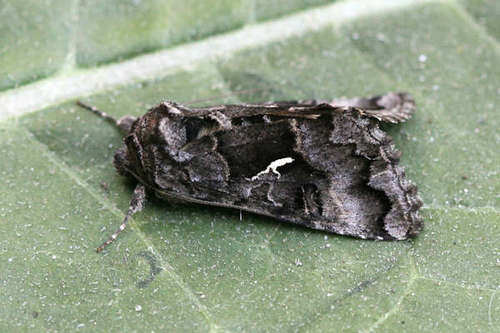
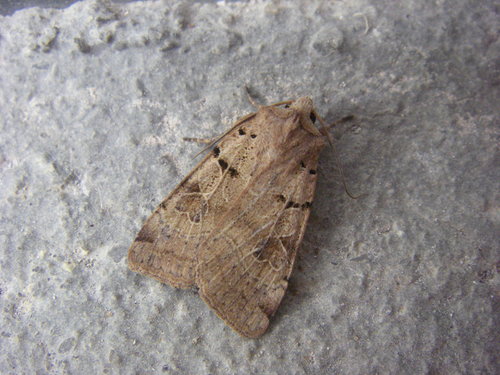
Eugnorisma depuncta, commonly known as the plain clay, is a moth species belonging to the family Noctuidae. It was first described by Carl Linnaeus in 1761. This species occurs across most of Europe, reaching west to England, north to Scotland and Fennoscandia, south to southern France, Italy, Sicily and Greece, and extending east as far as the Caucasus. It is not found in northern France, the Benelux region, or parts of western Germany. The wingspan of adult plain clay moths ranges from 34 to 44 mm. Meyrick's description of the species is as follows: In males, the antennae are ciliated. The forewings are a light ochreous-brown shade. The subbasal line has a black edge on its anterior side. The first line has a black edge on its posterior side, except in the area toward the dorsum. The second line is partially dark-edged, and has a blackish edge on its anterior side at the costa. Both the orbicular and reniform spots have fine pale edges, and the area between these spots, as well as the area before the orbicular spot, is darker brown. The subterminal line has a darker edge on its anterior side. The hindwings are fuscous, and become darker toward the posterior end. Fully grown larvae are dull brown, with a dorsal series of diamond shapes outlined in darker brown. The spiracular area is diffusely darker; the spiracles are white with dark edges. The subspiracular area is ochreous-whitish. The head is light brown with darker markings. Adult moths are active between July and September, with the timing varying by location. The larvae feed on Pulmonaria mollis, Lamium, Vaccinium myrtillus, and Urtica dioica.