About Eudonia delunella Stainton, 1849
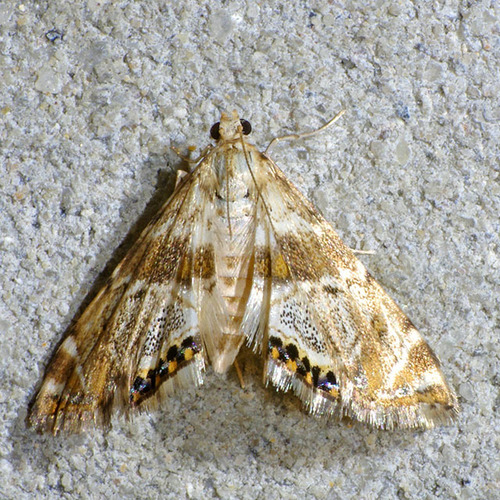
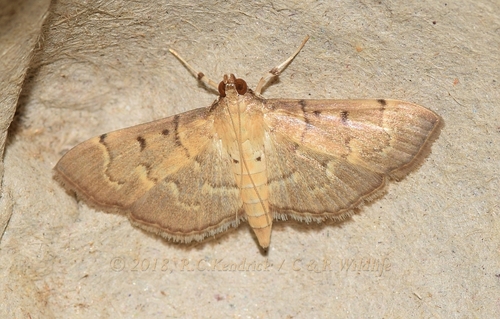
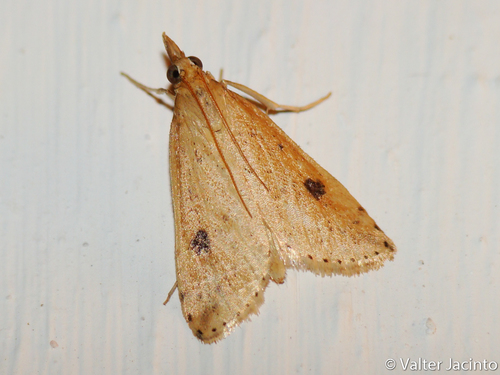
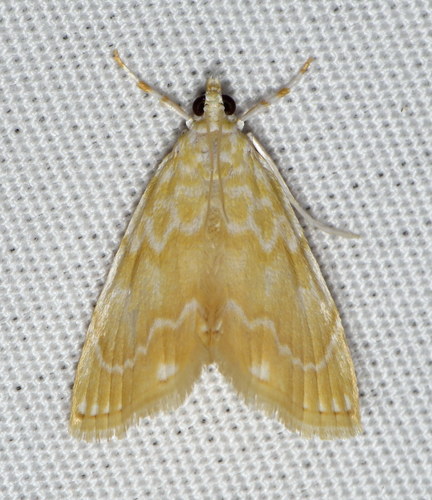
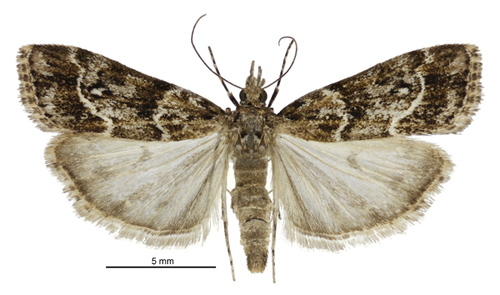
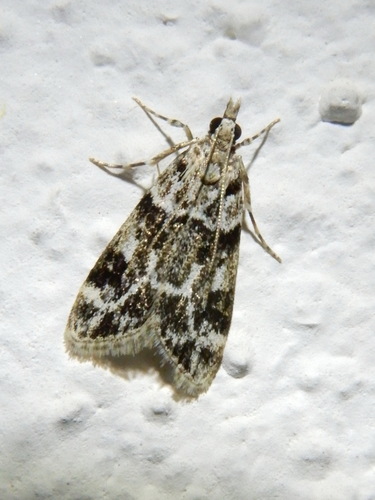
Eudonia delunella is a species of moth belonging to the family Crambidae. It was first described by Henry Tibbats Stainton in 1849, and it is found in Europe. This moth has a wingspan of 17–18 mm (0.67–0.71 in). Its forewings are white, with irregular mixed blackish coloring, and a black triangular mark extending from the base of the costa. The forewing lines are white with dark edges: the first line is irregular, while the second line is strongly sinuate. Beyond the first line, there is an irregular blackish costal blotch that includes the orbicular and claviform marks, and before the second line, there is a quadrate blotch that hides the discal spot. The terminal area of the forewing is blackish, and the subterminal line is white, touching the second line at the middle. The hindwings are light grey, with darker coloring toward the terminal end, and have a darker discal mark. The larva of Eudonia delunella is greenish-yellow, with its spots, head, and the dorsal plate of the second segment colored dark bronzy-brown. Adult moths fly from June to September, with the exact timing varying by location. The larvae feed on a variety of mosses and lichen.