About Euclea crispa (Thunb.) Gürke
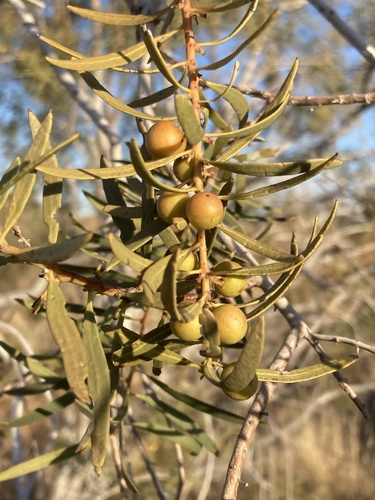
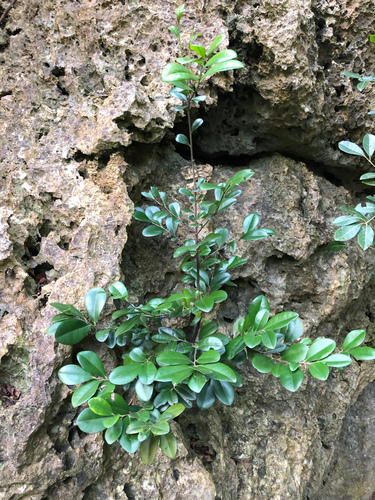
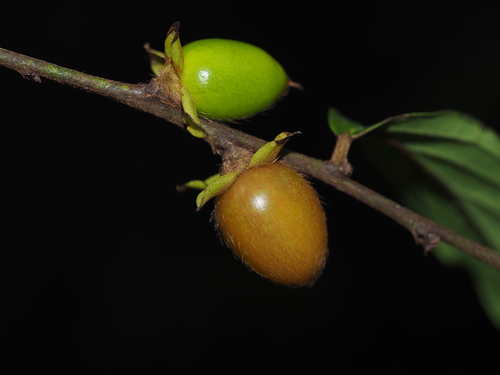
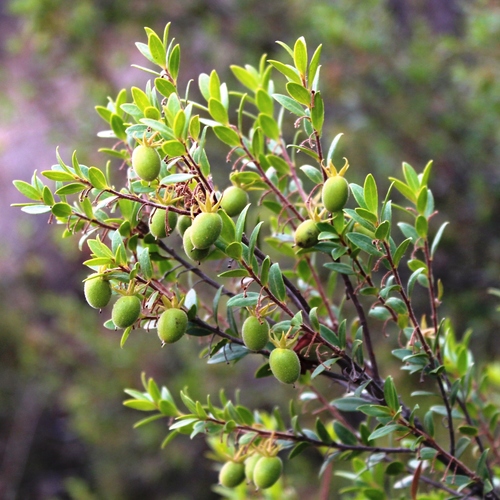
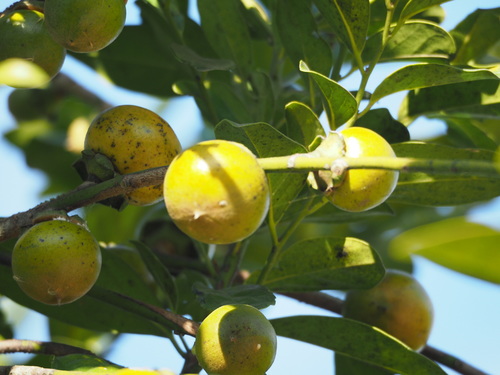
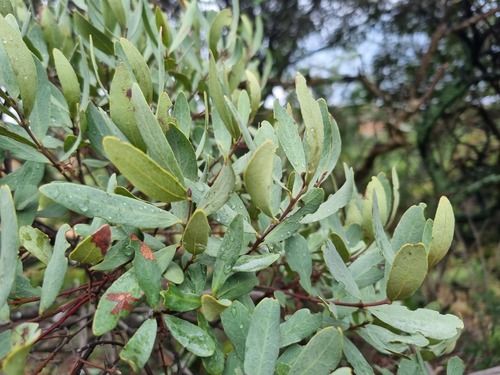
Euclea crispa, commonly called the blue guarri, is an Afrotropical plant species in the Ebenaceae family. These hardy evergreen plants may grow as dense shrub stands or reach tree size. It is widespread and common across the interior regions of southern Africa, and ranges northward into the tropics. While some individuals grow near South Africa’s south and east coasts, the species generally occurs at middle to high altitudes. It is easily identified by its highly branched structure and dull bluish foliage color. However, specimens with lanceolate leaves can resemble the wild olive, another common species of interior plateaus. It is native to central South Africa, where it is one of 35 native ebony species, as well as Lesotho, Eswatini, the Zimbabwean plateau and Eastern Highlands, Angola, Zambia, Malawi, and the uplands of tropical Africa. It grows in open or thick bush along stream banks, woodland, kloofs, hillsides, open forest, along forest margins, and very often in sheltered rocky places. It is rare in the lowveld, where it is restricted to rocky areas or regions with higher rainfall. Lichens frequently grow on the species’ older bark. Bees are drawn to the sweet scent of its summer flowers, and the larvae of the moths Ectoedemia crispae and Graphiocephala barbitias feed on its leaves. Birds and mammals including antelope, vervet monkeys, mongooses and rats eat its fruit, while black rhino browse its bark and leaves. A dye extracted from its roots is used to color baskets, mats and wool. A medicinal infusion made from the root is used to treat a variety of ailments, and the fruit or bark are used as a purgative.