About Euchelus asper (Gmelin, 1791)
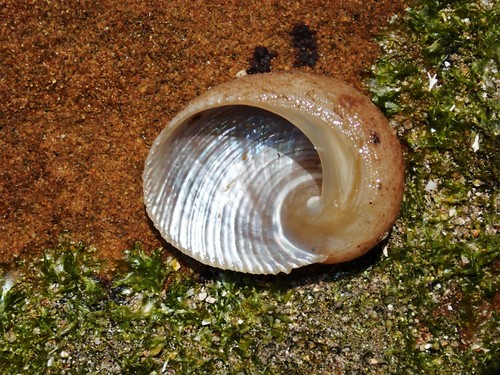
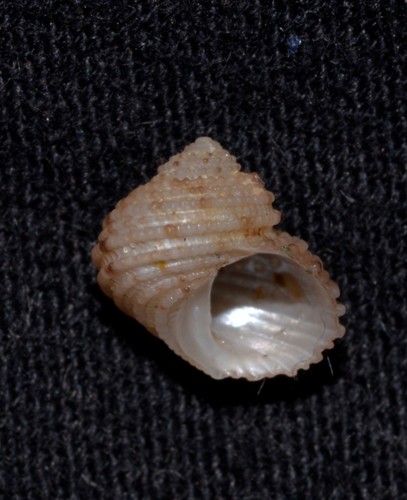
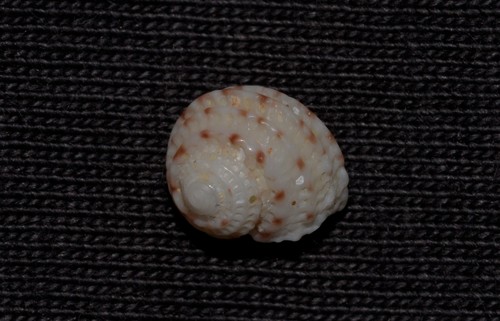
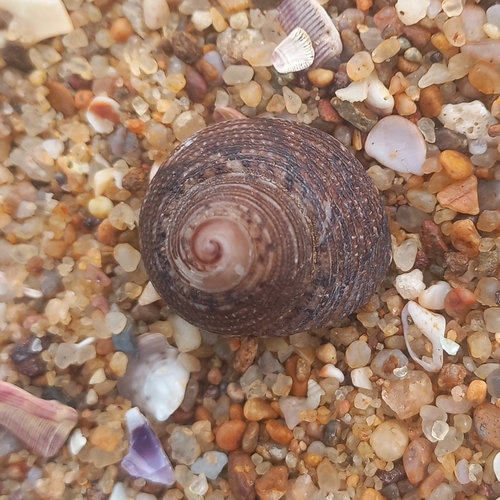
Euchelus asper is a species first described by Gmelin in 1791. For the typical form, the shell size ranges between 6 mm and 35 mm. The shell is thick, conoidal, and imperforate in adult individuals. Its base color is dull ashen, dotted with brown, rosy, and black markings. The shell has 5½ to 6 convex whorls separated by deep sutures; the first whorl is eroded, and the remaining whorls are rough in texture. Whorls are ornamented with dense, granular, unequal spiral colored bands (called cinguli), with two more prominent cinguli on the upper whorls and 3 or 4 on the body whorl. The penultimate whorl bears 12 to 15 spiral lirae. The body whorl is globose, rounded, descending, and convex on its underside. The aperture is ovate-rounded, with nearly continuous margins that are finely plicated all around. The columella is arcuate, and the base of the shell bears small teeth. This species is highly morphologically variable. One infraspecific form is recognized: Euchelus asper quadricarinatus, first described by Holten in 1802, which has the synonym Trochus alabastrum Reeve, 1858, and the common name four-keeled margarite. For this form, the shell size varies between 6 mm and 12 mm. This species occurs in the Indo-West Pacific region, and the four-keeled margarite form is found in the Indo-Pacific.