About Eucalyptus saligna Sm.
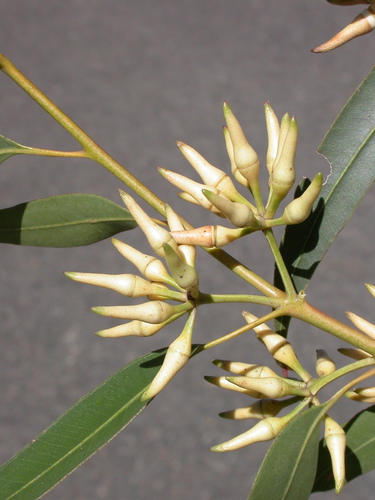
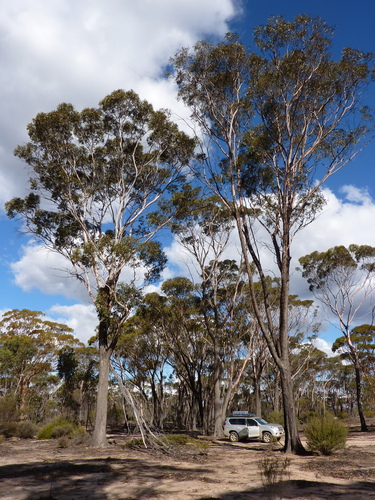
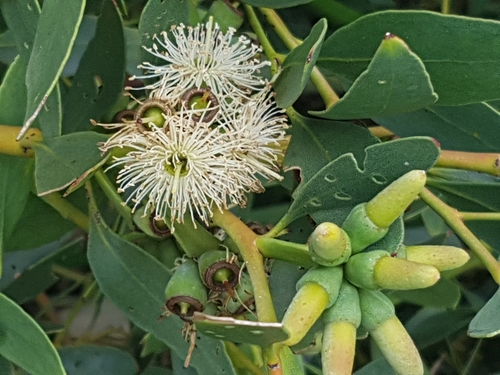
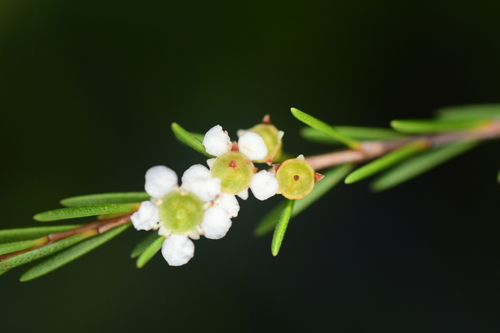
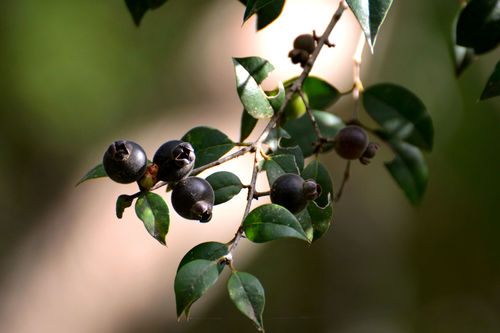
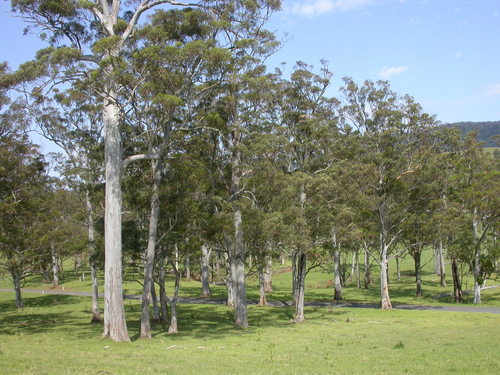
Eucalyptus saligna Sm., commonly known as Sydney blue gum, is a tree with a straight trunk that typically reaches 30–55 m (98–180 ft) in height, rarely growing as tall as 65 m (213 ft), and 2–2.5 m (6 ft 7 in – 8 ft 2 in) in diameter at breast height. This species forms a lignotuber. Its trunk has smooth pale grey or white bark, with 1–4 m (3 ft 3 in – 13 ft 1 in) of rough brownish bark at the base. Young plants and coppice regrowth have lance-shaped to egg-shaped or oblong leaves that are paler on the lower surface, measuring 37–120 mm (1.5–4.7 in) long and 15–40 mm (0.59–1.57 in) wide. Adult leaves are arranged alternately along stems, are glossy green, paler on the lower surface, and lance-shaped to curved, 90–190 mm (3.5–7.5 in) long, 15–40 mm (0.59–1.57 in) wide, borne on a 15–30 mm (0.59–1.18 in) long petiole. Flower buds are arranged in leaf axils in groups of seven, nine or eleven on an unbranched peduncle 5–15 mm (0.20–0.59 in) long; individual buds are either sessile or on pedicels up to 5 mm (0.20 in) long. Mature buds are spindle-shaped, oval or diamond-shaped, 5–10 mm (0.20–0.39 in) long and 3–5 mm (0.12–0.20 in) wide, with a conical or beaked operculum. Flowering occurs from December to March, and the flowers are white. The fruit is a woody cylindrical, conical or cup-shaped capsule 4–9 mm (0.16–0.35 in) long and 4–7 mm (0.16–0.28 in) wide, with valves protruding above the capsule rim. Sydney blue gum is generally found within 120 km (75 mi) of the coastline from Sydney to Maryborough in central Queensland. To the northwest of this coastal range, it occurs in disjunct populations across central Queensland, including in Eungella National Park, Kroombit Tops, Consuelo Tableland, Blackdown Tableland and Carnarvon Gorge. It grows in tall forests in more sheltered areas, on clay, loam soils, and alluvial sands. It is a component of the endangered blue gum high forest ecological community in the Sydney region. Populations found south of Sydney are no longer classified as E. saligna. Associated tree species include blackbutt (E. pilularis), grey ironbark (E. paniculata), mountain blue gum (E. deanei), flooded gum (E. grandis), tallowwood (E. microcorys), thin-leaved stringybark (E. eugenioides), manna gum (E. viminalis), river peppermint (E. elata), grey gums (E. punctata and E. propinqua), rough-barked apple (Angophora floribunda), spotted gum (Corymbia maculata), turpentine (Syncarpia glomulifera), brush box (Lophostemon confertus) and forest oak (Allocasuarina torulosa). South of Sydney Harbour and the Parramatta River, pure E. saligna stands transition to hybrid populations with bangalay (E. botryoides). After bushfire, Eucalyptus saligna regenerates by regrowing from epicormic buds on the trunk and lower branches. Trees of this species live for over two hundred years. The grey-headed flying fox (Pteropus poliocephalus) eats its flowers, the koala (Phascolarctos cinereus) eats its leaves, and the crimson rosella (Platycercus elegans) eats its seeds. Three longhorn beetle species, Paroplites australis, Agrianome spinicollis and Tessaromma undatum, have been recorded on Sydney blue gum. The presence of the territorial, aggressive bell miner (Manorina melanophrys) and psyllid insects of the genus Glycaspis correlates with E. saligna canopy dieback, a condition called bell-miner-associated dieback (BMAD), though the exact mechanism behind this dieback remains unclear. After colonization by Glycaspis, E. saligna may become infested by the ambrosia beetle Amasa truncata. The wood of this species is heavy (about 850 kg/m³), fairly hard, coarse, even-textured and reasonably easy to work. It is used for general building construction, panelling, and boatbuilding, and is highly prized for flooring and furniture due to its rich dark honey colour.