About Eucalyptus alba Reinw. ex Blume
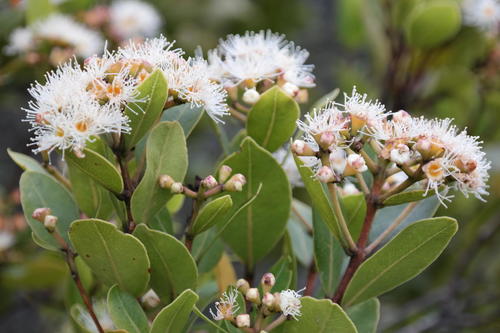
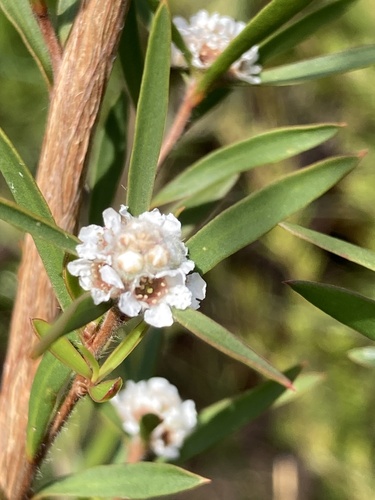
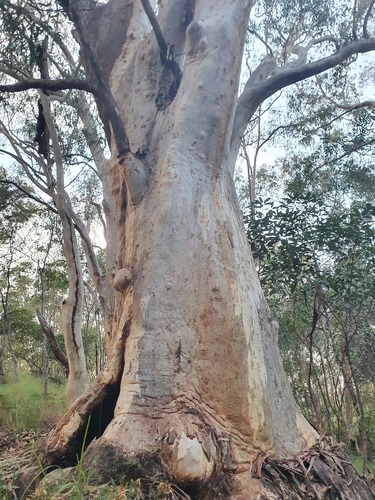
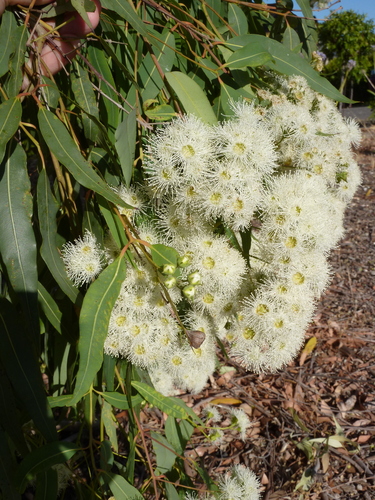
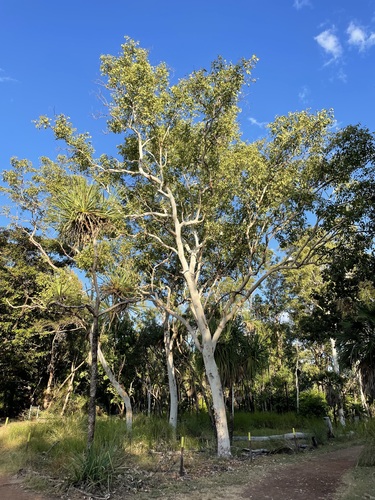
Eucalyptus alba Reinw. ex Blume, commonly known as white gum, is a tree that reaches a height of 5 to 18 meters (16 to 59 feet), with a spreading crown that measures 5 to 15 meters (16 to 49 feet) wide. Its trunk is often bent, and bears smooth, powdery bark that ranges in color from pinkish red to white or cream. Young plants have alternately arranged leaves that are egg-shaped to roughly round, 10–20 cm (3.9–7.9 in) long and 8–12 cm (3.1–4.7 in) wide. Adult leaves are egg-shaped to lance-shaped, 5–12 cm (2.0–4.7 in) long and 5–8 cm (2.0–3.1 in) wide, with both sides displaying the same shade of green. Flower buds grow in groups of seven on a 4–14 mm (0.2–0.6 in) long peduncle. The buds are oval to roughly spherical, with an operculum 3–5 mm (0.1–0.2 in) long and 4–7 mm (0.2–0.3 in) wide, matching the dimensions of the floral cup. White flowers bloom from August to November, and are sometimes produced in large amounts. The fruit is cone-shaped to hemispherical, 4–7 mm (0.2–0.3 in) long and 5–8 mm (0.2–0.3 in) wide. The related species Eucalyptus bigalerita is similar in general appearance, but has larger leaves, buds and seed pods, and grows in alluvial flats. As a dominant tree of open woodlands, this species is distributed from the Kimberley region of northeastern Western Australia across the Top End of the Northern Territory, and between Cape York Peninsula and Rockhampton in Queensland, as well as in New Guinea and Timor. It often occurs on ridges, elevated areas, and poor-quality soil. Eucalyptus alba has horticultural value as a small ornamental tree, and can also attract birds. It has been used for fencing in northern Australia, its flowers are used in the beekeeping industry to produce honey, and it was valued as a source of firewood by Aboriginal people in the Northern Territory.