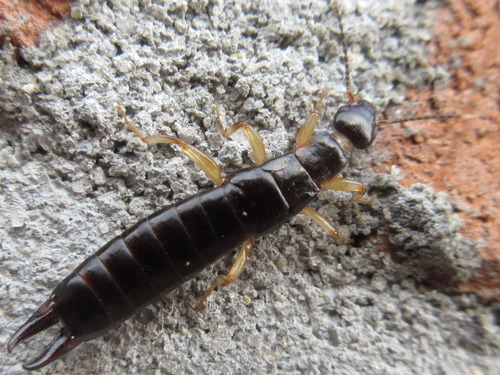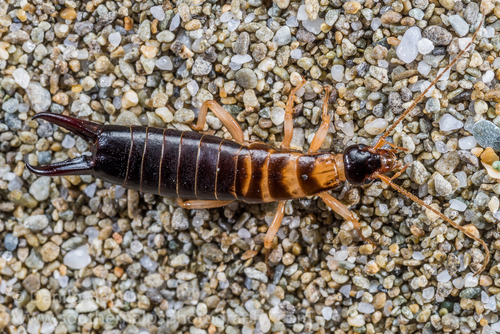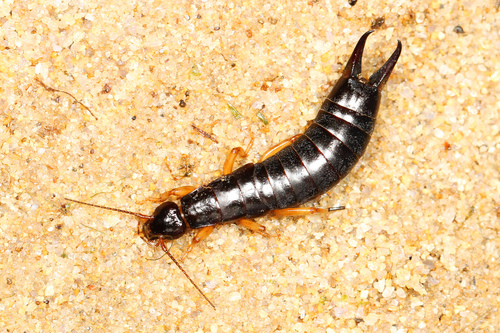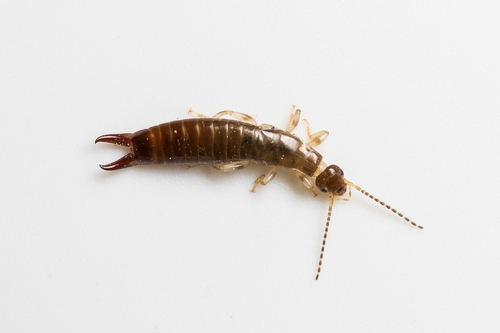
About Euborellia annulipes (Lucas, 1847)
Description: Adult Euborellia annulipes are typically dark brown, with a body length from 10 mm (0.4 in) to 25 mm (1.0 in). This is a wingless species, and like most earwigs, females are larger than males. Their legs are pale brown, with a noticeable dark band around the middle of the femur, or occasionally the tibia, which gives the species its common common name ringlegged earwig. Their antennae usually have sixteen segments, though other segment counts can occur. Their cerci have similar traits to those of most earwigs: male cerci are more curved than female cerci. Additional sex differences can be seen in the abdomen of this species: males have ten abdominal segments, while females have eight. Discovery and habitat: The species was described by Hippolyte Lucas in 1847, and it has been recorded living in the United States since 1902. Over time, it has become cosmopolitan, and is documented across the whole world. Like other earwigs, this species tends to live in both tropical and temperate climates. Life cycle: Adult females typically lay eggs in batches, with an average of fifty eggs per batch, and a female produces two to four batches total. Eggs are laid in different seasons throughout the year. If eggs are laid in the fall, they usually incubate over the winter; eggs laid in spring incubate for a much shorter time before hatching. During the incubation period, the mother guards her eggs, protects them from predators, and eats any fungi that begin growing on the eggs. A few days after hatching, nymphs leave the nest. They share the same overall shape as adults, but are smaller in size and lack wingpads. While adult abdominal segment count differs by sex, all nymphs have ten abdominal segments. Nymphs go through five instars during their development, which takes between 45 and 176 days total before they reach adulthood. Around 75% of nymphs will develop into females. These earwigs mate soon after reaching adulthood, and eggs are laid approximately eleven days after mating. Ringlegged earwigs generally produce two to three generations per year (one for spring and one for autumn), and a single full generation can be completed in 61 days. Adult ringlegged earwigs can be found year-round except during winter, when they remain underground.