About Eublaberus distanti (Kirby, 1903)
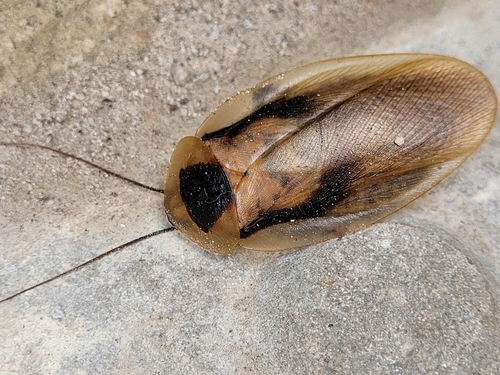
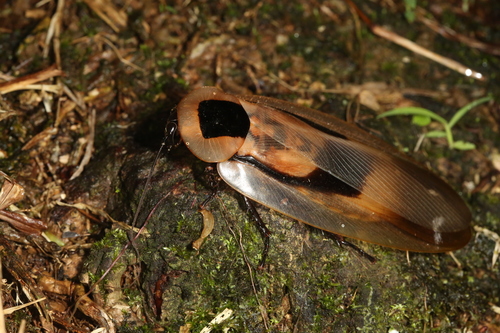
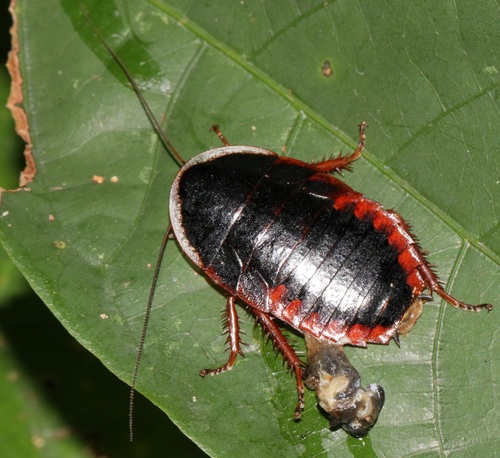
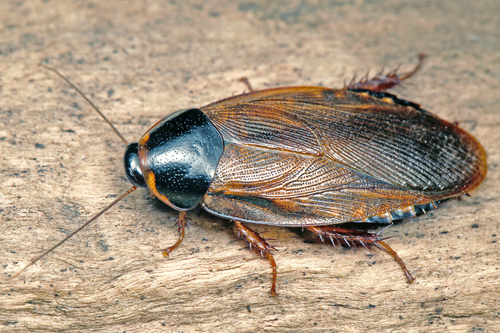
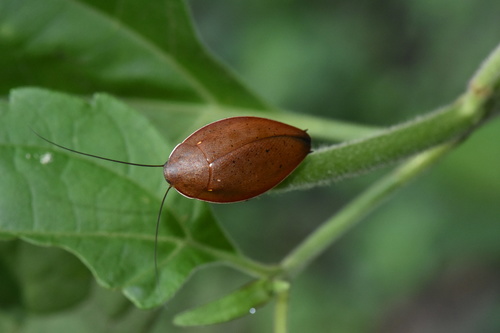
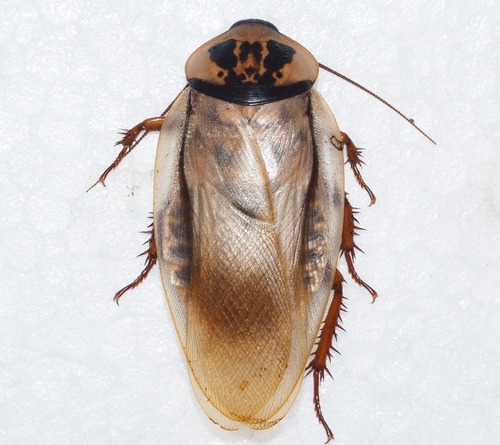
Eublaberus distanti (Kirby, 1900), commonly called the six-spotted cockroach, four-spotted cockroach, four-spot cockroach, or Trinidad bat-cave cockroach, is a primarily cave-dwelling Central and South American cockroach in the genus Eublaberus (Hebard, 1920). It is named after William Lucas Distant. Nymphs of this species are dark brown when mature, and the common name "six-spotted cockroach" comes from six yellow spots that run along the sides of the nymph. Both adult males and females have wings but cannot fly. They reach an approximate length of 6.4 cm (2.5 in). Males are typically smaller than females, have longer wings than females, and have a smaller rear sternite than females. E. distanti occurs naturally in Trinidad and Tobago, Guatemala, Costa Rica, Panama, Colombia, French Guiana, Suriname, Guyana, Brazil, and Peru. In Trinidad, E. distanti has been observed to prefer relatively dry, guano-rich areas inside caves. It is occasionally found in other habitats, including rotting logs, under decaying leaf litter, in epiphytes, and in rot holes and hollows of trees, especially those that house bat colonies. Nymphs burrow into organically rich soil on cave floors until they reach their 6th or 7th instar, after which they climb onto rocky, often guano-covered cave walls. Caves with guano deposits usually support very large populations of just a small number of cockroach species, which can exploit the abundant, rich, but rather uniform food resource guano provides. One single chamber of a cave in Trinidad was recorded to hold more than 43,000 E. distanti individuals.