About Euastacus sulcatus Riek, 1951
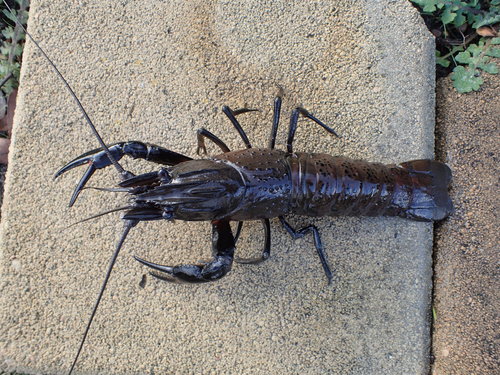
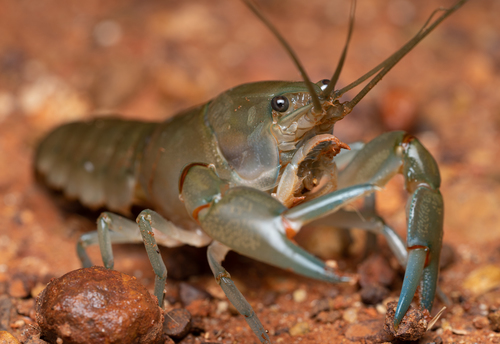
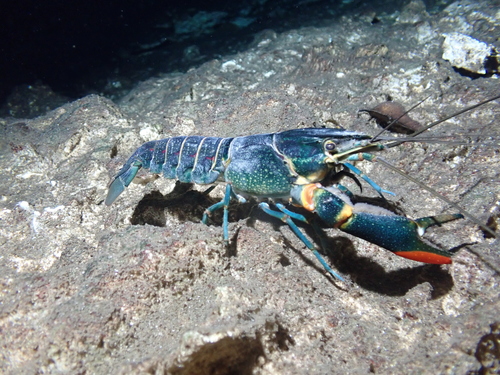
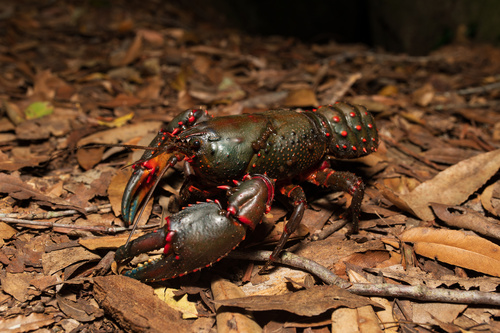
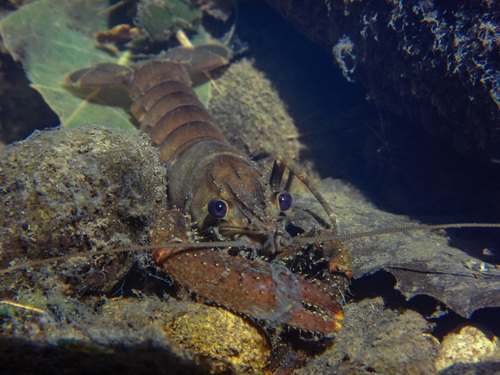
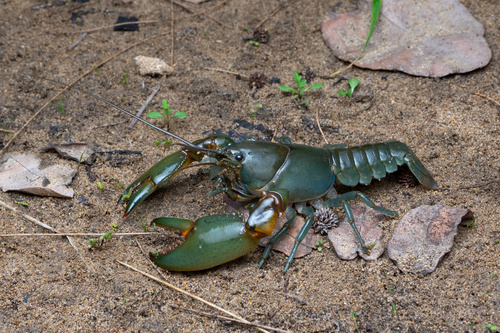
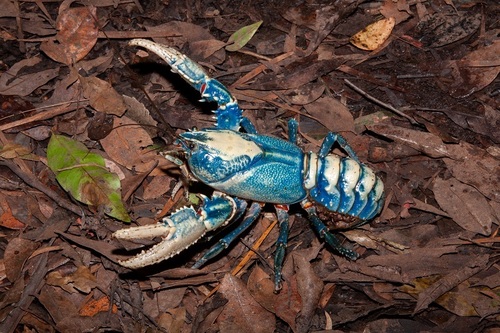
Euastacus sulcatus, commonly known as the Lamington crayfish, is a freshwater crayfish or "yabby" native to Australia. It is most often bright blue, but color variations including red and white, rusty red, brown, green, orange, and completely white can be found across its entire known range. When conditions are damp, usually after heavy rainfall, these crayfish can be found roaming the forest floor while actively searching for a mate, new territory, or food. When threatened, it raises its two large front pincers and will readily pinch any potential predator. By the time this spiny crayfish reaches full adult size, it has no native predators. However, the introduction of feral animals such as foxes and cats has exposed the species to predation it did not evolve defenses against. Due to its striking coloration, it has been collected to keep as an aquarium pet, and some individuals are even cooked and eaten. This species is legally protected, and trapping, removing, or harming it is an offense carrying on-the-spot fines of up to $522. Its distribution is restricted to rainforest-bordered streams, and sometimes streams bordered by wet eucalyptus forest, located at altitudes above 300 meters. It inhabits a crescent-shaped mountain range that runs from Mount Tamborine to Lamington Plateau, west along the Macpherson Range, and north via Cunningham's Gap into the Mistake Mountains in Queensland. It has also been observed nearby in Goonengerry National Park, Northern New South Wales. This species lives in streams and creeks above 300 meters (980 ft) altitude within rainforests.