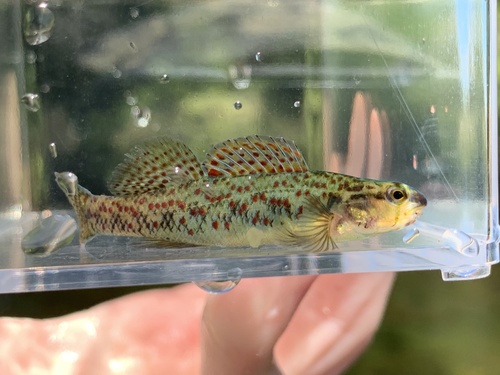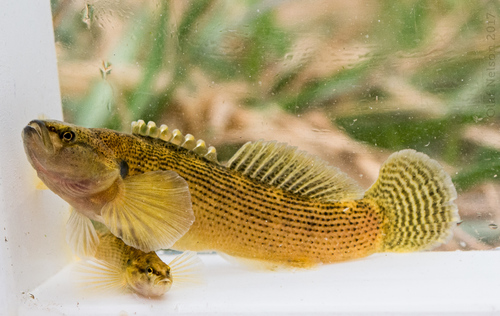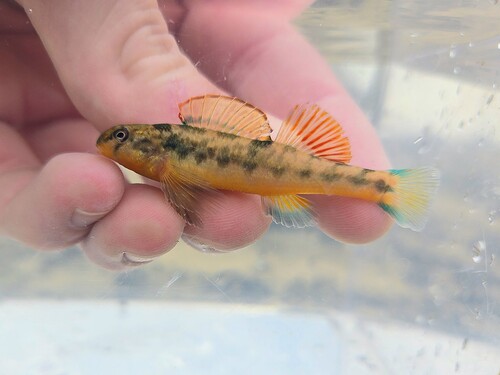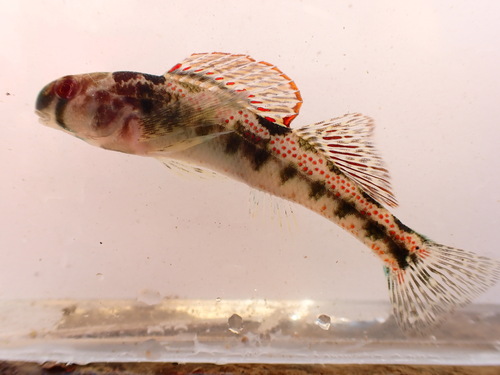
About Etheostoma zonale (Cope, 1868)
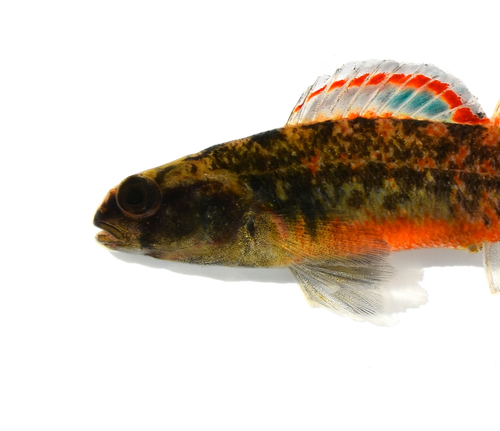
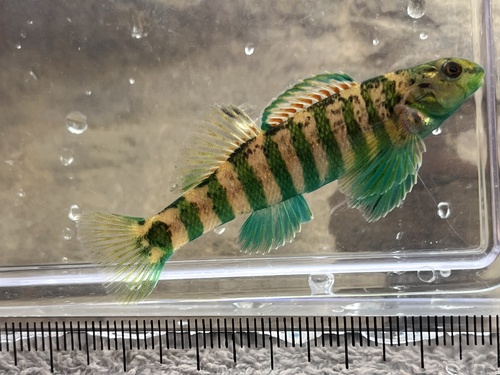
Etheostoma zonale, commonly called the banded darter, reaches a maximum total length of 7.8 centimetres (3.1 inches), while most individuals grow to around 5.3 centimetres (2.1 inches) instead. It is one of the most common darter species in North America, where approximately 250 darter species in total are found. This fish has a broad distribution across much of the eastern United States, primarily within the Mississippi Basin. Its native range extends east from the Verdigris River in Kansas to the Allegheny River in New York, and south from the Minnesota River in Minnesota to the Ouachita River in Arkansas and the Tennessee River in Alabama. It can also be found in the headwaters of the Savannah River, Lake Michigan drainages, the Duck River, and other streams across the eastern United States.
This species has been introduced into a small number of non-native streams, with its most notable established introduction in the Susquehanna River drainage. Starting in the 1960s, specimens of banded darter and the native tessellated darter, Etheostoma olmstedi, have been collected from Catatonk Creek in New York. Biologists have studied these two darter species and their ecological niches in the Susquehanna River drainage, and found that the introduced banded darter outcompetes the native tessellated darter for habitat and resources. Since the introduction of the banded darter to this watershed, the buccal cavity length of the tessellated darter has increased. This change is expected to improve the species' suction feeding performance, measured as the volumetric flow rate of water through the mouth. The morphological shift in tessellated darter is likely driven by the banded darter taking over the native species' original ecological niche.
Banded darters prefer to inhabit swift riffles in moderate-sized streams and rivers, where the substrate consists of moderately large to large cobble or gravel, rock slabs, and small boulders. They favor water deeper than 25 centimetres, located in riffles near the midchannel of rivers and creeks. The species tolerates a wide range of water temperatures, able to survive between 32 and 80 °F, with a preferred temperature range of 72 to 76 °F.