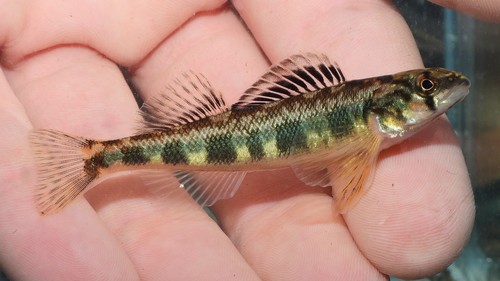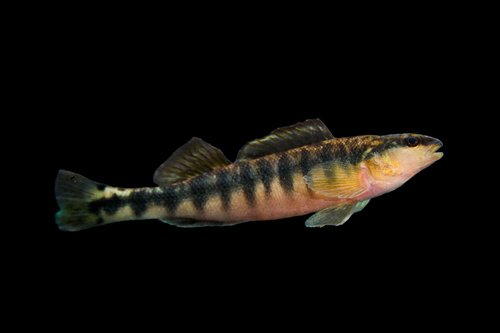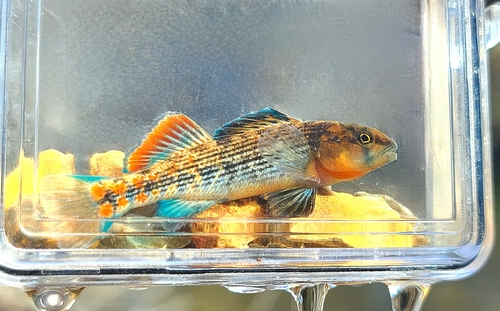
About Etheostoma spectabile (Agassiz, 1854)
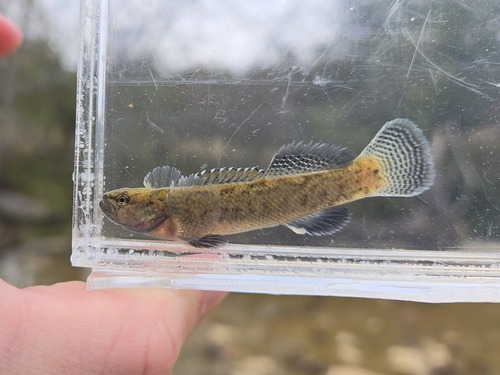
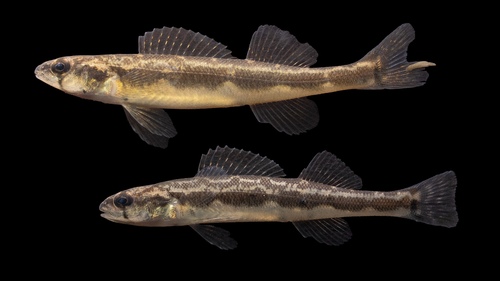
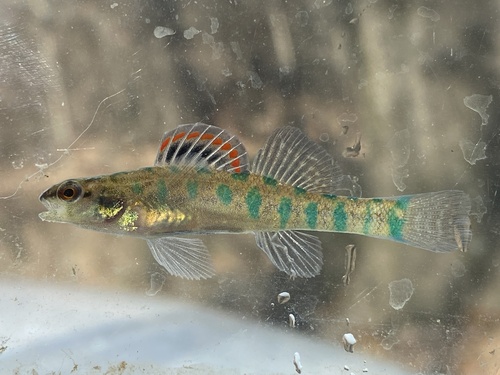
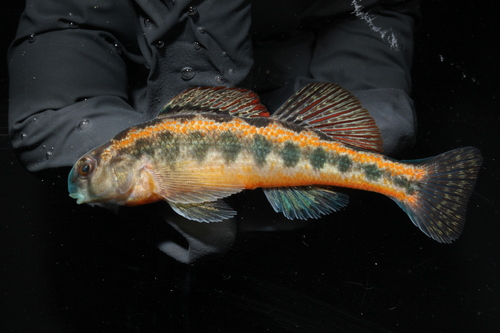
The orangethroat darter, scientifically named Etheostoma spectabile (Agassiz, 1854), is a species of freshwater ray-finned darter. It belongs to the subfamily Etheostomatinae, part of the family Percidae that also includes perches, ruffes, and pikeperches. This species is endemic to the central and eastern United States, where it is native to parts of the Mississippi River Basin and Lake Erie Basin. Its typical habitat is shallow gravel riffles in cooler streams, as well as rocky runs and pools in headwaters, creeks, and small rivers, with substrates made of sand, gravel, rubble, or rock. It forages along the bottom for aquatic larvae of midges, blackflies, mayflies, and caddisflies, as well as isopods and amphipods. Spawning occurs in spring, and these fish often select upper riffle stretches with sandy and gravelly bottoms interspersed with larger cobble as spawning sites. This species has high reproductive success. No particular threats to the orangethroat darter have been identified, and the International Union for Conservation of Nature has assessed its conservation status as least concern. The orangethroat darter occurs in portions of the Mississippi River Basin and Lake Erie Basin in North America. It is found in the eastern and western tributaries of the Mississippi River Basin, ranging from southeastern Michigan and Ohio to eastern Wyoming. Its range extends south to Tennessee and west to the northern section of Texas, including Gulf drainages from the Trinity River to the San Antonio River in Texas that lie mostly on the Edwards Plateau. Locally, the orangethroat darter is regularly found throughout middle Tennessee in appropriate, high-quality habitats. It also occurs locally in the Cumberland drainage below Cumberland Falls, and in the lower Tennessee drainage upstream to the Pickwick Reservoir area. It is most abundant in streams of the northern and western Highland Rim, and isolated populations are found in the Reelfoot Lake vicinity, in streams that drain bluffs. The orangethroat darter's habitat often includes slow to swift shallow gravel riffles in cooler streams. It sometimes inhabits rocky runs and pools in headwaters, creeks, and small rivers with sand, gravel, rubble, or bedrock substrates; in some areas it can also be found in spring runs or quiet backwaters. This species is most abundant in waters with high alkalinity, and it appears to avoid rivers with strong current.