About Etheostoma proeliare (Hay, 1881)
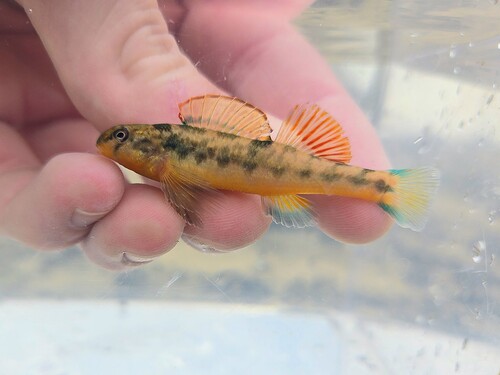
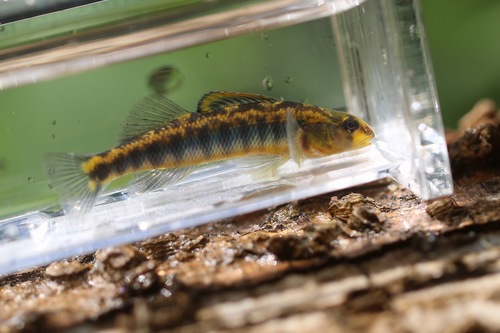
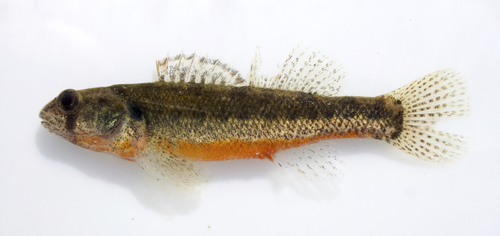
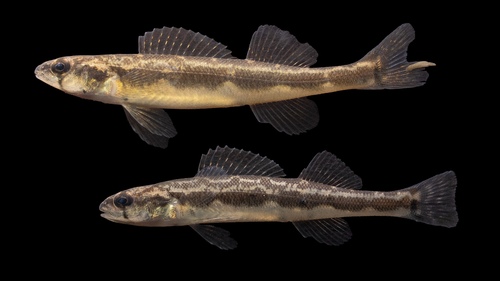
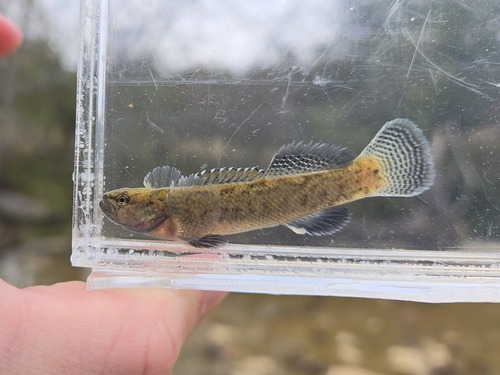
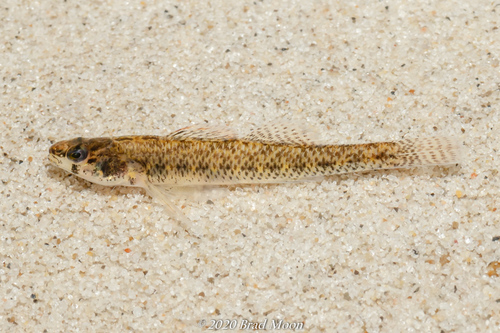
The cypress darter, whose scientific name is Etheostoma proeliare, is a species of freshwater ray-finned fish. It is a darter belonging to the subfamily Etheostomatinae, part of the family Percidae, which also includes perches, ruffes and pikeperches. It is endemic to fresh waters of the central and eastern United States. Its range covers drainages from the Choctawhatchee River in Florida to the San Jacinto River in Texas, as well as the Mississippi River basin from southern Illinois and eastern Oklahoma to the Gulf of Mexico. It also occurs across the Gulf Coastal plain of southern North America, ranging from the Colorado River of eastern Texas through the Choctawhatchee River of eastern Alabama, north to the Fall Line, and upstream along the Arkansas River valley in eastern Oklahoma. In Texas, it can be found in streams limited to the extreme east, including the Red River, Sabine Lake, Galveston Bay, and the Colorado River. In summer, it inhabits vegetated margins of swamps and lakes, and backwater habitats. In winter, it moves to flooded riffles, backwater bayous, and lowland lakes. It prefers slow-moving streams with silt or sand bottoms and leaf-laden water. As a result of leaf and vegetation decomposition in this slow, leaf-filled habitat, the water it lives in has lower pH. The vegetation insulation and lack of fast-moving water that carries heat away also makes the water temperature warmer here. It feeds mostly on small crustaceans, and less heavily on insects other than chironomids, which is related to its small body and small mouth that make ingesting large insects like caddisflies and stoneflies difficult, and the habitat it occupies. Small crustaceans are more common in the slow-moving, leaf-laden, shallow water where the cypress darter lives, making them a viable food source. Insects such as stoneflies prefer faster-moving water with rocky substrates, so they are not often found in cypress darter habitats. The cypress darter also eats midge larvae, isopods, amphipods, and mayfly nymphs. Spawning occurs during spring and summer. Females lay clusters of up to three eggs, which are often stuck to the surface of dead leaves. In Max Creek, Illinois, the cypress darter competes with Etheostoma chlorosomum and Etheostoma gracile. All three species lay their eggs on vegetation and live in the same swampy, silt- or sand-bottom, leaf-laden waters. Predators of the cypress darter include Micropterus salmoides, Lepomis megalotis, Centrarchus macropterus, and Cottus caroline. Human activities can reduce the abundance of the cypress darter: toxic runoff from paved roads pollutes its habitat, and logging causes erosion that adds silt to streams. The cypress darter has a very wide range, and its population trend appears to be stable. No current information indicates that any population of the cypress darter across the southeast is decreasing. It is a common species with numerous sub-populations, so the International Union for Conservation of Nature has assessed its conservation status as least concern.